
ACCOUNTING WITH FURTHER FARMERS
Rice Sowing Techniques for the Early Winter–Spring Crop
Sowing Rice at the Beginning of the Winter–Spring Crop The early Winter–Spring sowing stage is considered the “golden period” for farmers to kickstart a successful crop season. However, uneven sowing, improper seed selection, or excessive sowing density can lead to weak plants, poor tillering, and increased pest susceptibility.
Applying the right sowing techniques helps rice plants develop strong roots, grow vigorously, tiller effectively, and reduce production costs. In the article below, Viet Nga Agri provides detailed guidance on rice sowing techniques for the early Winter–Spring crop, helping farmers make the best preparations for a bountiful and prosperous harvest season.
Preparation Before Sowing
Seed Selection and Treatment Before Sowing
Choosing the right seed variety is the first and most important step to ensure a successful Winter–Spring crop with high yield. Farmers should prioritize rice varieties that are suitable for local climatic conditions, tolerant to acidity and salinity, resistant to pests and diseases, and have an appropriate growth duration.
Short-duration rice varieties with strong tillering ability and uniform growth will help reduce risks caused by unpredictable early-season weather conditions.
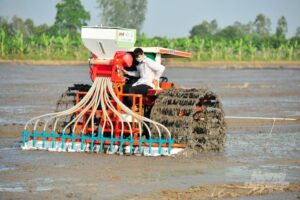
Before sowing, seeds must be properly soaked and incubated to ensure quick and uniform germination.
- Soaking time: About 30–36 hours, depending on water temperature.
- Incubation: After soaking, rinse the seeds thoroughly and wrap them in a moist cloth bag for 24–36 hours. When the seeds have evenly sprouted (tiny white tips visible), they are ready for sowing.
- Water source: Use clean, non-acidic, non-saline water to avoid affecting germination.
Additionally, farmers should remove empty or impure seeds by soaking them in a 10% saltwater solution (1 liter of water mixed with 100g of salt). This helps ensure seed quality before sowing.
Proper seed treatment from the very beginning not only promotes uniform germination but also reduces the risk of seed-borne diseases and lowers future crop care costs.
Field and Soil Preparation for Sowing
Proper field preparation helps rice plants develop roots quickly, germinate evenly, and maintain stable growth throughout the Winter–Spring crop.
Right after the previous harvest, farmers should till and clean the field to remove straw residues, weeds, and remaining pathogens.
During land preparation, it is important to plow and harrow thoroughly, and level the field surface to ensure the soil is loose, well-aerated, and even, which makes water retention easier. A flat field also helps fertilizer spread evenly, reducing waterlogging or dry spots, thereby allowing rice plants to grow uniformly.
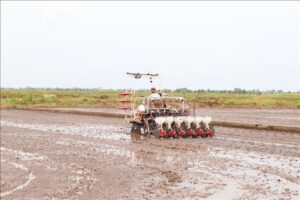
Before sowing, farmers should apply a basal dose of well-decomposed organic fertilizer or phosphorus fertilizer to enrich soil fertility and provide rice plants with a stable initial nutrient source.
At this stage, the soil should be kept moderately moist — not too dry or deeply flooded — to create ideal conditions for seed germination.
It is also essential to check soil pH and moisture levels, especially in acidic (sour) or saline areas. If the soil shows signs of acidity or salinity, farmers should flush the field with fresh water to wash away acid and salt before sowing to prevent damage to germinating rice seedlings.
Determining the Right Sowing Time and Density
Choosing the proper sowing time helps rice plants grow uniformly and avoid the impact of unfavorable early-season weather conditions. For the Winter–Spring crop, farmers should sow from early to mid-November, depending on local water conditions and regional cropping schedules. Sowing at the right time helps minimize early pest infestations and maximize yield at harvest.
In addition, sowing density plays a crucial role in determining rice growth and productivity. Proper sowing ensures that light and nutrients are evenly distributed, allowing rice plants to tiller strongly, stand firm, and remain easy to manage later.
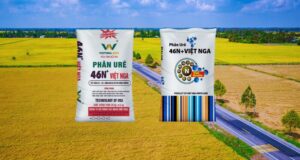
After sowing, maintain a shallow and stable water level (1–3 cm) to promote quick germination and root development. During the early seedling stage, farmers can apply a light dose of Urea to help plants recover quickly, grow upright, and promote early tillering. The Viet Nga Black Urea product line effectively reduces nitrogen loss and supports farmers in establishing strong, healthy crops with vigorous growth for a productive season ahead.
Rice Sowing Techniques for the Early Winter–Spring Season
Suitable Rice Sowing Methods
Depending on soil conditions and water availability, farmers can select the most appropriate sowing method to ensure uniform germination and healthy plant growth:
- Dry Sowing: Applied in highland or slow-irrigation areas. The soil should be well-tilled and moderately moist before sowing.
Advantages: Saves seed, reduces land preparation costs, and makes early-season weed control easier. - Wet Sowing: Suitable for areas with good water retention. After leveling the field, maintain a shallow water level (2–3 cm), then sow evenly by hand.
Advantages: Promotes quick germination and early root establishment.
- Transplanting (Nursery Sowing): Ideal for low-lying fields or areas with poor water regulation. Healthy seedlings ensure uniform growth and better resistance to pests and diseases.
Today, many farmers use rice sowing machines to achieve greater uniformity and seed savings. Regardless of whether sowing is done manually or mechanically, the most important factors are even distribution, proper density, and a thin soil cover layer — helping seeds absorb moisture quickly and germinate effectively.
Step-by-Step Rice Sowing Process
After preparing the soil and seeds, farmers can proceed with sowing by following these steps:
- Check Field Moisture: Ensure the field surface is slightly moist — not dry or deeply flooded.
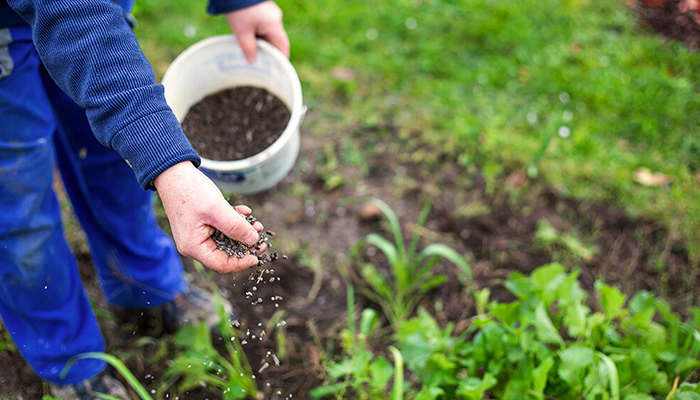
- Sowing: Sow evenly by hand or in rows, making sure the seeds are uniformly distributed and not clumped together.
- After Sowing: Maintain a shallow and stable water level (1–3 cm) to prevent sudden drying or deep flooding of the field.
- 8–12 Days After Sowing: When seeds begin to germinate, apply a small amount of Viet Nga Agri’s specialized fertilizer — NPK 22-15-8+TE for Rice, which provides early nutrients to help seedlings develop strong roots, grow healthy green leaves, and achieve uniform growth.
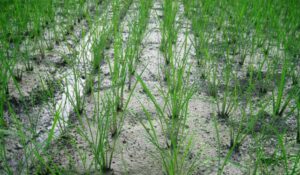
Keeping the field consistently moist and well-covered with water, without allowing the soil to crack or dry out, ensures uniform germination and strong early growth for a healthy, productive rice crop.
A Few Notes for Early Winter–Spring Sowing
Avoid sowing when the soil is too dry or water levels are unstable, as this can cause seed damage and uneven germination.
Do not sow too densely: A proper sowing density allows plants to receive adequate sunlight and nutrients, helping reduce pests, diseases, and lodging.
Monitor for weeds and leftover residues after sowing: Remove them early to prevent competition for nutrients.
Provide proper nutrition at each growth stage: After the seedlings recover and turn green, farmers can apply Nitrogen fertilizer to stimulate early tillering, enhance resistance, and reduce nitrogen loss to the environment.
Conclusion
Sowing rice correctly from the very beginning of the season is the key first step that determines the success of the entire Winter–Spring crop.
When the field is well-prepared, seeds germinate uniformly, and plants grow strong, farmers can be more proactive in fertilization, care, and pest management throughout the season.
Contact Viet Nga Agri today to receive technical support and tailored nutritional solutions for each stage of sowing and early-season crop care.
Wishing all farmers a successful Winter–Spring crop — with healthy rice plants, strong roots, and high yields, leading to a bountiful golden harvest together with Viet Nga Agri!
Related news
The Role of Base Fertilization in Soil Improvement and Enhancing Agricultural Fertility
Measures to Improve and Treat Saline Soil
Winter-Spring rice blast warning – Don’t let leaf and flower burns rob you of your golden crop

Rice Sowing Techniques for the Early Winter–Spring Crop
What Is Slow-Release Fertilizer? Learn How to Use It Effectively