ACCOUNTING WITH FURTHER FARMERS
Measures to Improve and Treat Saline Soil
In recent years, the saline intrusion in the Mekong Delta and the Central Coast has become increasingly serious. Drought and salinity come early, spreading deep into the fields, causing soil quality to decline, fresh water resources to become scarce, and agricultural production to be negatively affected. In this article, Viet Nga Fertilizer will help you learn about what saline soil is, its causes, and effective measures to improve and treat saline soil to help restore soil and protect crops.
What is saline soil?
Saline soils are soils that contain more dissolved salts – primarily sodium chloride (NaCl) – than plants can tolerate. When salts build up too high, water in the soil becomes “retained,” making it difficult for plant roots to absorb water and nutrients even when the soil surface is moist.
This phenomenon leads to physiological drought: plants wilt, leaves turn yellow, and growth is slow because salt hinders the absorption process. If not treated promptly, saline soil will severely affect the vitality of plants and reduce crop yields.
Causes of saline soil
Soil salinity is mainly due to natural factors. In coastal areas, rising sea levels and saltwater intrusion cause salt ions to follow high tides and tides deep into canals and fields. Dry climates with little rain cause strong evaporation, thereby increasing the salinity on the soil surface. Some areas also have natural saltwater aquifers, which when permeated to the top layer of soil will gradually make the soil saline over time.
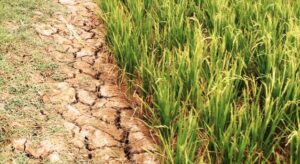
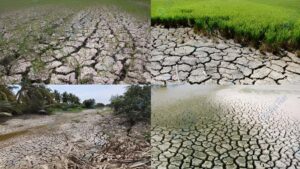
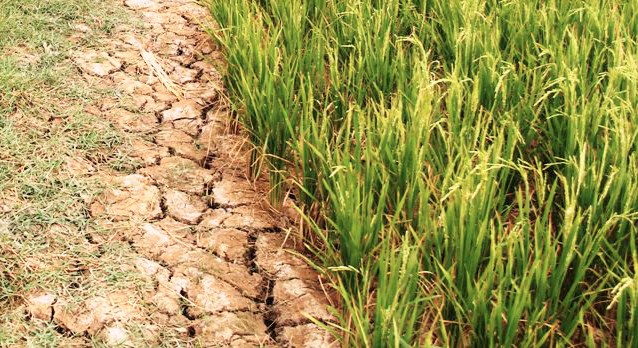
In addition to natural factors, subjective causes also contribute to making the soil increasingly saline. Using irrigation water containing salt, ineffective irrigation and drainage systems cause salt to accumulate over time. During the dry season, if water is not managed well, the soil will dry and crack, causing salt to crystallize and increase salinity. Low-lying terrain also creates conditions for salt to accumulate quickly and be more difficult to control.
Effects of saline soil on crops
When the soil is saline, the osmotic pressure increases, making it difficult for plant roots to absorb water and nutrients. Even though the soil is still moist, plants are still susceptible to physiological drought, leading to wilting leaves, yellow leaves, slow growth and a significant reduction in growth. The amount of salt accumulated over time also reduces the ability to photosynthesize, disrupts mineral absorption and weakens the plant, making it susceptible to death.
For rice plants – a plant that is very sensitive to salt – the damage is even more serious: rice is stunted, has poor tillering, small flowers, many empty grains and a sharp decrease in yield. Not only harmful to plants, high salinity also makes the soil hard, reduces porosity and reduces the ability to circulate water, air and nutrients. The soil gradually loses moisture, reduces fertility and makes it difficult for the next crop.
If not improved promptly, saline soil will continue to accumulate salt, causing severe damage to the crop and even making the field unusable. Therefore, treating saline soil is an important step to maintain production and help crops recover sustainably.
Measures to treat and improve saline soil
To effectively improve saline soil, farmers can combine many measures suitable to the soil conditions and salinity level. Below are popular methods that bring high efficiency in practice.
Irrigation measures – washing salt with fresh water
Irrigation is the most common and fastest way to treat saline soil. First, farmers need to build dikes or reinforce embankments to prevent salt water from entering the fields. When the water level in the fields is still salty, it is necessary to drain this amount of water, then add fresh water to dissolve the remaining salt in the soil. Soaking and draining water many times helps the salt to gradually wash down to the lower layers.
During the process of washing the salt, farmers should also dig drainage ditches so that the water carrying the salt has a way to escape, helping the salinity reduction to take place faster. Another important point is to check the irrigation water source, because if the irrigation water is also salty, the soil washing will not be as effective as desired.
Organic supplements for soil improvement
Organic addition is one of the important measures to help improve saline soil in a sustainable way. Applying organic fertilizers, decomposed manure, combined with the use of straw or rice husk ash helps increase soil porosity, improve water retention and reduce salt toxicity. Organic matter also creates a favorable environment for microorganisms to work, helping the soil recover faster and significantly improve soil structure over a long period of time.
Lime or gypsum application
Applying lime and gypsum is an effective measure to reduce salinity and improve soil quality quickly. Lime CaO or CaCO₃ has the effect of raising pH, neutralizing acidity, reducing toxicity and promoting microbial activity in the soil, thereby helping plant roots grow better. Meanwhile, gypsum CaSO₄ provides Ca²⁺ ions to replace Na⁺ ions on the surface of soil colloids, helping Na⁺ to be easily washed away with water. For areas with both salty and acidic soil, farmers can combine fused phosphate to improve soil structure and increase improvement efficiency.
Biological measures – using microorganisms to treat salt
Biological measures use beneficial microorganisms to support the process of improving saline soil naturally and safely. Microorganisms help neutralize NaCl salt, reduce toxicity to roots and limit the effects of salt on water absorption. When properly added, they also stimulate the activity of beneficial microorganisms, thereby improving water exchange capacity and increasing the efficiency of mineral absorption of plants. At the same time, microorganisms help decompose organic matter in the soil, promote the process of restoring soil structure, making the soil looser and more fertile in a short time.
Adjusting farming techniques
Adjusting farming techniques plays an important role in reducing salinity and limiting damage to crops. Farmers need to rearrange the crop calendar, avoiding planting during periods of high salinity to limit risks. In rice production, it is possible to sow thickly and plant sparsely to reduce salinity pressure on early-stage seedlings. In addition, it is necessary to manage the water level of the field to be stable, keeping water at a suitable level to limit evaporation causing salt to rise to the surface. Absolutely do not let the soil dry and crack, because this condition causes salt to crystallize and increase salinity for the following crops.
Choose salt-tolerant varieties and rotate crops appropriately
One of the effective solutions to adapt to saline soil is to choose salt-tolerant rice varieties, which help crops grow stably even when salinity has not been completely treated. In addition, farmers can apply crop-livestock rotation models, typically the rice-shrimp model, which is very popular in the Mekong Delta provinces.
Crop rotation helps reduce salinity pressure in the soil, interrupts salt accumulation and creates conditions for the soil to recover naturally. In addition, intercropping with salt-tolerant plants also contributes to improving the topsoil, increasing porosity and helping the soil gradually become fertile again for the next crop.
Conclusion
Saline soil is a big challenge for agricultural production, especially in areas frequently affected by saltwater intrusion. However, if farmers apply the right measures such as salt washing, organic addition, lime or gypsum application, use of microorganisms, adjusting cultivation techniques and choosing salt-tolerant varieties, the soil can still recover and produce stable yields. If farmers need further advice on how to improve the soil or choose the right product, please contact Viet Nga Fertilizer for quick support. We always accompany farmers in every crop season.
Related news
The Role of Base Fertilization in Soil Improvement and Enhancing Agricultural Fertility
Measures to Improve and Treat Saline Soil
Winter-Spring rice blast warning – Don’t let leaf and flower burns rob you of your golden crop

Rice Sowing Techniques for the Early Winter–Spring Crop
What Is Slow-Release Fertilizer? Learn How to Use It Effectively