ACCOUNTING WITH FURTHER FARMERS
What Is the Brown Planthopper? How to Identify and Effectively Control It
The brown planthopper is one of the most dangerous pests affecting rice crops, as it spreads grassy stunt and ragged stunt diseases, severely impacting yields. Early detection and the correct application of control measures are essential to help farmers proactively and effectively protect their crops. In this article, Viet Nga Agri will walk you through how to identify the brown planthopper and provide effective prevention and control methods tailored to each stage of rice growth.

What Is the Brown Planthopper? Why Is It a Major Threat to Rice Production?
The brown planthopper (Nilaparvata lugens Stål) is a highly destructive pest that affects rice crops throughout their growth cycle — from sowing to harvest. It harms the plant by piercing and sucking sap from the base of rice stems, causing plants to weaken and eventually die in patches, a phenomenon known as “hopperburn”. This damage is especially severe in dense fields or areas near lights at night, where the insects tend to gather. In addition to direct damage, the brown planthopper is a vector for grassy stunt and ragged stunt diseases — viral infections for which there are no cures. If rice becomes infected early in the season, it can lead to severe yield losses.
Biological Characteristics and Life Cycle of the Brown Planthopper
The brown planthopper is a small insect but causes serious damage to rice crops, especially by transmitting grassy stunt and ragged stunt diseases.
When populations are high, they suck sap from rice plants, causing them to yellow rapidly and die in patches — a phenomenon commonly referred to by farmers as “hopperburn.” Brown planthoppers cause rice plants to turn yellow.. To effectively control this pest, farmers need to clearly understand the biological characteristics and life cycle of the brown planthopper.
The life cycle of the brown planthopper lasts approximately 28–30 days and goes through three main stages:
- Egg StageThe eggs are oval-shaped, transparent, and are usually laid deep inside the leaf sheath or along leaf veins. The incubation period lasts about 6–7 days.
- Nymph Stage (also known as young hoppers): Newly hatched nymphs are ivory white in color and gradually turn yellowish-brown as they develop. They are about 1–3 mm in length. This stage lasts 12–13 days and includes five molting phases.
- Adult Stage:Brown planthopper adults are brown in color and appear in two forms:
Long-winged (macropterous): Typically appear under hot and dry conditions or when food sources are scarce. These can migrate over long distances.
Short-winged (brachypterous): More common when humidity is high, temperatures are cooler, and rice fields are lush and green. These have higher reproductive capacity, leading to rapid population growth.
Adult Stage: They live for about 10–12 days and spend their entire lifespan sucking sap from rice plants. If not detected early and properly controlled, they can cause significant losses in both yield and crop quality.

Peak Brown Planthopper Infestation – Autumn–Winter Season, Tillering Stage
During the Autumn–Winter crop season, brown planthoppers often appear in high densities, causing severe damage during the tillering stage — a period when rice plants are growing vigorously and are highly vulnerable. Cool temperatures, high humidity, and lush green fields create ideal conditions for short-winged planthoppers to reproduce rapidly and extend their life cycle, often leading to outbreaks of “hopperburn.”
When outbreaks occur, brown planthoppers not only cause yellowing and stunted growth in rice plants but also act as vectors for dangerous diseases such as grassy stunt and ragged stunt, which they transmit from host weeds like Leersia grass and Echinochloa (barnyard grass).
Brown planthoppers can produce multiple generations per year, with population levels fluctuating depending on crop seasons and weather conditions.
Farmers should proactively monitor brown planthopper populations, especially during the tillering stage of the Autumn–Winter crop, in order to detect infestations early and apply timely, effective control measures to minimize yield losses.
How to Identify Brown Planthopper Damage at Each Stage of Rice Growth
On Young Rice – Seedling Stage
At the seedling stage, rice plants are still weak and highly vulnerable to pest attacks. Both nymphs and adult brown planthoppers tend to gather and feed at the base of the plant near the waterline, especially under the leaf sheath. Their sap-sucking activity leads to a condition known as “hopperburn.”
Common signs farmers can observe:
Brownish streaks or hardened spots on the leaves
Slowed or stunted growth
Leaves turn yellow and gradually dry from the edges inward
In severe cases, dense clusters of planthoppers cause entire patches of rice to wilt, collapse, and die off, especially if not controlled in time
These early signs are crucial for timely detection and response to minimize damage in the field.
Tillering Stage – Rapid Growth Phase
During the tillering stage, rice plants grow rapidly, which tends to attract larger populations of brown planthoppers. At this time, both nymphs and adults continue to feed at the leaf sheath and stem, disrupting the plant’s ability to transport water and nutrients.
Signs of damage include:
Rice plants appear less green and less vigorous
Poor tillering (fewer new shoots forming)
In some cases, farmers may observe empty or underdeveloped grains (sterility) forming unusually early
Adult planthoppers may fly between fields, especially when food becomes scarce or when disturbed
If not monitored and managed early, infestations during this stage can severely impact yield potential and increase the risk of disease transmission.
Panicle Initiation Stage – High Risk of Ragged Stunt, Hopperburn
This is the most critical stage for rice if brown planthoppers attack. At this point, they cause not only direct physical damage but also serve as vectors for dangerous viral diseases, such as grassy stunt and ragged stunt.
Common symptoms include:
Stunted plant growth
Twisted, curled leaves
Yellowing foliage
Failure to flower or uneven panicle emergence
In severe “hopperburn” cases, the entire field may turn yellow-brown, wilt, and result in total yield loss
Additionally, planthopper excretions, which contain sugars, can promote the growth of sooty mold — a fungal disease that forms black coatings on leaves, further reducing the plant’s ability to photosynthesize.
This stage requires special attention and timely intervention to avoid devastating crop losses.
Serious Damage Caused by Brown Planthoppers
Sap-Sucking – Causes Leaf Yellowing and Stunted Growth
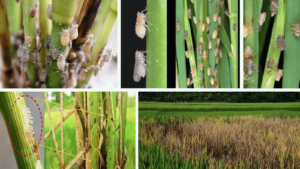
Brown planthoppers often appear in large numbers during the panicle emergence to grain-filling and ripening stages. They gather in clusters on the underside of rice leaves, sucking sap from the plant. This leads to: Yellowing leaves;Weak, stunted plants; Poor growth and shortened rice stalks.
In cases of high infestation, entire fields may experience “hopperburn” — where the leaves dry out, turn reddish-brown, and the rice plants die in patches, severely impacting yield.
Vectors of Ragged Stunt and Black-Streaked Dwarf Diseases
In addition to causing direct damage, brown planthoppers are major vectors of two serious viral diseases: Ragged stunt disease ; Rice black-streaked dwarf disease. What’s especially concerning is that both nymphs and adults can transmit these viruses — even after molting. A single planthopper can transmit both viruses simultaneously in less than one hour of feeding on a healthy rice plant.
Although the viruses are not transmitted through eggs, their incubation period within the insect is only about 7–10 days, which allows disease outbreaks to spread rapidly and widely.
Once infected, rice plants show symptoms such as:
Stunted growth
Twisted or curled leaves
Silvery or pale discoloration
And most critically, the damage is irreversible — as there is currently no specific cure for these diseases.
Impact on Yield and Grain Quality
Brown planthoppers cause severe damage to both yield and grain quality. Infested fields often result in shrivelled, underdeveloped grains with poor filling, leading to lower productivity and reduced economic value.
In cases where grassy stunt or ragged stunt disease outbreaks occur, entire fields can be completely lost.
What’s more concerning is that both healthy and diseased tillers can appear on the same rice clump, making it difficult for farmers to detect the infection in time and apply proper control measures.
Effective Brown Planthopper Management for Farmers
To minimize damage caused by brown planthoppers, farmers need to apply a comprehensive set of control measures tailored to local farming conditions. Below are the recommended integrated approaches combining cultural, biological, and chemical methods — for optimal results:
Cultural Practices: Field Sanitation, Proper Sowing Schedules, and Resistant Varieties
These are proactive steps farmers can take at the beginning of the crop season to create unfavorable conditions for brown planthopper development:
- Thorough field sanitation after each harvest: Remove weeds along field borders and ditches, and destroy volunteer rice plants, which serve as ideal shelters for planthoppers.
- Sow uniformly and in sync with the recommended planting schedule issued by agricultural authorities to avoid peak planthopper infestations.
- Avoid overly dense planting; transplant at proper spacing, apply balanced NPK fertilizers, and do not overuse nitrogen.
- Prioritize using brown planthopper-resistant rice varieties and short-duration cultivars to reduce the exposure time to pests.
- Apply supplemental fertilizers that boost plant resistance, such as anti-planthopper foliar fertilizers or biological fertilizers, to strengthen plant health and enhance tolerance against pests and diseases.
Biological Control: Using Natural Predators
This is an environmentally friendly method that helps control brown planthoppers naturally and sustainably:
- Farmers are encouraged to promote the presence of natural predators such as predatory spiders, ladybugs, and water striders, which help naturally reduce planthopper populations.
- You can also release ducks, tilapia, or silver carp into the rice fields when the crop is 4–5 weeks old to feed on young planthoppers. Limit the use of chemical pesticides during the early stages of the crop to protect the natural predator ecosystem and allow beneficial species to thrive.
Using Fertilizers to Boost Plant Immunity
Applying specialized fertilizers is an effective solution to strengthen the rice plant’s natural resistance, thereby improving its ability to withstand pests and unfavorable environmental conditions. The specialized fertilizer range from Viet Nga Agri is formulated with a balanced nutrient profile, tailored to each growth stage of the rice plant. These products help promote healthy development and effectively prevent pest outbreaks, including brown planthoppers.
- Stage 1 (8–12 days after sowing): Apply 10–15 kg/1,000m² of NPK 22-15-8 + TE Stimulates tillering and increases the number of productive shoots.
- Stage 2 (18–22 days after sowing): Apply 12–17 kg/1,000m² of NPK 22-15-8 + TE Supports healthy plant development and ensures balanced nutrition.
- Stage 3 (40–45 days after sowing): Apply 15–20 kg/1,000m² of NPK 19-7-25 + TE Provides additional potassium to strengthen panicles, enlarge grains, and reduce lodging risk.
This product line is compatible with modern fertilizer application technologies, helping farmers save costs, improve crop care efficiency, and increase yield and grain quality.
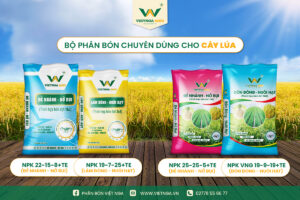
Explore more about the specialized rice fertilizer product line from Phân Bón Việt Nga here!
Combine Prevention Based on Economic Thresholds – Minimize Pesticide Resistance
This is a key principle for helping farmers sustainably control brown planthoppers and avoid overreliance on chemical pesticides:
- Integrated pest management should be applied, combining multiple methods rather than depending solely on chemical control, in order to prevent pesticide resistance in planthopper populations.
- Farmers should regularly monitor their fields, stay updated on pest developments, and strictly follow recommendations from agricultural authorities to ensure timely and effective control — applied at the right time and in the right way.
Conclusion
Though small in size, brown planthoppers pose a major threat to rice production if not identified and controlled in time. By understanding their characteristics and damage patterns, and applying the right control methods including cultural practices, natural predators, and selective pesticide use based on economic thresholds — farmers can take a proactive approach to protecting their crops. Viet Nga Agri hopes that the information shared in this article will serve as a useful guide, helping farmers feel more confident in production and achieve a bountiful, sustainable harvest.
Related news
The Role of Base Fertilization in Soil Improvement and Enhancing Agricultural Fertility
Measures to Improve and Treat Saline Soil
Winter-Spring rice blast warning – Don’t let leaf and flower burns rob you of your golden crop

Rice Sowing Techniques for the Early Winter–Spring Crop
What Is Slow-Release Fertilizer? Learn How to Use It Effectively