ACCOUNTING WITH FURTHER FARMERS
Winter-Spring rice blast warning – Don’t let leaf and flower burns rob you of your golden crop
Rice blast disease is one of the most dangerous pests on rice plants, causing leaf burn, ear burn and seriously reducing yield if not detected early. Unstable weather, thick fog and high humidity in the early stages of the 2025-2026 Winter-Spring crop are creating favorable conditions for fungal diseases to arise and spread rapidly. In this article, Viet Nga Fertilizer will help farmers learn about the causes, signs of recognition and guide on how to effectively prevent and treat rice blast disease in the Winter-Spring crop, helping to protect healthy rice fields and ensure a bountiful harvest.
Causes and conditions for the occurrence of rice blast disease in the winter-spring crop
Rice blast disease (leaf blight, neck blight) is caused by the fungus Pyricularia oryzae – a fungus that exists year-round on straw residue, weeds, and seeds left over from the previous crop. Under favorable conditions, this fungus will quickly develop, spread, and cause widespread damage.
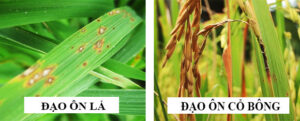
Weather is favorable for disease outbreaks
This year’s Winter-Spring crop started with erratic weather conditions: early morning fog, light sunshine during the day, cold nights creating a prolonged humid environment.
High humidity combined with large temperature difference between day and night is the “ideal environment” for blast fungus spores to develop and penetrate young leaves.
Farming practices that can lead to disease outbreaks
Some common farming methods of farmers such as thick sowing, heavy nitrogen fertilization at the beginning of the season, poor water retention or continuous sowing of the same variety make the rice plant grow quickly but the stem and leaves are weak and soft, easily attacked by fungi.
In particular, excess nitrogen fertilization not only makes rice leaves greener but also reduces resistance, making diseases spread faster and more difficult to control.
Rice varieties susceptible to disease
Varieties with high yield, beautiful grains but high susceptibility to disease such as OM18, OM5451, OM4900, Dai Thom 8, IR50404… are often attacked by blast early, especially at the tillering – heading stage.
Therefore, right from the beginning of the Winter-Spring crop, farmers need to closely monitor weather conditions, visit fields regularly and adjust fertilizer amounts and sowing density appropriately to minimize the risk of rice blast disease.
Signs of rice blast disease
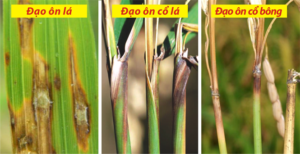
Blast disease usually appears first on the leaves, then gradually spreads to the neck and seeds. Farmers can recognize it through some of the following characteristics:
- On leaves: diamond-shaped spots appear, gray-white in the middle, reddish-brown or purple-brown on the outside. When humidity is high, the lesions spread, linking together into large patches, causing the leaves to burn and droop.
- On the rice neck: often occurs strongly at the flowering stage, milky, causing the rice neck to burn brown, the rice to be white or broken, directly affecting yield. Easily confused with leaf burn due to strong sunlight or lack of potassium.
- However, rice blast spots have a clear diamond shape, dark brown edges, and spread quickly, while burns due to sunlight or nutrition are often dry and brittle, spread unevenly and do not spread widely.
Impact of blast disease on yield
Rice blast disease not only directly damages the leaves and rice flowers but also seriously affects the growth and development of the entire rice field. When the fungus attacks, the leaves become dry and acrid, reducing the ability to photosynthesize, making the plants weak, slow to grow and prone to falling.
If not detected and treated promptly, the disease can reduce productivity by 15-50%, even causing total loss of fields in heavily infected areas, especially in prolonged wet weather.
Not only that, having to spray pesticides many times to control the disease will increase production costs, affect the health of users, as well as negatively impact the soil environment and water resources. Therefore, Viet Nga Fertilizer advises that farmers should proactively prevent diseases early, take care of healthy plants from the root, combine reasonable farming methods and use balanced fertilizers to protect productivity right from the beginning of the season.
Effective measures to prevent rice blast disease
Winter-Spring rice blast disease can be prevented with proper cultivation and fertilization techniques and early detection of the disease. Below are some effective measures to prevent and treat rice blast disease.
- Prevention is key with steps such as selecting disease-resistant varieties, treating seeds before sowing, thin sowing, regulating water, etc.
- Balanced fertilization helps plants to be strong and healthy, with thick leaves, increasing resistance to fungal diseases.
- Keep fields weed-free, limit the source of spread
- Visit fields regularly.
When detecting the first blast spots on leaves, farmers need to promptly treat them with the right technique and medicine to prevent the disease from spreading.
- Stop fertilizing immediately to avoid making the disease worse.
- Spray the fungus treatment according to the “4 rights” rule: right medicine, right dosage, right time and right way of use.
- After 5-7 days, you should fertilize or spray foliar fertilizer to help the leaves become thick, hard and recover quickly after the disease.
Solutions to accompany Viet Nga Fertilizer
With more than 32 years of accompanying farmers, Viet Nga Fertilizer always brings optimal solutions to help increase plant resistance, reduce the risk of pests and diseases and recover quickly after being infected with rice blast disease. The quality of products that have achieved the title of High Quality Vietnamese Goods 2025 voted by consumers is proof of the quality of Viet Nga Fertilizer products.
Specialized product set provides balanced nutrition to help plants grow strong branches, strong plants and healthy leaves.

The right combination of farming methods, reasonable nutrition, and quality products will help farmers protect productivity and maintain a bumper crop in the 2025-2026 Winter-Spring crop.
Conclusion
Although winter-spring rice blast disease is dangerous, it can be prevented and controlled effectively when farmers proactively visit their fields regularly, detect it early and apply the right technical measures. Balanced fertilization, combined with quality specialized products from Viet Nga Fertilizer will help the rice plants stay healthy, increase natural resistance and minimize the risk of disease.
Related news
The Role of Base Fertilization in Soil Improvement and Enhancing Agricultural Fertility
Measures to Improve and Treat Saline Soil
Winter-Spring rice blast warning – Don’t let leaf and flower burns rob you of your golden crop

Rice Sowing Techniques for the Early Winter–Spring Crop
What Is Slow-Release Fertilizer? Learn How to Use It Effectively