ACCOUNTING WITH FURTHER FARMERS
Instructions on how to grow chili peppers properly for high yield
Chili is a plant that is easy to grow, easy to care for, bears fruit all year round and is commonly used in daily meals. Not only serving family needs, growing chili also brings high economic value if farmers know how to apply the right techniques. In this article, Viet Nga Fertilizer will guide farmers on how to grow chili at home or in the garden in a simple, effective way and suitable for actual growing conditions.
How to grow chili peppers simply and effectively
Chili is a perennial herb with many branches and leaves growing alternately. Chili is usually long, pointed and has many different shapes and colors depending on the variety. In addition to being used as a spice, chili also contains capsaicin – an active ingredient that helps relieve pain, reduce inflammation and increase resistance. In addition, chili also contains many minerals such as iron and copper, which are very good for blood production and help prevent anemia.

Below are instructions for growing chili peppers from Viet Nga Fertilizer – detailed, easy to understand, and can be applied right at home.
Preparation before planting
- Seed selection: Farmers should choose chili varieties suitable for the intended use such as chili, buffalo horn chili, chili… Prioritize seeds with clear origin, disease-free.
- Planting soil: Chili is suitable for loose, nutritious, well-drained soil. Avoid waterlogged soil or soil that has been planted with chili for many consecutive crops.
- Tools: Can be planted on beds, in pots, trays or foam boxes depending on the area. Prepare composted organic fertilizer or Viet Nga Fertilizer to help the plant grow strong from the beginning.
- Temperature and light: Chili plants grow well at temperatures of 25–30°C and need at least 5–6 hours of sunlight per day.
How to grow chili peppers from seeds
- You need to soak the seeds in warm water (ratio 2 boiling – 3 cold) for about 6-8 hours to soften the seed coat and stimulate germination.
- After soaking, you incubate the seeds in a damp cloth or cotton for 1-2 days until the seeds crack.
- While incubating the seeds, you should prepare the soil by mixing compost, rice husk ash and sawdust in the appropriate ratio to make the soil loose and rich in nutrients.
- To kill pathogens in the soil, you should dry the soil in the sun for 7-10 days before using.
- After the soil has been treated, you sow the seeds in soil pots or nursery trays, ensuring each seed has the right distance and depth, then water lightly every day to keep moist.
- When the seedlings are about 10-15cm tall and have 3-4 true leaves, you can plant them in large pots or directly in the garden beds.
Chili pepper growing techniques
Chili pepper is a type of chili that grows strongly, can withstand the sun well, is easy to grow and produces spicy fruit. To grow this type of chili effectively, farmers need to note:
- Plant the plants 40-50cm apart to give them room to grow.
- Place stakes to support the plants when they start to grow to avoid them falling over.
- After about 10 days of planting, you should fertilize with composted manure combined with phosphate fertilizer.
- You should spray biological products periodically to prevent leaf miners, mealybugs and other common diseases.
How to grow chili peppers from fresh fruit
- First, you should choose red, ripe chili peppers that are free of pests and diseases to ensure the quality of the seeds.
- After choosing the right fruit, you should split the fruit lengthwise and take out the seeds inside.
- You need to wash off the slimy layer surrounding the seeds, then let the seeds drain before sowing.
Treated chili seeds can be planted in the same way as composted seeds. This is a simple and easy-to-implement planting method, especially suitable for those who want to grow chili in small quantities at home.
How to grow chili peppers in pots
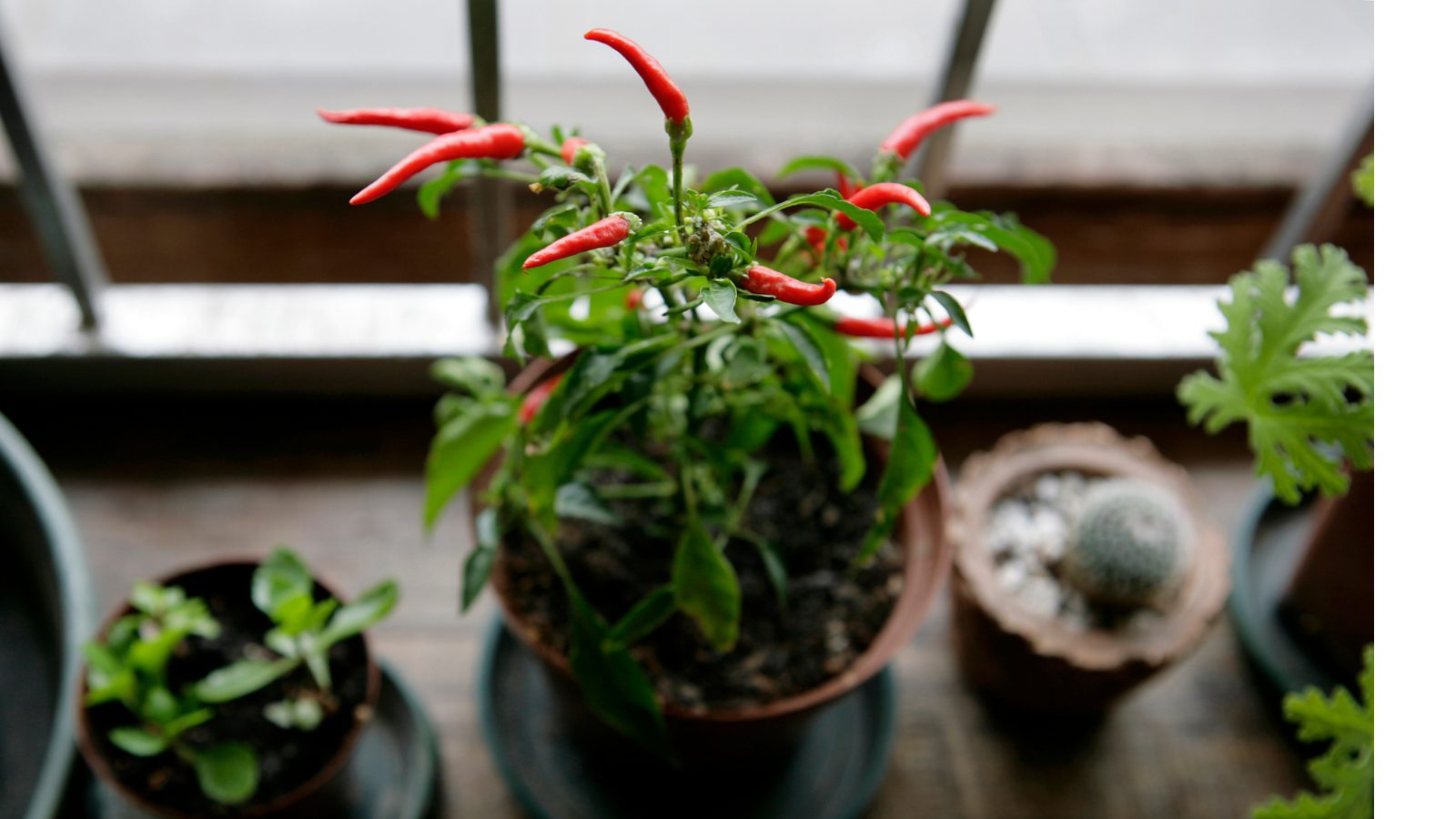
- Growing chili in pots is a suitable solution for people who do not have much garden space.
- When choosing a pot, you should prioritize the type with a minimum height of 30cm and drainage holes to avoid waterlogging.
- The soil should be mixed evenly in a ratio of 3 parts soil, 1 part organic fertilizer and 1 part rice husk ash to ensure the necessary porosity and nutrition for the plant.
- Each pot should only have one plant to ensure enough space for growth and nutrition for each chili root.
- You need to water regularly 1-2 times a day, keeping the soil moist but not stagnant.
- The pot should be placed in a place with direct sunlight for at least 5-6 hours a day for the plant to photosynthesize well and grow strongly.
How to care for chili plants
- Watering: Maintain moderate humidity, avoid waterlogging. In the dry season, water 1-2 times/day, in the rainy season, good drainage is required.
- Fertilizing: Fertilize periodically every 15-20 days with NPK fertilizer or organic fertilizer.
- Branch pruning: When the tree is about 30cm high, farmers should prune weak branches, keeping only 2-3 main branches.
- Disease prevention: Regular monitoring is needed to detect early diseases such as anthracnose, leaf curl, thrips, fruit borers, etc. Biological products can be used for safe prevention and treatment.
Chili harvest
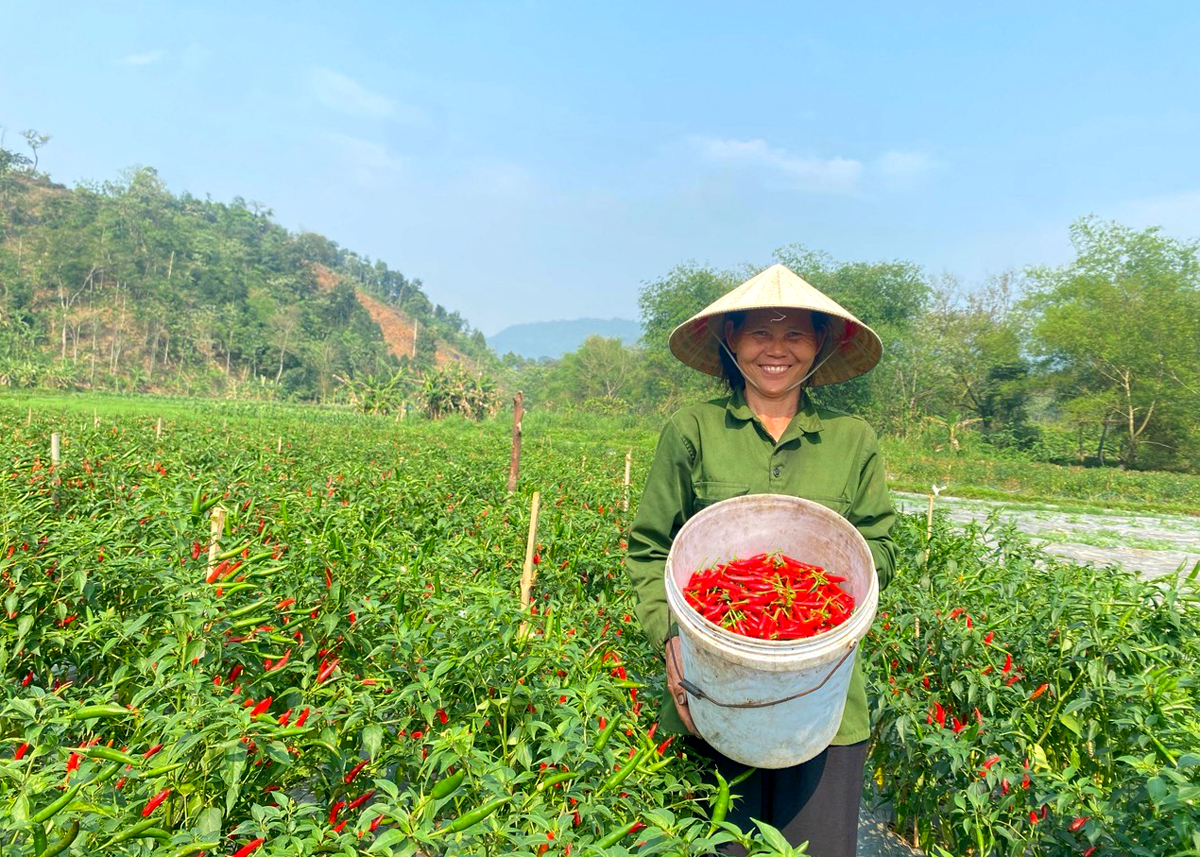
Normally, after about 70-90 days from planting, the chili plant will begin to produce its first crop of fruit. When harvesting, farmers should choose the time in the early morning, when the weather is still cool to limit heat shock to the plant. During the picking process, use scissors to cut the fruit stem instead of breaking it by hand, to avoid breaking the branch or damaging the plant. If properly cared for with water, fertilizer and pest control, chili plants can produce fruit continuously for 3-4 months, helping farmers have a stable source of income for a long time.
.jpg "Instructions on how to grow chili peppers properly for high yield")
Chili classification
- Chili pepper: Small fruit, very spicy, suitable for use as a spice.
- Buffalo horn pepper: Large fruit, mildly spicy, often used in cooking or as an ornamental plant.
- Bell pepper: Not spicy, has many colors (red, yellow, green), suitable for decorating dishes.
- Chili pepper: Fruit grows straight up, is spicy, easy to grow and produces a lot of fruit.
Depending on weather conditions, soil and usage needs, farmers can choose suitable varieties to grow for the highest efficiency.
Conclusion
How to grow chili peppers at home or in the garden is not too complicated, but for the plant to grow healthy, produce fruit evenly and have the right spicy aroma, farmers need to pay attention to the stages of choosing seeds, preparing the soil and taking care of it regularly. With specific instructions from Viet Nga Fertilizer, farmers can completely successfully grow green chili pepper beds with fruit all year round. Don’t forget to contact Viet Nga Fertilizer immediately to receive the earliest incentives on fertilizers for your garden.
Related news
The Role of Base Fertilization in Soil Improvement and Enhancing Agricultural Fertility
Measures to Improve and Treat Saline Soil
Winter-Spring rice blast warning – Don’t let leaf and flower burns rob you of your golden crop

Rice Sowing Techniques for the Early Winter–Spring Crop
What Is Slow-Release Fertilizer? Learn How to Use It Effectively