ACCOUNTING WITH FURTHER FARMERS
Winter-Spring Rice Crop Management Process – Things You Shouldn’t Miss
The winter-spring crop is known as the most profitable crop season due to the climate being suitable for the growth and development of rice plants. According to data from the Ministry of Agriculture and Rural Development, the area planted during the winter-spring crop season is estimated to account for 40% of the year’s total and yield approximately 46% of the year’s rice production.
Because of the importance mentioned above, Viet Nga Fertilizer would like to send some notes on the rice cultivation process for the Winter-Spring crop season to farmers.

1. What should be considered when preparing the land for the winter-spring crop?
If conditions permit, farmers should irrigate their fields or use pesticides to eliminate remaining pathogens and weeds in the soil.
In addition to familiar land preparation processes such as hoeing, loosening the soil, and fertilizing to enhance soil nutrients, farmers should note the following when preparing the land for the winter-spring rice crop:
– Weed control: spray with weed bait, after mowing let the soil rest for about 7 days then spray again.
– After harvesting the rice, the straw needs to be processed to clear the field. Currently, farmers are encouraged to sell the straw for other agricultural activities such as mushroom cultivation, animal feed, etc., instead of burning it as in the old farming practices.
– Tilling and leveling the soil facilitates good drainage and prevents water from accumulating in the field during cultivation.
2. Which rice variety should be chosen for cultivation during the winter-spring rice crop season?
Viet Nga Fertilizer encourages farmers to choose certified rice varieties from reputable seed sources for the Winter-Spring crop, especially those suitable for the weather conditions of this season. Here are some suggested varieties for farmers.
2.1. Dai Thom 8 rice variety
– Growing time: 95 – 100 days.
– The leaves are upright, the panicle is large, suitable for the weather conditions of the winter-spring season.
– Prices are usually higher than other varieties during the winter-spring season.
– Rice yield in the winter-spring season: 8-10 tons/ha, in the summer-autumn and autumn-winter seasons: 6-8 tons/ha.
– Height: 90 – 100cm, depending on the farmer’s cultivation methods. The plant grows particularly well when using specialized fertilizers from Viet Nga.
– Suitable for the soil conditions in the Mekong Delta region.
2.2. OM 18 rice variety
– Growing time: 95 – 100 days.
– Height: 100 – 110cm, depending on the farmer’s cultivation methods. The plant grows particularly well when using specialized fertilizers from Viet Nga.
– Rice yield in the winter-spring season: 7 – 8 tons/ha.
– For good branching, suitable for the soil of the Mekong Delta region, tolerant of saline and acidic soils with a salinity of 3-4‰.
– This variety has characteristics of resistance to rice blast disease and good tillering ability.
2.3. OM 5451 rice variety
– Growing time: 90 – 95 days
– Height: 95 – 100 cm, depending on the farmer’s cultivation methods. The plant grows particularly well when using specialized fertilizers from Viet Nga.
– Rice yield in the winter-spring season: 6-8 tons/ha, in the summer-autumn and autumn-winter seasons: 5-6 tons/ha.
– Tolerates saline and acidic soils fairly well (2-4‰), less susceptible to yellow dwarf and leaf curl diseases. Suitable for all three growing seasons.
– This variety is characterized by very low susceptibility to brown planthoppers and other pests.
2.4. ST24 rice variety
– Growing period: 102 – 105 days.
– Height: 100 – 110cm, depending on the farmer’s cultivation methods. The plant grows particularly well when using specialized fertilizers from Viet Nga.
– Rice yield in the winter-spring season: 8-9 tons/ha; summer-autumn and autumn-winter seasons are not suitable for sowing due to heavy rainfall.
– It has good tolerance to acidity and salinity, making it adaptable to drought and saltwater intrusion conditions.
– The ST24 variety has better resistance to brown planthoppers due to its larger straw size.
2.5. ST25 rice variety
– Growing time: 90 – 95 days.
– Height: 100 – 110 cm, depending on the farmer’s cultivation methods. The plant grows particularly well when using specialized fertilizers from Viet Nga.
– Rice yield in the winter-spring season: 6-7 tons/ha, in the summer-autumn and autumn-winter seasons: 5-6 tons/ha.
– Tolerates saline soils fairly well (2-4‰), is salt-tolerant, resistant to blast disease (level 2) and bacterial leaf blight, has a strong stem that provides good lodging resistance.
3. Preventing common pests and diseases during the Winter-Spring crop season.
Besides favorable weather conditions for rice growth, pests and diseases also thrive in this rice crop. Therefore, during the planting and cultivation process of the winter-spring rice crop, farmers should pay attention to preventing pests and diseases.

3.1. Thrips
– Developmental phase: 7 – 15 days after birth.
– Symptoms: Yellowing leaves, appearing in clusters; if widespread, the entire field will show yellowing. When thrips attack, they eat away at the leaf veins. Damaged young rice leaves show many small white spots, but in severe cases, the leaf tips dry out, turn yellow, and curl up, gradually spreading to the entire leaf. Thrips damage occurs 1-2 weeks after transplanting the rice.
3.2. Rice Gall Midge
– The weather during the winter-spring season is suitable for the development of this type of insect.
– They will attack during the 10-15 or 20-25 day after sowing, especially on full moon days. The rice stem borer larvae move to the middle part of the sheath and stem, then penetrate the growing tip. Here, the larvae bite and cause damage, secreting toxins in their saliva, causing the base of the rice sheath to swell and become hollow inside. Subsequently, the rice shoot develops abnormally into a tube-like structure resembling an onion leaf, with a pale white color. The onion-like tube appears about a week after the borer infestation. Damaged rice tillers do not produce panicles, but the rice may sprout new shoots to compensate. Rice stem borer only causes damage from the seedling stage to the end of tillering, before heading.
3.3. Brown planthopper
Brown planthoppers, which typically appear during the heading stage and later in the growing season, cause significant damage and are the causative agents of rice yellow dwarf and leaf curl diseases. Short-winged planthoppers appear when there is ample food in the field, laying more eggs, usually in the middle of the season during the active tillering stage to the heading stage. Long-winged planthoppers appear when the field runs out of food (rice in the ripening stage before harvest, or when the field is scorched). Brown planthoppers suck sap from diseased rice plants, carrying the virus in their bodies and then transmitting the disease to healthy rice plants, spreading the infection. Brown planthoppers carrying the disease can transmit it until they die.
3.4. Stem borer
In one crop cycle, the pest typically develops in two generations. The first generation of larvae causes wilting of rice tillers during the tillering stage (10-25 days after sowing). While the damage is not severe, this poses a risk for the second generation. The second generation usually emerges at 40-60 days after sowing, coinciding with the heading and flowering stages of the rice crop. This is the period when serious damage to rice yield occurs. It is crucial to take timely action to prevent outbreaks starting from the first generation.
3.5. Rice Panicle Mite
Rice spider mites increase in population rapidly due to their high reproductive rate and short life cycle. They can cause yield losses of up to 60%. They damage all parts of the rice plant, including leaf sheaths, leaf veins, and panicles, causing stunted heading. They also damage the husks of rice grains and panicles, sometimes burrowing into the tissue cavities of the sheath to cause damage, mainly during the seedling, tillering, and heading stages. Initial damage appears as small, rectangular spots, ranging from yellowish-white to light yellow, later turning dark brown or black. These spots cluster together in patches of light brown, dark brown, or black, resembling “gua sha” marks (scraping marks).
3.6. Rice blast, rice blast disease
– Conditions for disease development: The disease thrives in warm, sunny weather, overcast skies, high humidity, fog, dense planting, or excessive nitrogen fertilization…
– Rice blast disease develops and causes severe damage under conditions of high humidity and prolonged rain. In sunny conditions with low humidity, the damage caused by the disease is negligible.
– Damage potential: The disease causes damage right from the seedling stage, but becomes severe from the tillering stage onwards. The disease will develop and spread rapidly over a wide area and can cause crop failure if not controlled promptly. Most rice varieties are susceptible to the disease.
3.7. Sheath blight
– Conditions for outbreak: This is a frequent pest in rice fields, affecting all rice varieties and planting cycles. The disease develops and causes severe damage under conditions of high humidity, high temperature, and deep flooding.
– Damage potential: The disease causes damage from the late tillering stage onwards, peaking from the heading stage to the flowering stage, especially in areas with unbalanced intensive farming practices such as dense planting and excessive nitrogen fertilization. The disease causes patchy blight, resulting in yield loss.
3.8. Early Ripening Yellow Leaf Disease
– Conditions for outbreak: Rice yellow leaf disease usually causes severe damage in healthy, densely sown rice fields or those heavily fertilized with nitrogen. Fields near orchards that are shaded from the morning or afternoon sun are more severely affected. The disease is more likely to attack long-duration varieties and fields with insufficient sunlight.
– Damage potential: The disease usually appears and causes damage from 7-10 days before flowering until harvest. When the disease first appears on the leaves, it manifests as small, crescent-shaped spots 1-3 mm in size, yellow-orange in color. Later, from the lesions, the disease causes leaf tissue to die, forming long streaks extending to the leaf tip, also yellow-orange in color.
– Identification: Multiple lesions may appear on a single leaf. Severe disease may cause spots to appear on the leaf sheath. In severely affected fields, the entire field appears bright yellow, resembling ripening rice, hence it is also known as early ripening yellow leaf disease.
3.9. Rice Kernel Smut
– How to identify: Rice blast disease is easy to recognize; farmers can see brown-black spots on the grains, and the rice grains do not fill evenly. The period when rice plants are most susceptible to the disease is from flowering to milk ripening, and this occurs during months with low temperatures, high humidity, heavy rainfall, and many rainy days.
– Potential harm: Rice grain discoloration is a general term referring to the phenomenon where rice grains have dark husks that change from brown to black; from speckled black to completely black husks; this affects both rice grains and empty grains (without grain) during the stage when the rice plant is still in the field before harvest. Rice grain discoloration affects yield and grain quality, and also causes damage to the following crop.
3.10. Bacterial leaf blight
– How to identify: The disease develops on both edges of the leaf, initially appearing from the tip of the leaf, then gradually spreading downwards along both edges.
– Conditions for outbreak: The disease usually develops and causes damage in the late stages of the growing season. After thunderstorms accompanied by strong winds during the rice heading and ripening period, conditions are favorable for the disease to develop and spread rapidly. Fields with excessive nitrogen fertilization, high humidity, and fog are also contributing factors.
4. Weed management during the winter-spring season – fundamental principles
Besides pests and diseases, weeds are also a major cause of damage and thrive during the winter-spring crop season, threatening crop yields at the end of the season. In the winter-spring rice cultivation process, farmers need to pay attention to the following principles:
4.1. Common types of weeds
In rice paddy fields, weeds such as barnyard grass, foxtail grass, hairy grass, water sedge, water hyacinth, and other similar species often appear. These weeds harm the soil’s ability to absorb nutrients and fertilizer, causing damage to yields and, in the long term, having more severe consequences.
4.2. Methods for preventing and eradicating common weeds in the field.
– For the winter-spring crop, thorough soil cleaning and preparation are necessary before sowing. This should be done 10-15 days before sowing to remove weed residues and limit the spread of pests and diseases.
– Seeds: Use standard, purebred seeds to minimize weed contamination of the seeds.
– Water: Regularly check the water level in the rice fields at each stage of rice growth. When irrigating the rice fields, farmers should use a screen to prevent weed seeds and pollen from entering the fields.
– Herbicides: It is necessary to correctly identify the type of weed to use the appropriate, safe, and effective herbicide.
In addition, farmers should also clear weeds along the edges of rice fields and canals, and cut grass to prevent seeds from falling to the ground and spreading into cultivated fields.
5. Balanced fertilization methods for healthy rice crops during the Winter-Spring season.
Fertilizing crops, especially rice, requires a balanced approach according to each stage of root, stem, and leaf development. In a rice crop, there are three fertilization periods: the first, second, and third. The cultivation process for the winter-spring rice crop is similar to other crops in terms of fertilization periods:
5.1. Phase 1
Rice plants grown in the 10 NSS stage are currently developing their roots, stems, and leaves. At this time, farmers should use specialized fertilizers from Viet Nga Fertilizer Company with main components of Nitrogen and Phosphorus such as NPK 20-15-7+TE, NPK 22-15-8+TE, etc., to create a foundation for the tillering stage.
5.2. Phase 2
Rice plants 18-20 days after sowing are in the tillering stage. This fertilization determines the number of effective tillers and the coverage of the rice plants in the field, thereby reducing weeds.
5.3. Phase 3
During the period from 38 to 42 days after sowing, farmers should use specialized fertilizers from Viet Nga Fertilizer Company with the main components being Nitrogen and Potassium, such as NPK 19-7-25+TE, NPK 15-5-20+TE, NPK 15-7-20+TE, etc. This will help differentiate the panicle and the number of spikelets on the ear, creating a foundation for future yield.
Currently, Viet Nga Fertilizer offers specialized fertilizers that have been researched and balanced in nutrients, suitable for the growth characteristics of rice plants. Farmers are invited to view more information on our Specialized Fertilizer Products page, or call our hotline 02778 55 66 77 for advice.
6. Protecting rice yield during the Winter-Spring crop season.
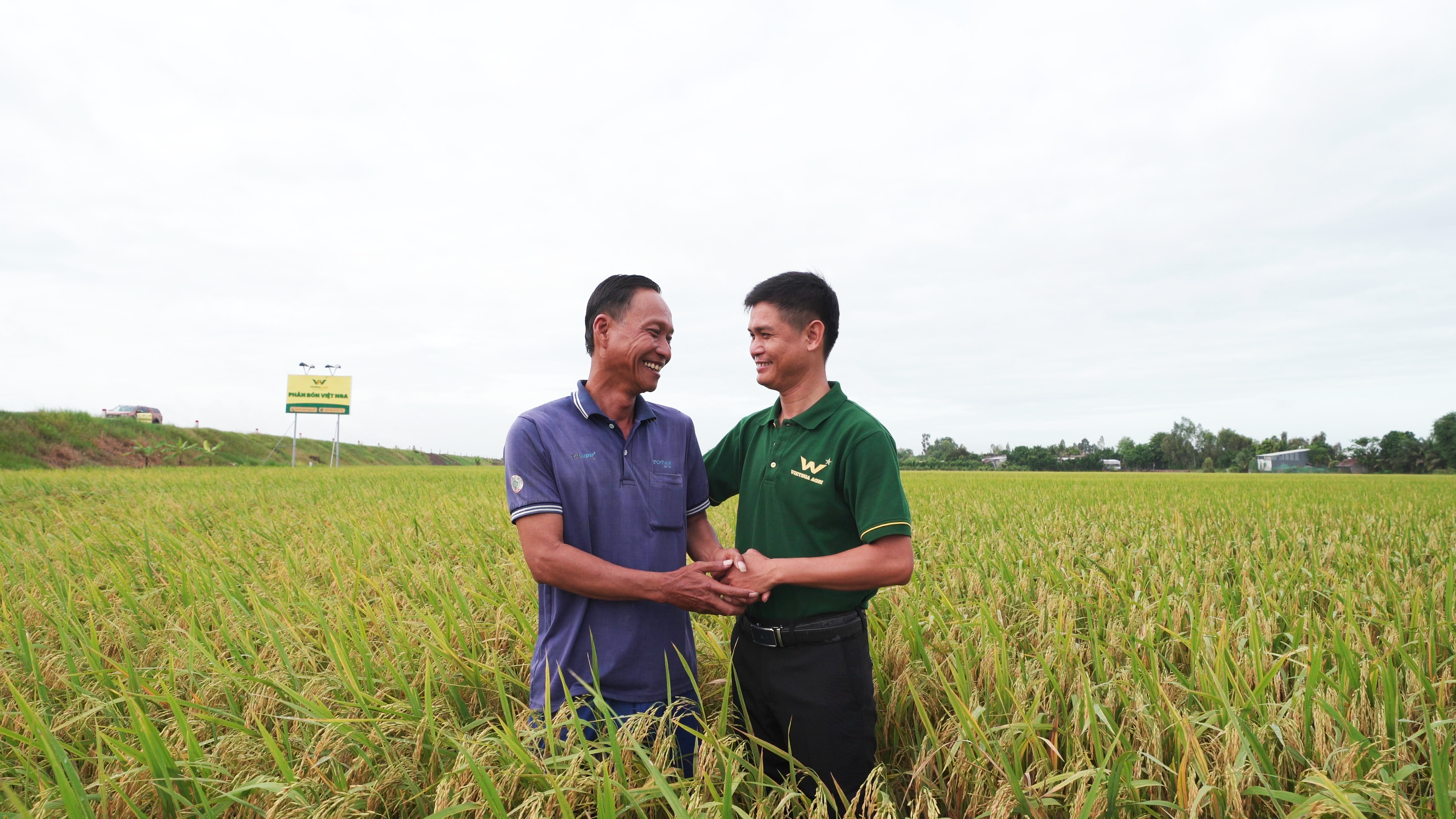
To achieve the highest productivity and efficiency in farming, farmers should regularly monitor pest and disease situations to implement effective solutions. Simultaneously, they need to follow the recommended procedures regarding dosage and timing of treatments.
6.1. 3 days before sowing
Proceed with spraying golden apple snails using common active ingredients such as Niclosamide or bait formulations like Metaldehyde,…
6.2. Tillering stage
It is necessary to prevent diseases such as blast, bacterial infections, brown spot, etc.
– Brown spots: appear in fields with nutrient deficiencies. If the condition is severe, the plants will lack resistance to pests and diseases later on. Therefore, farmers need to re-fertilize with appropriate and balanced amounts according to the plant’s growth stage.
– Rice blast: During this stage, rice blast appears in fields with excessive nitrogen fertilization or in foggy or rainy weather. Farmers should spray according to recommendations with pesticides containing active ingredients such as Tricyclazole, Isoprothiolane, etc.
6.3. Heading stage
It is extremely important for yield to protect the flag leaf and ensure subsequent yields. Farmers should prevent leaf-rolling caterpillars, blast disease, and bacterial infections by fumigating with products containing the following active ingredients:
– Leaf-rolling caterpillars: Chlorfenapyr, Permethrin,…
– Rice blast: pesticides containing active ingredients such as Tricyclazole, Isoprothiolane, etc.
– Bacteria: medications containing active ingredients such as Bronopol, Kasugamycin, etc.
6.4. Pre-flowering stage
This stage is crucial for the overall crop yield. Rice is often susceptible to diseases such as grain discoloration, rice blast, leaf roller, stem borer, and bacterial infections. Farmers should use commercially available products containing the following active ingredients to control these diseases:
– Rice blast: Azoxystobin, Difenoconazole,…
– Rice blast: Isoprothiolane, Propiconazole,…
– Bacteria: Bronopol,…
6.5. The flowering stage
Farmers should regularly inspect their fields to prevent rice crops from being attacked by diseases such as grain discoloration, blast, and bacterial infections. At the same time, spray with beneficial pesticides containing similar active ingredients as before the heading stage.
Above is everything farmers need to know about the rice cultivation process during the Winter-Spring season. We wish all farmers successful cultivation, a bountiful harvest, and good prices!
Related news
The Role of Base Fertilization in Soil Improvement and Enhancing Agricultural Fertility
Measures to Improve and Treat Saline Soil
Winter-Spring rice blast warning – Don’t let leaf and flower burns rob you of your golden crop

Rice Sowing Techniques for the Early Winter–Spring Crop
What Is Slow-Release Fertilizer? Learn How to Use It Effectively