ACCOUNTING WITH FURTHER FARMERS
Guide to Applying Single Fertilizers in the Summer-Autumn Rice Crop

The summer-autumn crop season usually begins in early April and ends around the end of August. However, in some areas, due to geographical characteristics, farmers may start the season later, waiting for rain.
This season, farmers often feel that the soil is no longer fertile due to the alluvial deposits, so they are more cautious about applying single fertilizers. Therefore, the traditional practice of using single fertilizers will receive more attention from farmers.
Understanding this, Viet Nga Fertilizer would like to share the timing and techniques for applying single fertilizers to rice crops during the Summer-Autumn season to achieve the highest yield and efficiency. Please click on each image to see the appropriate timing and type of fertilizer!
1. First application (8 to 10 days after sowing)
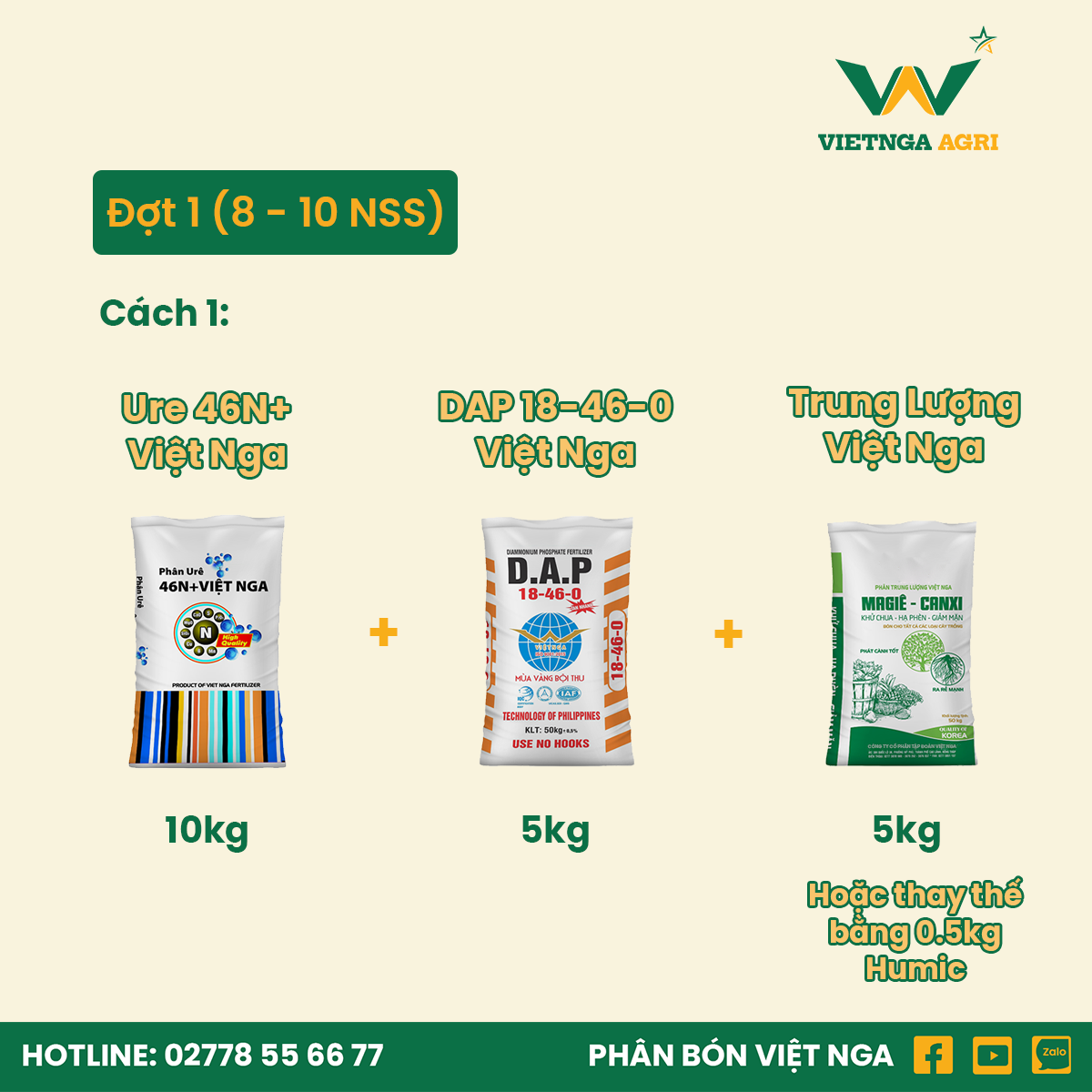
This is the stage when the rice plant begins to develop, forming 3 to 4 leaves. During this stage, there are two fertilization methods for farmers to consider:
– Method 1: 10kg of Urea 46N+ Viet Nga + 5kg of NP/DAP 18-46 Viet Nga fertilizer combined with 5kg of medium-nutrient fertilizer Viet Nga or 0.5kg of humic acid (if available) for a large area (1,300m2)
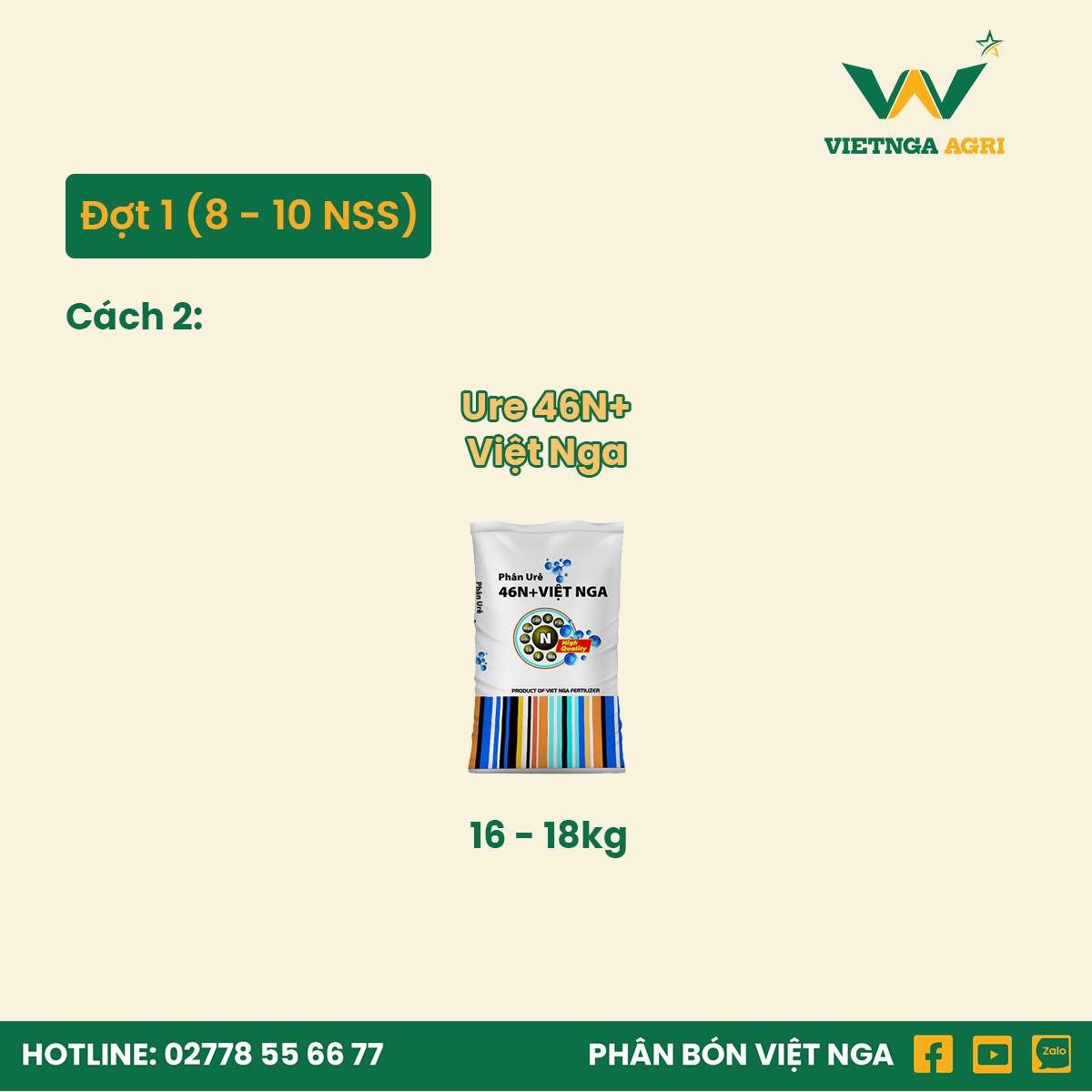
– Method 2: 16-18kg of Urea 46N+ Viet Nga for large-scale work (1,300m2)
Nitrogen and phosphorus are particularly important nutrients needed during the early stages of rice plant growth. They help the plant increase its resistance to hot weather and extreme temperature fluctuations like those we are experiencing today.
In addition, Viet Nga’s micronutrient fertilizer is specifically used to reduce acidity, salinity, and balance soil pH.
Humic acid helps plants increase their ability to absorb nutrients through a healthy root system.
2. Second planting (18 to 22 days after sowing)
After the first fertilization, depending on the soil type, farmers should observe their fields to adjust the fertilizer dosage for the second fertilization accordingly.
– Application method: 5kg of Urea 46N + Viet Nga fertilizer + 10kg of NP/DAP 18-46 Viet Nga fertilizer for a large area (1,300m2).
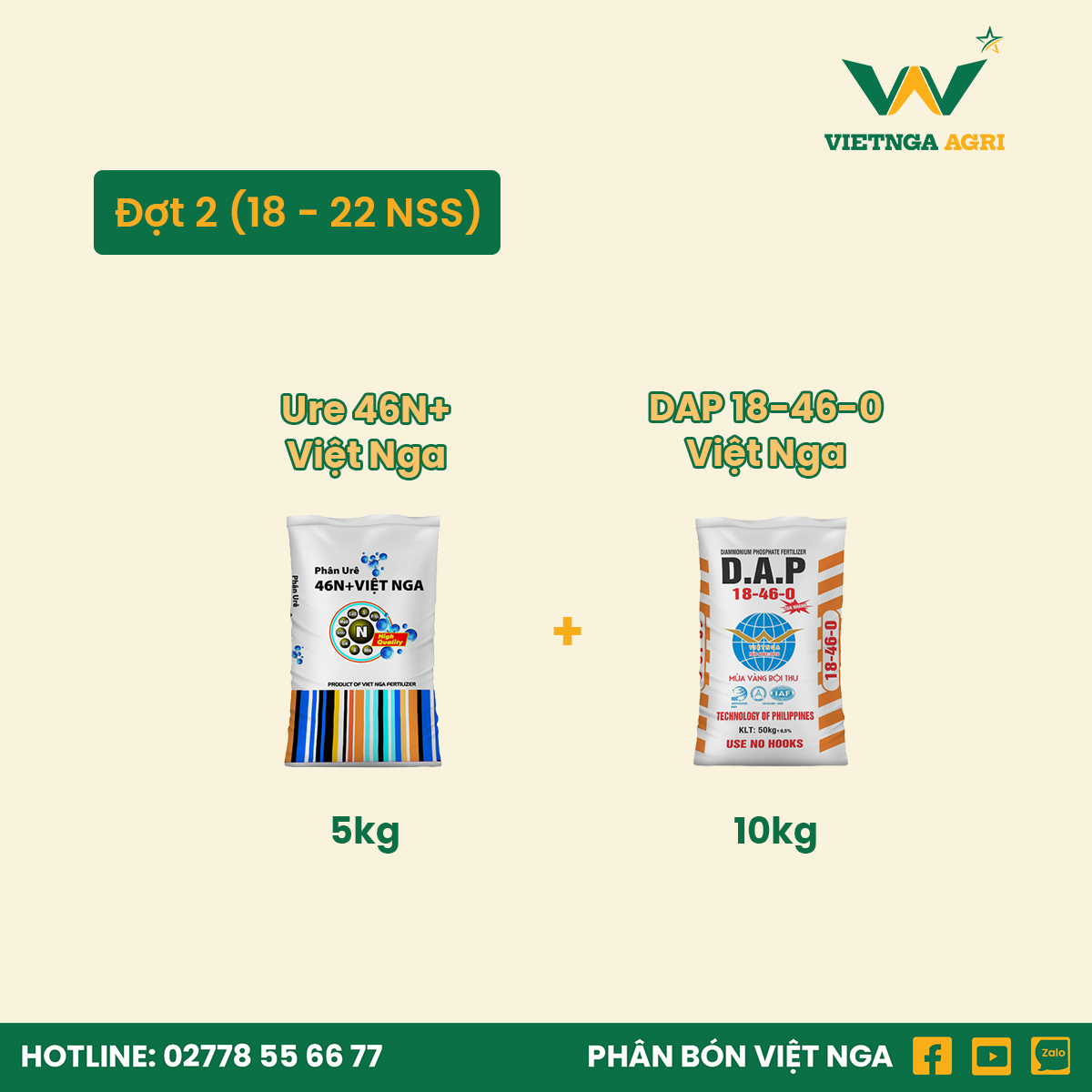
This is the time to apply fertilizer to help rice plants tiller. During this stage, rice plants need a high content of effective phosphorus to promote strong tillering and increase resistance to pests and diseases. Strong tillering will result in a better number of effective rice tillers and higher yields at harvest.
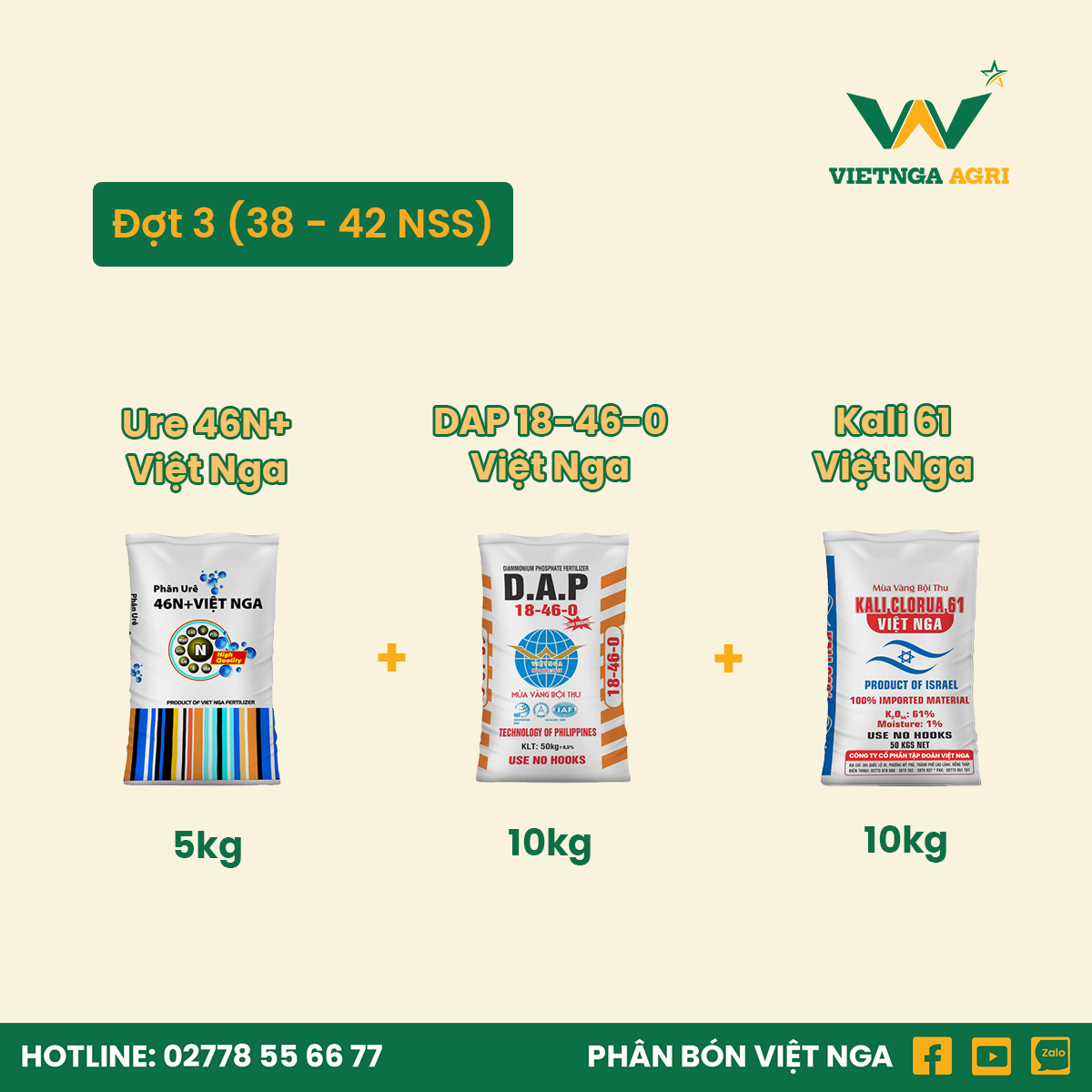
3. Third cropping (38 to 42 days after sowing)
Farmers should inspect their rice fields and only apply fertilizer when the panicles are 1-2mm long. This is the most crucial fertilization for the final yield, because at this stage the rice plant has differentiated its flower buds and needs nutrients for their development. If fertilized too early, the flower bud differentiation process will be hindered; if fertilized too late, there will be insufficient nutrients to nourish the flower buds. It is also the most difficult fertilization because it requires monitoring many parameters to determine the timing and amount of fertilizer.
– Fertilization method: 5kg Urea 46N+ Viet Nga + 2kg NP/DAP 18-46 Viet Nga + 10kg Potassium Viet Nga.
4. Third supplementary cropping (46 to 52 days after sowing)
Depending on the rice variety, farmers may need to add more fertilizer to ensure sufficient nutrients for the tillering stage.
– Application method: 2kg of Urea 46N+ Viet Nga + 3kg of Potassium Viet Nga.
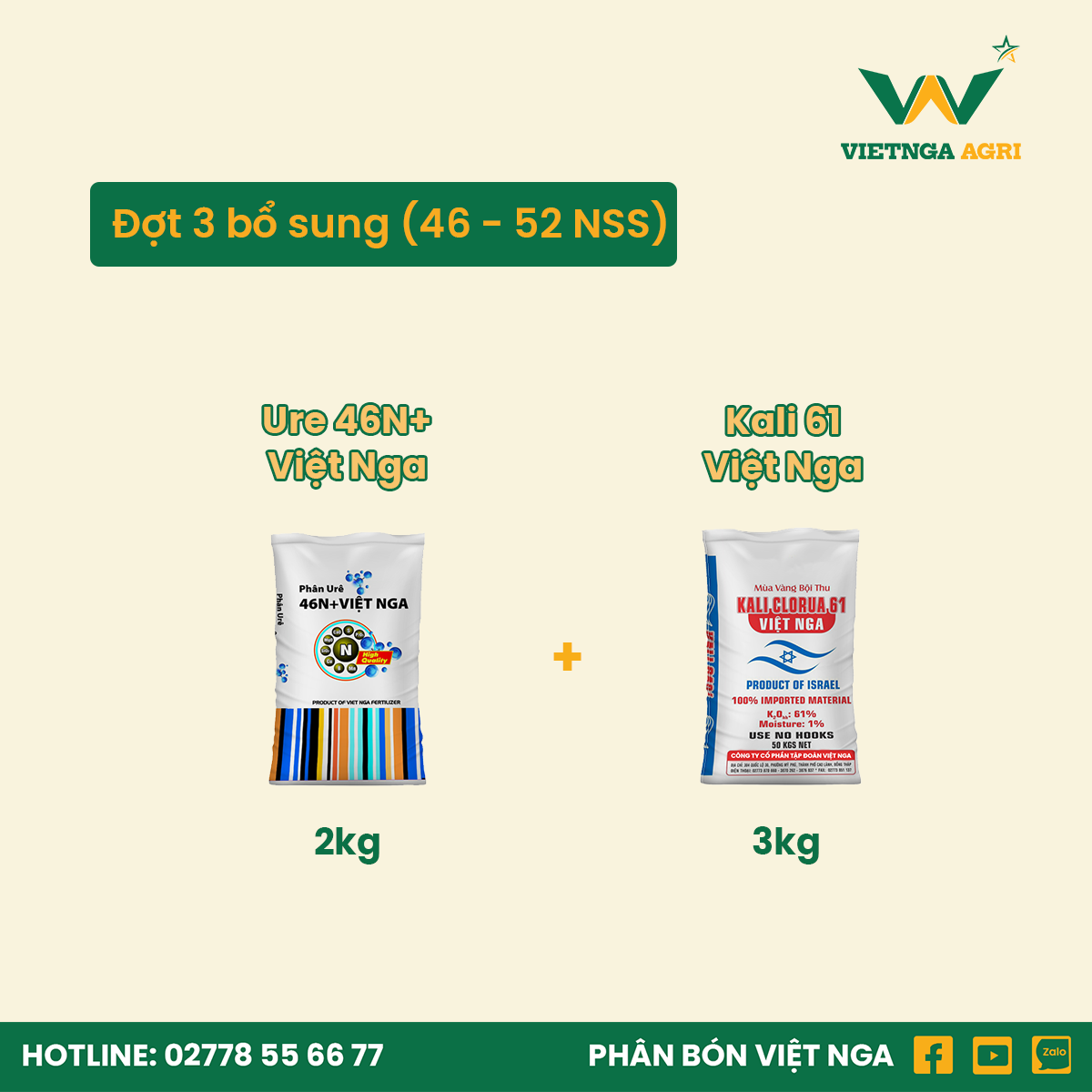
Supplementing with sufficient and effective nitrogen and potassium helps strengthen the plant, preventing lodging, promoting even flowering, large panicles, large ears, and firm grains, thereby increasing yield and achieving the best results. Besides applying fertilizer at the right time and in the right dosage, farmers should regularly inspect their fields to detect and control pests and diseases promptly.
5. Một số lưu ý khác khi bón phân đơn vụ hè thu
– The dosages in this guide are for large-scale projects (1300m2).
Farmers should regularly inspect their fields to detect pests and diseases and treat them as early as possible.
– The best time to apply fertilizer is early morning or late evening, when there is little rain and the temperature is low.
– Avoid fertilizing on rainy days or during midday when the temperature is high, as this will reduce the effectiveness of the fertilizer.
– The amount of fertilizer will depend on the weather and soil conditions of each area. Farmers can call the hotline 02778 556677 for the fastest support!
Viet Nga Fertilizer wishes our valued dealers successful sales and farmers a bountiful harvest with good prices.
Related news
The Role of Base Fertilization in Soil Improvement and Enhancing Agricultural Fertility
Measures to Improve and Treat Saline Soil
Winter-Spring rice blast warning – Don’t let leaf and flower burns rob you of your golden crop

Rice Sowing Techniques for the Early Winter–Spring Crop
What Is Slow-Release Fertilizer? Learn How to Use It Effectively