ACCOUNTING WITH FURTHER FARMERS
Techniques for Planting and Fertilizing Durian Trees During the Base Fertilization Stage
Below are some noteworthy planting techniques from Viet Nga Fertilizer to help farmers plant and care for durian trees correctly, ensuring healthy growth and superior yields.
1. Techniques for planting and caring for 170-200 trees/ha
One of the techniques for growing durian trees in the Mekong Delta is to build mounds 1m high, with a top diameter of 1m and a base diameter of 1.5m (mound dimensions can vary depending on the elevation of the raised bed relative to the groundwater level of the planting area).
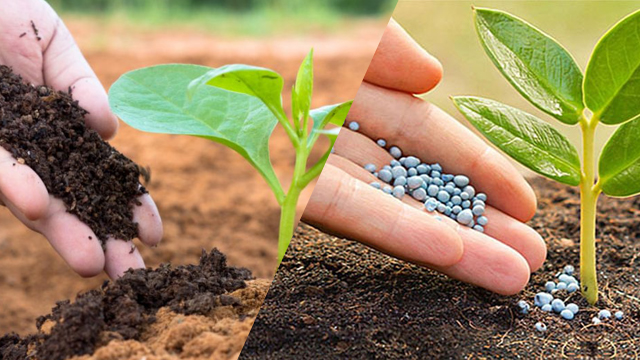
2. Base fertilization
– Apply 800g-1kg of Norwegian Gronn 75% OM organic fertilizer to the planting hole on the mound (do not use mineral organic fertilizers containing urea or sulfites, as the seedling’s roots are weak and very sensitive to chemical fertilizers). Then, place the seedling in the pot, spread Norwegian Gronn 75% OM organic fertilizer around the root ball, and cover with soil.
– Use stakes to secure the seedlings to prevent them from being shaken and broken by the wind, and to avoid damaging the young roots.
– Apply COC 85WP to the base of the plants every 20 days for 2-3 months (this is a copper-based fungicide containing Copper Oxychloride to kill fungi and bacteria, as the roots of the transplanted seedlings are often damaged and susceptible to fungal diseases). Keep the soil moist, avoiding excessive dryness or compaction. It is best to grow grass on the soil (e.g., water spinach, as its shallow roots are easy to manage).
3. Planting techniques during the seedling stage
This period spans from the time the seedlings are planted until they are ready for flowering, averaging 4-5 years of age.
From 1-3 months after planting: use Gronn 75% OM Norwegian Organic Fertilizer
– Dosage: 150-200g/plant (apply once every 15-20 days).
*Note: During this stage, the plants are being moved from the nursery to the field, so they are susceptible to weather shock. Using chemical fertilizers can easily kill them.
For children aged 4-24 months: use organic fertilizer + NPK 30.10.10 + DAP Viet Nga (ratio 1:1:1).
– Dosage: 200-500 grams per plant (apply once every 15-20 days).
For children aged 24-60 months (2-5 years): Organic + NPK 30-10-10 + DAP Vietnam-Russia (ratio 1:1:1)
– Dosage: 500-2000 grams per plant (Apply once a month)
*Note: Gradually increase fertilization as the plant grows. During this stage, the plant needs plenty of nitrogen and phosphorus for root, stem, branch, and leaf development, and less potassium. Therefore, use NPK 30.10.10 combined with a high-phosphorus DAP formula. HC helps loosen the soil, retain moisture, preserve mineral nutrients for the plant, and provides a favorable environment for beneficial microorganisms to thrive.
4. Points to note during this phase
– It is necessary to spray insecticides against aphids (green leafhoppers), leaf miners, thrips, and red spider mites on the plants according to the new shoot cycle. Start spraying every 7-10 days when the new shoots emerge (farmers call this “breaking the husk”) until all the leaves have fully developed (silky leaves).
– Disease control measures include spraying once a month, targeting both fungi and bacteria.
– To increase effectiveness, different medications should be rotated to prevent drug resistance.
Note regarding stem canker disease: inspect the orchard between 7-8 am, as this is the easiest time to detect disease symptoms (before the lesions dry). If stem canker is present, scrape the affected area clean and apply a concentrated fungicide to the scraped area. This disease is mainly caused by the Fusarium fungus.
4.1. Some notes on the characteristics of the durian tree.
– As a perennial woody plant, durian prefers tropical monsoon climates, with an optimal temperature of 22-30 degrees Celsius for growth. It can thrive in various soil types: basaltic red soil, clay loam, and alluvial soil in the plains…
– Durian trees prefer moist conditions but cannot tolerate waterlogging. Their soft, brittle wood (similar to kapok wood) makes them susceptible to falling over due to storms and strong winds, and their branches can crack and break when bearing fruit.
– Durian trees particularly prefer sunlight, so they should be planted in a sunny, unshaded area (if shaded, the branches will die, hence the name Durian).
– Ở Việt Nam trồng chuyên canh có ba giống chủ lực: Mothong (Thái Lan), Ri6 (Vĩnh Long), Chuồng Bò (bản địa)
4.2. Propagation methods
Seed propagation, cuttings, and root grafting. Currently, growing trees from root grafts (root grafts) is the main method.
4.3. How to choose seedlings
– Exactly the kind I wanted to plant
– The tree is free from pests and diseases.
– The rootstock must be shiny, free of algae growth, and without traces of old grafts (the graft union should not be sticky), with a rootstock circumference of 10-15cm (equivalent to an adult’s big toe).
– The grafted shoots should be plump, with large, thick, glossy leaves free from pests and diseases.
Farmers should refer to the information provided before planting durian trees to ensure the best results.
Let’s take a look at Part 2: Planting Techniques and Fertilization of Durian Trees by Viet Nga Fertilizer!
Wishing everyone a bountiful harvest and good prices!
Related news
The Role of Base Fertilization in Soil Improvement and Enhancing Agricultural Fertility
Measures to Improve and Treat Saline Soil
Winter-Spring rice blast warning – Don’t let leaf and flower burns rob you of your golden crop

Rice Sowing Techniques for the Early Winter–Spring Crop
What Is Slow-Release Fertilizer? Learn How to Use It Effectively