ACCOUNTING WITH FURTHER FARMERS
What is Net Zero? How to achieve net zero emissions?
Net Zero is a concept that is being widely discussed in the context of increasingly serious climate change. It’s not just a goal, but also a strong commitment from countries and businesses to reduce carbon emissions. So what is Net Zero, why is it important, and what do we need to do to achieve it? Let’s explore this with Viet Nga Fertilizer in the article below.
What is Net Zero?
Net Zero, also known as zero emissions, is the goal that many countries and organizations worldwide are striving for to prevent global climate change. Net Zero is the ideal state where the amount of greenhouse gases (GHGs) released into the Earth’s atmosphere balances the amount of GHGs removed. To put it simply, imagine the Earth as a “GHG bank.” When humans release greenhouse gases into the air (such as CO2 from cars, factories, or other activities), it’s like “withdrawing money” from the bank.
To keep the “bank” from running out, we need to “redeposit” an equivalent amount of greenhouse gases back into the atmosphere, for example through planting trees (since trees absorb CO2). Net Zero means that the total amount of greenhouse gases we release into the atmosphere (withdraw) will equal the amount of greenhouse gases we remove or mitigate (redeposit), thus not increasing the amount of greenhouse gases in the atmosphere.
The Importance of Net Zero
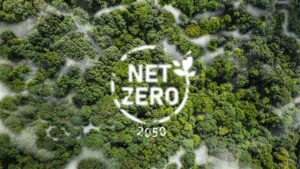
To prevent the adverse effects of climate change, global temperatures need to be limited to 1.5°C above pre-industrial levels. Currently, the Earth is about 1.1°C warmer than it was in the late 1800s, and emissions are expected to continue rising. To mitigate this, as outlined in the Paris Agreement on climate change, emissions need to be reduced by 45% by 2030, aiming for net-zero emissions by 2050.
To achieve this, we need to limit the accumulation of greenhouse gases in the atmosphere and prevent global warming. Electricity generation, industry, transportation, construction, agriculture, forestry, waste, etc., are all sources of emissions. The goal of Net Zero is to ensure that the amount of greenhouse gases emitted from human activities does not exceed the amount the planet can absorb or remove, thereby minimizing the negative impacts of climate change.
Achieving these goals requires comprehensive changes across all economic and social systems, promoting sustainable economic development. Investing in green technologies and renewable energy to reduce emissions not only brings us closer to the goal but also creates new jobs, boosts economic growth, improves air quality, and protects natural resources.

Current status of Net Zero in Vietnam
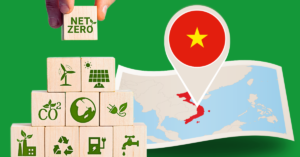
Vietnam has made an international commitment to achieving net-zero emissions by 2050 at the 26th United Nations Climate Change Summit (COP26). Simultaneously, Vietnam has implemented policies and regulations demonstrating strong commitments to reducing greenhouse gas emissions, such as… National Energy Development Strategy with the goal of achieving zero seaweed emissions by 2025, Vietnam aims to consume 175-195 million tons of oil equivalent (TOE) of primary energy by 2030, increasing to 320-350 million TOE by 2045.
Renewable energy is projected to account for 20-25% of total primary energy by 2030, increasing to 60-65% by 2045. To achieve this goal, the government has implemented energy saving measures with a plan to save up to 9% of energy compared to the BAU scenario (the business-as-usual scenario in Vietnam’s energy sector) by 2030 and 20% by 2045.
A smart, safe, and highly efficient power system is also a crucial element of this strategy, as it requires a reliable power source to minimize greenhouse gas emissions and contribute to sustainable development goals, aiming for a zero-emission future. The goal is to reduce greenhouse gas emissions from energy activities by 25% by 2030 and 70% by 2045 compared to the BAU scenario. Thanks to policies encouraging the development of renewable energy, Vietnam has achieved significant results since 2019-2020.
By the end of 2020, the total solar power capacity reached 16,700 MW, placing Vietnam among the top 10 fastest-growing renewable energy nations in the world. In the agricultural sector, Vietnam reduced CO2 emissions by 1.5 million tons in 2020 from crop and livestock activities. In land-intensive sectors like forestry, Vietnam aims to increase forest cover to 42% by 2030, resulting in a reduction of 11.1 million tons of CO2 by 2020. Notably, in the waste treatment sector, 71% of municipal solid waste is treated by landfill, 16% by composting, and 13% by incineration. Finally, the industrial sector reduced CO2 emissions by 4.06 million tons in 2020.
In addition to information about what Net Zero is, you can also refer to related articles such as:
4 measures to achieve net zero emissions
1. Use renewable energy.
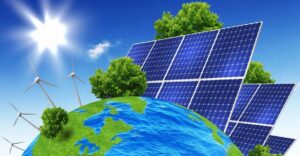
By 2035, renewable energy is estimated to generate 60% of the world’s electricity, and over the past decade, renewable energy growth has been consistent and far exceeded expectations. According to a December 1, 2021 report by the International Energy Agency (IEA), “Renewable energy will account for nearly 95% of global electricity capacity growth by 2026.” IEA Executive Director Fatih Birol also stated: “The record addition of 290 gigawatts of renewable energy in 2021 is another sign that a new global energy economy is emerging.”
2. Technological improvements
Việc sử dụng robot và tự động hóa trong các dây chuyền sản xuất để giảm thiểu công đoạn thủ công sẽ giúp tiết kiệm năng lượng và tăng năng suất. Sử dụng công nghệ IoT (Internet of Things) để giám sát và điều khiển quá trình sản xuất, tối ưu hóa việc sử dụng năng lượng. Xây dựng xanh cũng là một trong những giải pháp bền vững, mang lại nhiều hiệu quả thiết thực cho lợi ích kinh tế lâu dài đến doanh nghiệp.
By minimizing carbon emissions and using resources efficiently, green buildings will reduce the risks associated with climate change, and environmental regulations will become increasingly stringent. According to a 2023 study by the American Council for an Energy-Efficient Economy (ACEEE), green buildings can save up to 30% on energy costs compared to traditional buildings.

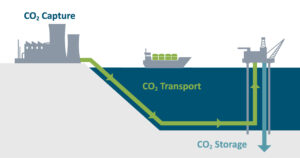
3. Carbon Capture and Storage (CCS)
This is an advanced technology aimed at minimizing greenhouse gas emissions (CO2) and combating climate change. The CCS process involves capturing CO2 from major emission sources such as thermal power plants, then transporting and storing it long-term underground. This technology promises to be one of the effective solutions for reducing CO2 emissions and achieving carbon neutrality in the future.
4. Protect and reforest
Forests are a source of biomass, and reforestation and conservation can create many new opportunities in industry. Tropical and broadleaf forests are large natural “carbon sinks.” As trees grow, they absorb CO2 through photosynthesis and store carbon in their trunks, branches, and roots.
Forest planting and reforestation offer numerous benefits in achieving Net Zero, ranging from absorbing CO2 and reducing greenhouse gases, protecting biodiversity, improving soil quality, to mitigating natural disasters and improving living conditions. It is a powerful and effective natural solution in the fight against climate change.

What is the difference between carbon neutrality and Net Zero?
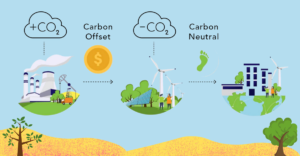
The difference between carbon neutrality and net zero lies in their scope and approach. Carbon neutrality is the goal of achieving zero carbon emissions for a company, product, event, or brand through measuring emissions, minimizing emissions, and offsetting the remainder with carbon offsetting credits.
Meanwhile, Net Zero is a more ambitious goal, applying to the entire organization and its value chain, including reducing indirect emissions from suppliers and consumers. Achieving Net Zero requires not only reducing emissions but also eliminating carbon from the atmosphere, with a focus on reducing emissions rather than simply offsetting them, aiming for net-zero emissions in the long term.
What do businesses need to do to achieve net-zero emissions?
To achieve net-zero emissions, businesses need a multi-pronged approach. They must reduce carbon emissions across all their operations, including managing emissions reductions internally and throughout their supply chains. In addition, businesses also need to offset unavoidable short-term emissions.
It is crucial to have accurate data to understand and mitigate emissions, while also providing transparent, accurate, and objective data reporting. To move beyond carbon neutrality and achieve Net Zero, businesses need to broaden how they think about carbon, including categorizing emissions according to the ranges in the Kyoto Protocol on Greenhouse Gases.

3 Violations in achieving zero net emissions
Scope 1: Direct emissions from sources owned or controlled by the organization, including on-site fuel combustion such as in gas boilers, fleet vehicles, and air conditioning systems.
Scope 2: Indirect emissions arising from the production of electricity, heat, cooling, and steam that the organization purchases and uses.
Scope 3: All other indirect emissions occurring throughout a company’s value chain. These are the most difficult sources of emissions to track and control, but they often account for the largest share of total emissions, including factors related to upstream suppliers, travel, procurement, waste and water treatment, as well as the use and end-of-life stages of the products and services the company produces.
Conclusion
Net Zero is a crucial goal for protecting the environment and building a sustainable future. Viet Nga Fertilizer is committed to supporting farmers with environmentally friendly production solutions, minimizing emissions, and promoting green farming, contributing to a greener planet.
Related news
The Role of Base Fertilization in Soil Improvement and Enhancing Agricultural Fertility
Measures to Improve and Treat Saline Soil

Winter-Spring rice blast warning – Don’t let leaf and flower burns rob you of your golden crop

Rice Sowing Techniques for the Early Winter–Spring Crop
What Is Slow-Release Fertilizer? Learn How to Use It Effectively