
ACCOUNTING WITH FURTHER FARMERS
Why are fertilizer-spreading drones favored by farmers?
In Vietnam and many countries around the world, the use of drones for fertilizer application is no longer uncommon. These drones are excellent partners that help farmers care for their crops easily, efficiently, and cost-effectively. Join Viet Nga Fertilizer in exploring this topic in the following article!
1. What is a fertilizer-spreading aircraft?
Fertilizer sprayers are aircraft designed to spray fertilizers and chemicals onto crops or the ground. They are commonly used to apply organic or chemical fertilizers to various soil types, improving soil fertility. Additionally, spraying fertilizer onto plant leaves allows for rapid nutrient absorption, minimizing loss and waste.
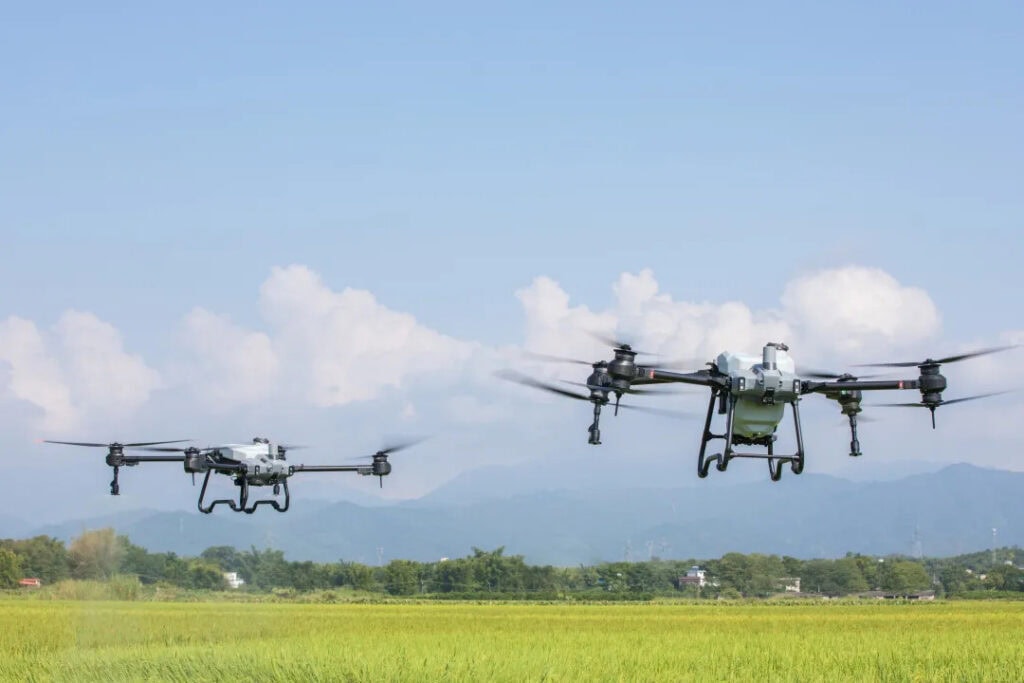
- Fertilizer-spreading drones have many incredibly useful applications.
Applying fertilizer by aircraft is far more efficient than traditional seed-spreading methods. It reduces labor costs, minimizes fertilizer use, and optimizes production and crop care costs.
2. Advantages of fertilizer-spreading aircraft
Agricultural drones that spread fertilizer offer many benefits to farmers, including:
– Saves time and costs: Fertilizer-spreading drones can spray fertilizer over a large area in a short time, saving time and costs during the spraying process.
– Automated operation, labor reduction: Fertilizer-spreading drones are capable of fully or partially automating the fertilizer spraying process. This helps save labor and increase productivity.
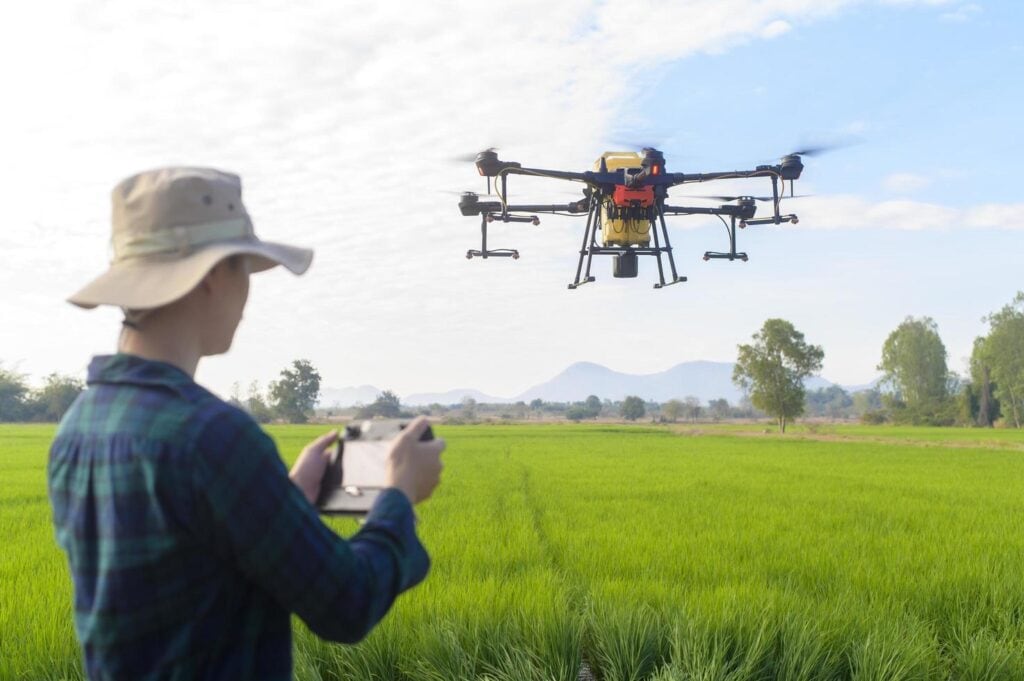
- Controlling a fertilizer-spreading drone is simple.
– Increased crop yield and quality: Fertilizers are sprayed evenly on the soil and plants, helping to increase crop yield and quality.
– Minimizing environmental pollution: Fertilizer-spreading aircraft help minimize negative impacts on the environment, reducing the amount of fertilizer spilled onto the soil and polluting the environment.
– Versatile terrain capability: Fertilizer-spreading aircraft are capable of operating in diverse terrains such as plains, hills, forests, grasslands, and fields, helping to improve production efficiency.
– Increased accuracy and efficiency: Fertilizer-spreading drones are equipped with advanced technologies such as Global Positioning System (GPS) and sensors to help increase accuracy and efficiency in fertilizer application.
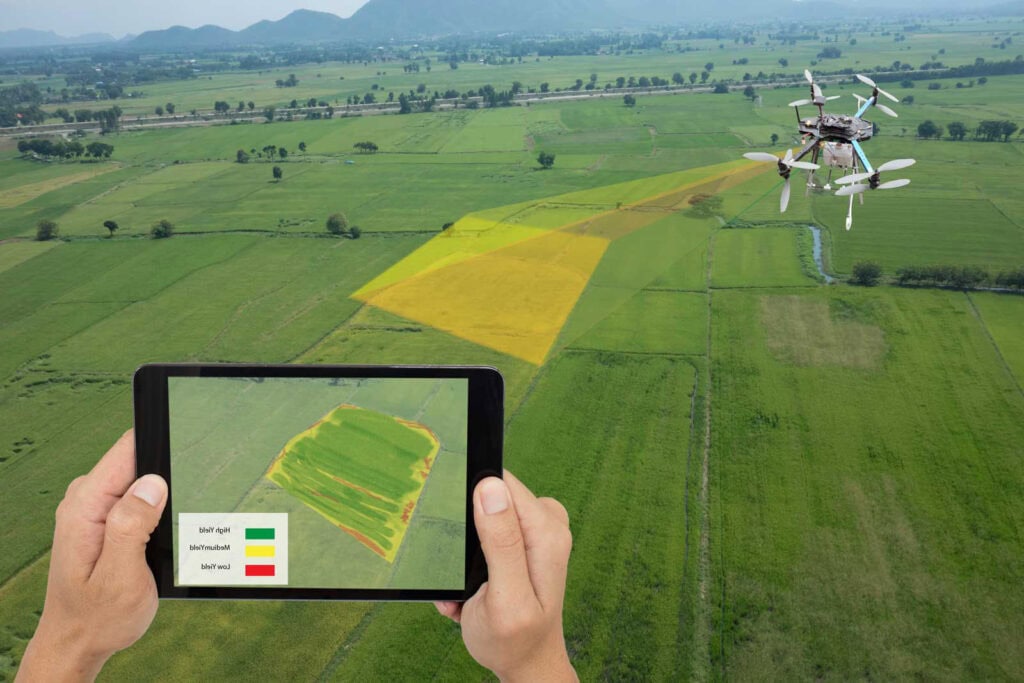
- Fertilizer-spreading drones can accurately identify areas requiring fertilization thanks to advanced GPS systems.
– Easy to operate and maintain: Agricultural fertilizer-spreading drones are designed to be simple, easy to operate and maintain. This saves time and costs for farmers.
– Reduced dependence on weather: Using drones to spread fertilizer reduces dependence on weather conditions and allows farmers to proactively complete their work in a shorter timeframe.
– Reduced fertilizer loss: Fertilizer-spreading drones distribute fertilizer evenly and precisely, reducing fertilizer loss, increasing fertilizer efficiency, and lowering costs for farmers.
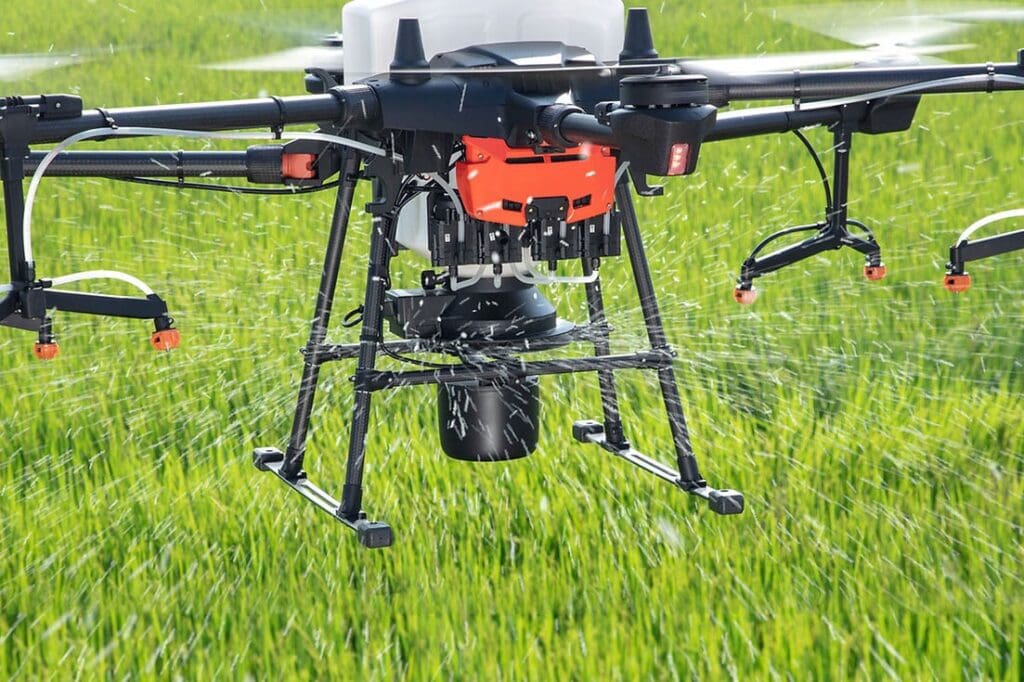
- Fertilizer-spreading aircraft spray fertilizer evenly and precisely, helping to reduce fertilizer loss.
However, the use of fertilizer-spreading drones in agriculture also presents some challenges. One of them is the initial investment cost for the drones and the training of operating technicians.
Furthermore, fertilizing by aircraft should be combined with other methods, such as using organic fertilizers, to ensure maximum effectiveness and safety for humans and the environment.
3. The process of spreading fertilizer by aircraft.
The process of using aircraft to spread fertilizer in agriculture typically includes the following steps:
Prepare fertilizer
Farmers need to prepare the right type and amount of fertilizer needed for their cultivated area.
Prepare the aircraft for fertilizer distribution.
Pilots operating the fertilizer-spreading aircraft need to inspect and fully prepare all parts of the machine, including the fertilizer spreading system, GPS navigation system, controller, and sensors.
Check the weather conditions.
Pilots operating fertilizer-spreading aircraft need to check weather conditions before beginning fertilization. If the weather is windy or rainy, using fertilizer-spreading aircraft may lead to undesirable situations.
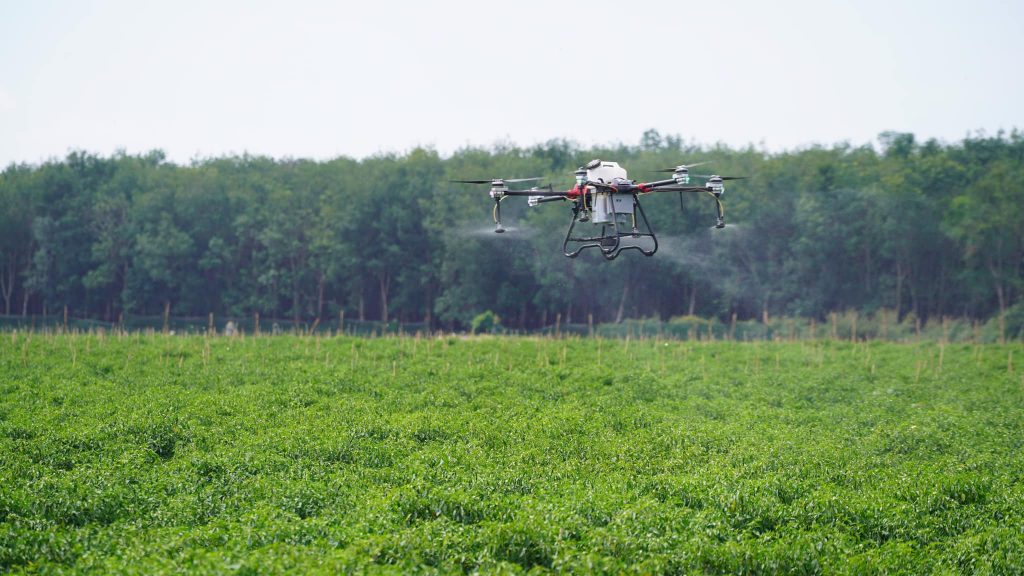
- Make sure to check the weather to ensure the fertilization process goes smoothly.
Carry out the fertilizer application process.gemini
The operator of the fertilizer-spreading drone will control the aircraft over the area requiring fertilization. They will use the control system to ensure the fertilizer is sprayed evenly and in the correct dosage.
Inspection and maintenance of fertilizer spreading aircraft.
After completing the fertilization process, the pilot needs to inspect and maintain the aircraft to ensure it is functioning properly and safely for the next use.
Check effectiveness
Those using drones to spread fertilizer need to monitor the effectiveness of the fertilization process by observing crop development, measuring growth rates and yield. If necessary, they can adjust the amount of fertilizer and the spraying method to increase fertilization efficiency.
4. Notes on using drones for fertilizer application
– Applying fertilizer at the right time will help plants absorb nutrients best, avoiding fertilizer waste. It is best to apply fertilizer in the early morning or late afternoon when the weather is cool and there is little wind to prevent the fertilizer from evaporating or being blown to other areas.
– Choosing the right aircraft for the size of the field will help optimize operating costs.
– Choose a type of fertilizer suitable for aerial application.
At Viet Nga Fertilizer, we offer specialized fertilizers suitable for application using aircraft for spreading fertilizer to crops.
|
|
|
|


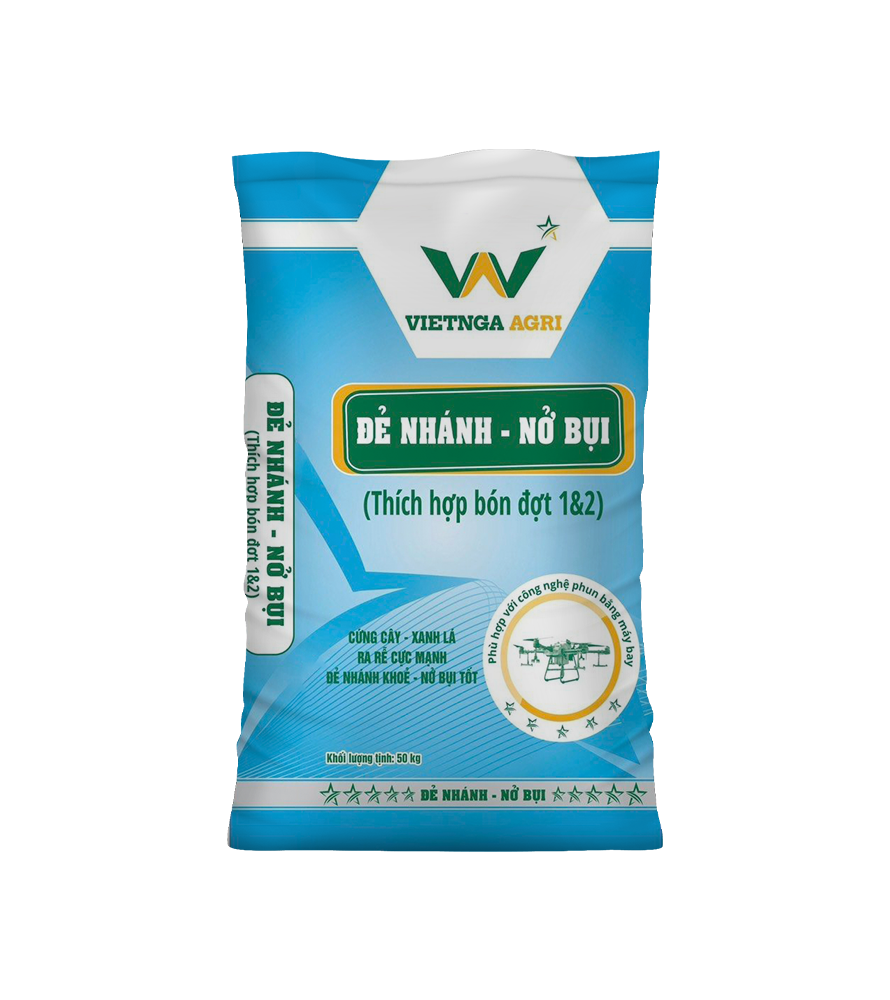
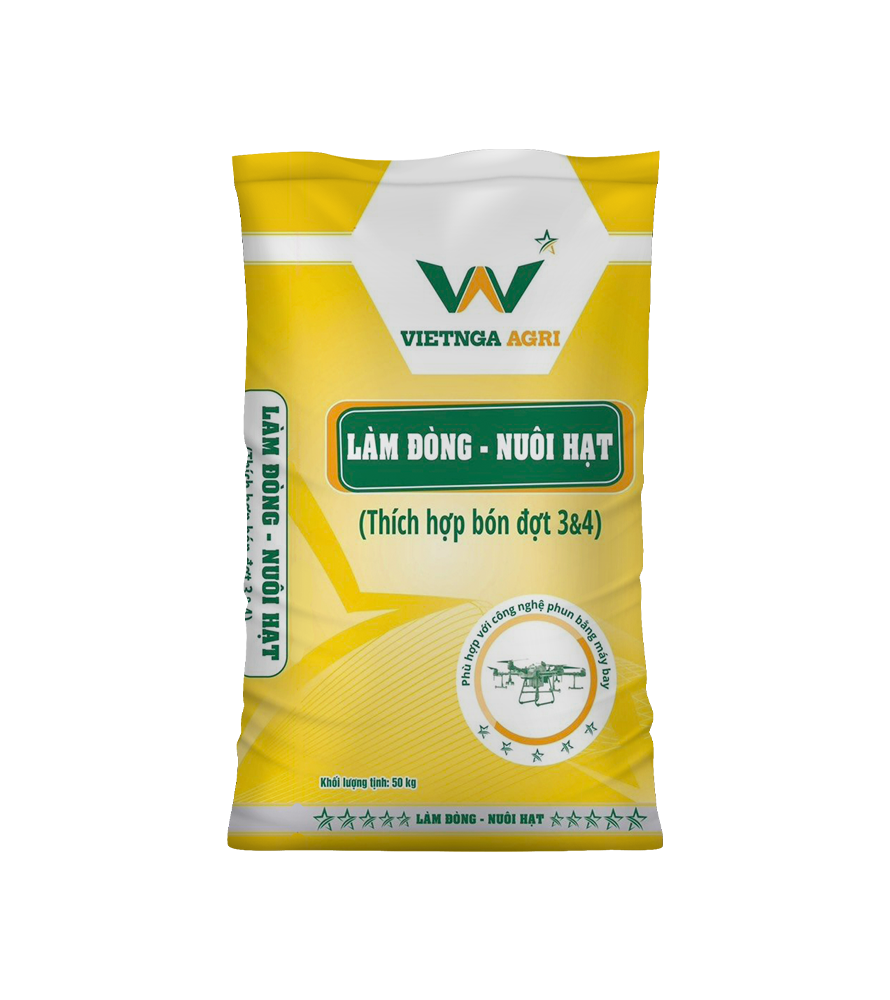
You can check out Viet Nga Fertilizer’s products here!
Conclusion
The use of drones for fertilizer application is becoming increasingly common in modern agriculture due to its significant benefits in terms of efficiency and cost. Compared to traditional fertilization methods, drone application offers many superior advantages, saving labor and time considerably.
Hopefully, through this article, you have gained information about this modern fertilizer application technology using aircraft. Thank you for following !
Related news
The Role of Base Fertilization in Soil Improvement and Enhancing Agricultural Fertility
Measures to Improve and Treat Saline Soil
Winter-Spring rice blast warning – Don’t let leaf and flower burns rob you of your golden crop

Rice Sowing Techniques for the Early Winter–Spring Crop
What Is Slow-Release Fertilizer? Learn How to Use It Effectively