
ACCOUNTING WITH FURTHER FARMERS
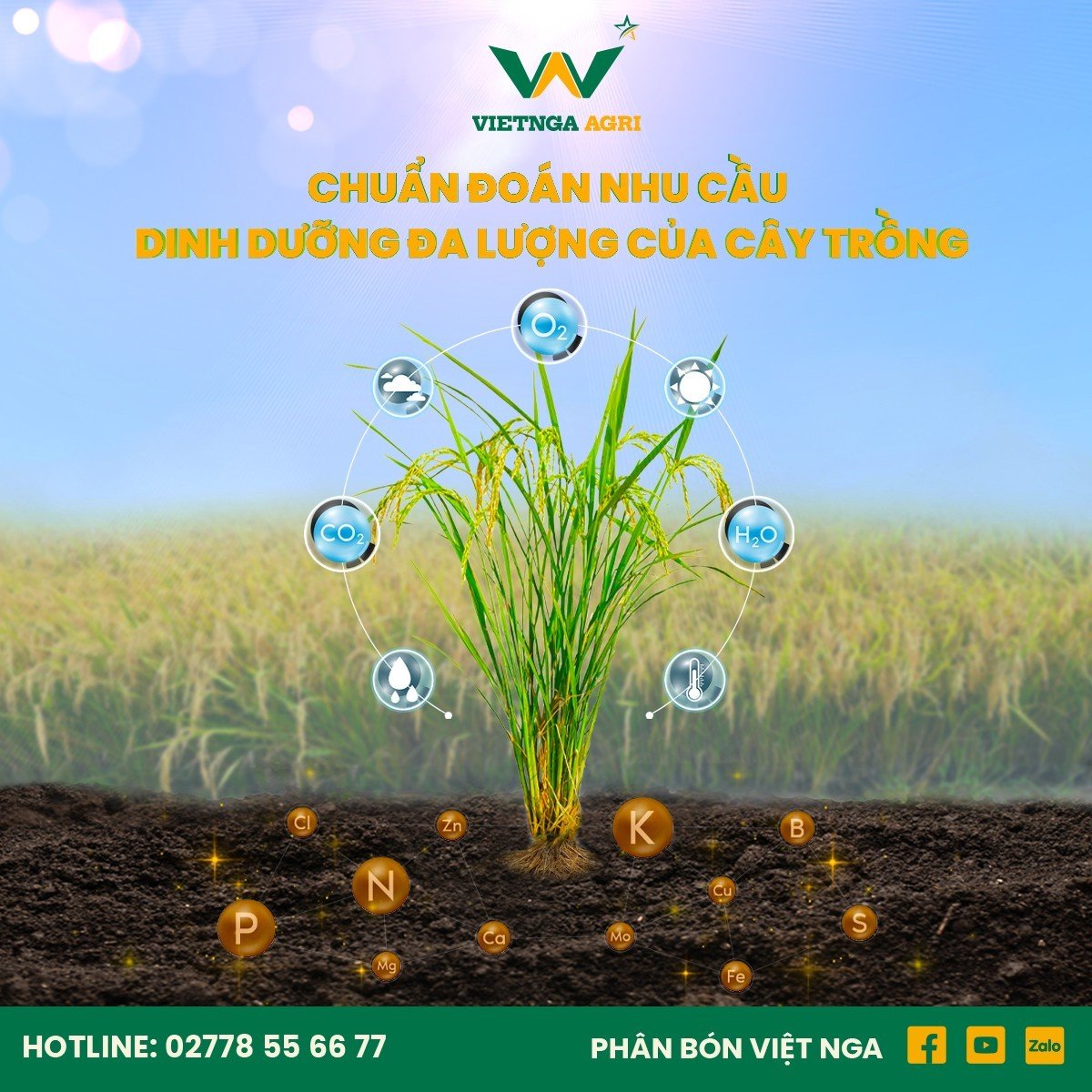
Plant Nutritional Needs Diagnosis
In actual production, the nutritional needs of plants are often not met properly and sufficiently. This is because many factors affect nutrient levels, such as soil type, soil microorganisms, climate, etc. At the same time, fertilizers are an indispensable factor in providing nutrients to plants, greatly determining whether the plants have excess or deficiency of nutrients.
With the naked eye, we can diagnose plant nutrient needs through symptoms displayed on the leaves (in severe cases, symptoms will appear throughout the entire plant). Let’s explore this further with Viet Nga Fertilizer in the article below!
1. Symptoms of macronutrient deficiencies in plants
– Nitrogen deficiency: Clearly manifested in newly emerged leaves. Leaves are smaller than normal and yellowish in color. As they mature, the leaves become increasingly yellow, including the veins, tips, and edges, appearing slightly dry, reddish, with brown spots, and falling off earlier than normal. In addition, the plant grows slowly, is stunted, produces fewer and later-blooming flowers, and yields fewer, smaller, and lower-quality fruits.
– Phosphorus deficiency: Leaves turn dark green or have reddish-brown spots, dry out and fall off prematurely. At the same time, the plant grows poorly, produces fewer flowers, and has smaller fruits.
– Potassium deficiency: The first symptoms usually appear in older leaves because all the potassium has been transferred to the younger leaves. Older leaves gradually turn dark green, with yellow spots or streaks, the tips and edges dry out, then the entire leaf turns yellow and falls off prematurely. These symptoms gradually spread to the younger leaves, causing the plant to grow poorly and become stunted. Furthermore, the roots develop slowly and often rot. Flowers and fruits fall off prematurely, seeds are less plump, and tubers are few, small, and spongy.
2. Symptoms of macronutrient excess in plants
Although fertilizers can provide essential nutrients for plants, overuse can lead to negative effects on crops.
– Excess Nitrogen: The plant is dark green, has many leaves, is weak and easily falls over, is susceptible to pests and diseases, flowers slowly, has shriveled seeds, and the fruit is watery, soft, and prone to rotting.
– Excess Phosphorus: Leaf tips turn black, young leaves change color, old leaves show cracks and breakage, and the plant may dry out and die.
– Potassium excess: Excess potassium leads to magnesium deficiency, and sometimes deficiencies in manganese, zinc, and iron.
3. Solutions from Viet Nga Fertilizer
Currently, Viet Nga offers a wide range of specialized fertilizers that provide a balanced supply of macronutrients for various crops at different stages of their growth.
– If the plant is deficient in nitrogen, you can apply Urea 46+ Viet Nga fertilizer.
– If the plant is deficient in potassium, you can apply Viet Nga Potassium Chloride 61 or Viet Nga Potassium Sulfate fertilizer (depending on the type of plant).
– If the plant is deficient in phosphorus, you can apply DAP 18-46 Viet Nga fertilizer.
Depending on the type of soil and crop, farmers can consider choosing the appropriate fertilizer to achieve the best results. We wish you successful farming and a bountiful harvest.

Related news

The Role of Base Fertilization in Soil Improvement and Enhancing Agricultural Fertility
Measures to Improve and Treat Saline Soil

Winter-Spring rice blast warning – Don’t let leaf and flower burns rob you of your golden crop

Rice Sowing Techniques for the Early Winter–Spring Crop

What Is Slow-Release Fertilizer? Learn How to Use It Effectively