Vietnam is moving closer to operating a carbon market
With significant potential in carbon credit supply, particularly in the agricultural sector, Vietnam is actively implementing the necessary steps to soon operate a carbon exchange.
Vietnam profits from forest carbon credits.
In 2023, for the first time, Vietnam received revenue from forest emission reduction activities. Through the World Bank (WB), Vietnam successfully transferred 10.3 million tons of forest carbon emission reductions (not carbon credits) in the North Central region at a price of US$5 per ton and received the full amount of US$51.5 million.

Currently, these funds are being disbursed to nearly 70,000 beneficiaries and supporting the livelihoods of local communities under the benefit-sharing scheme. The Forest Development Fund has received funding from the World Bank, and Vietnam has completed the disbursement of 77% of this amount. The remaining payments are expected to be completed in 2024.
Currently, the Ministry of Agriculture and Rural Development will negotiate and sign an agreement with the Emergent Organization to sell 5.15 million tons of carbon emissions reduction from forests in the Central Highlands and South Central region during the period 2022-2026. The minimum selling price is 10 USD/ton of carbon, equivalent to a total value of 51.5 million USD.
The potential of reducing emissions from rice production.
With the project to cultivate 1 million hectares of high-quality, low-emission rice in the Mekong Delta, Vietnam has the potential to generate carbon credits from agriculture.
In this model, farmers are guided on technical measures such as reducing seed usage, reducing fertilizer use, applying alternating wet-dry irrigation, etc., thereby enabling Vietnam’s rice production industry to not only reduce costs, increase productivity and profits, but also reduce greenhouse gas emissions and generate more carbon credits.
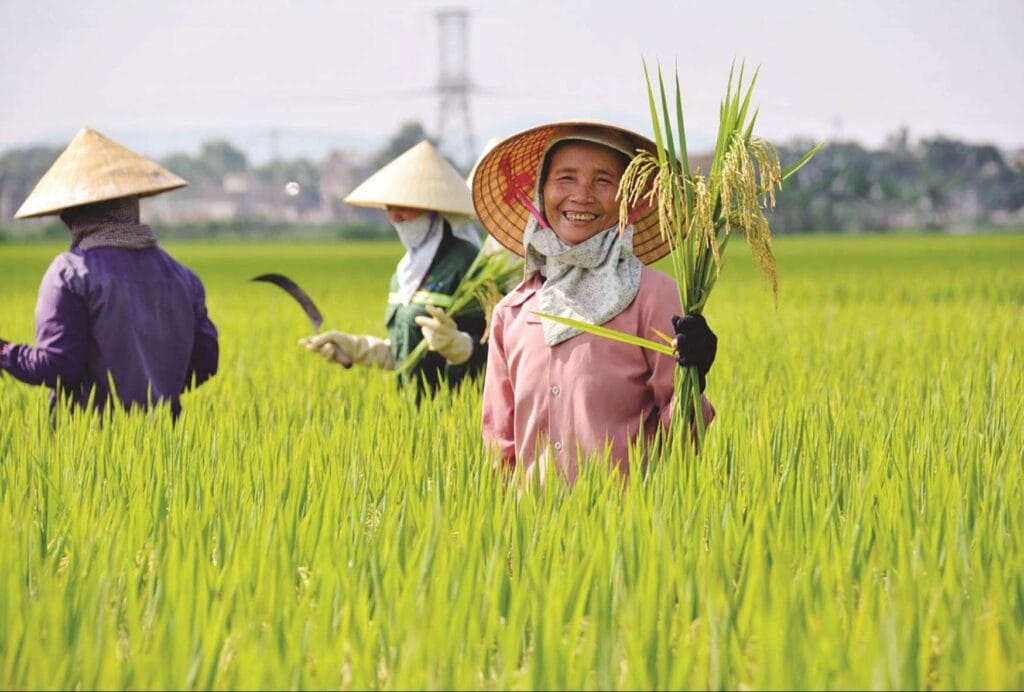
Pilot models in the project to reduce emissions from rice cultivation have been implemented in five provinces of the Mekong Delta: Kien Giang, Soc Trang, Tra Vinh, Dong Thap, and Can Tho; initially yielding positive results.
It is expected that pilot payments for carbon credits for these models could be made during the 2025 summer-autumn or 2025-2026 winter-spring seasons. The funding for these payments will come from the TCAF Fund, with an estimated budget of $20 million USD.
Current status of carbon credit trading activities in Vietnam
Although it does not yet have an official carbon market, Vietnam has participated in the international carbon credit market through the Clean Development Mechanism (CDM) – a mechanism established under the Kyoto Protocol, which allows developed countries to invest in greenhouse gas emission reduction projects in developing countries.
Vietnam ranks 9th in the world in terms of carbon credits earned from CDM projects, focusing on renewable energy and energy efficiency.
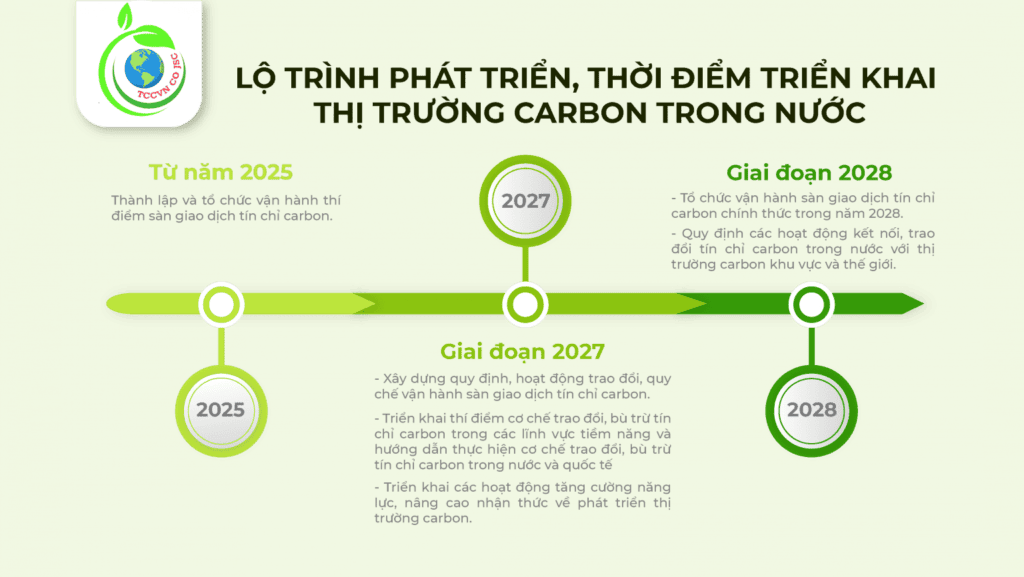
Currently, Vietnam is actively working to finalize the legal framework for the establishment of a carbon exchange. The carbon exchange is expected to be piloted in 2025 and officially operational in 2028.
During the period 2025-2028, the market will be tested domestically without connecting to the international market, and carbon credits will not be sold abroad.
From 2029, Vietnam will study the possibility of connecting its domestic carbon market with the international market. From 2030 onwards, the Vietnamese carbon exchange will expand its connections with carbon markets in the region and around the world.
Despite being slow in developing a legal framework for the carbon market, experts hope that Vietnam will proceed “slowly but surely” to ensure that the financial benefits from emission reductions are retained domestically, avoiding losses when participating in the international market.
Source: VnEconomy – Vietnam Economic Magazine

Related news
Asia’s Fertilizer Market “Out of Sync”: Crop Prices Fail to Keep Pace with Rising Costs
Middle East Conflict Drives Fertilizer Prices Higher, Supply Faces Risk of Disruption
Widespread Heavy Rain in Southern Vietnam – Farmers Need to Take Proactive Measures to Protect Their Crops
In 10 Months, Vietnam’s Cashew Industry Completed Its Export Plan
China Purchased 1.5 Million Tons of Durian in 10 Months