
ACCOUNTING WITH FURTHER FARMERS
Caring for Fruit Trees During the Rainy and Stormy Season
Protecting and caring for fruit trees during the rainy season is often more challenging than during the dry season. To ensure healthy growth and prevent losses to your orchards during storms and heavy rains, let’s explore some measures to care for and protect your fruit trees during adverse weather conditions with Viet Nga Fertilizer!
1. Nutritional requirements of fruit trees during the rainy season
The rainy season is a crucial time for fruit tree growth; however, it is also the period when trees are most susceptible to adverse factors such as waterlogging, root rot, and fungal diseases. Therefore, providing adequate nutrition to trees during the rainy season is essential to ensure healthy growth, resistance to harsh weather conditions, and high yields.
Applying inorganic and organic fertilizers helps improve soil structure and enhance water retention, providing a stable supply of nutrients to crops throughout the rainy season.
By providing adequate nutrition to fruit trees during the rainy season, farmers can help the trees grow healthily, withstand harsh weather conditions, and yield high productivity.
2. Caring for fruit trees during the rainy season
2.1. Ensure the garden has good drainage.
During the rainy season, there is continuous and prolonged rainfall. Therefore, the first condition is to ensure good drainage in the garden to prevent waterlogging. It is necessary to dig many secondary trenches about 20-30 cm deep to allow rainwater to quickly flow into the main ditches, limiting the possibility of flooding in the garden.
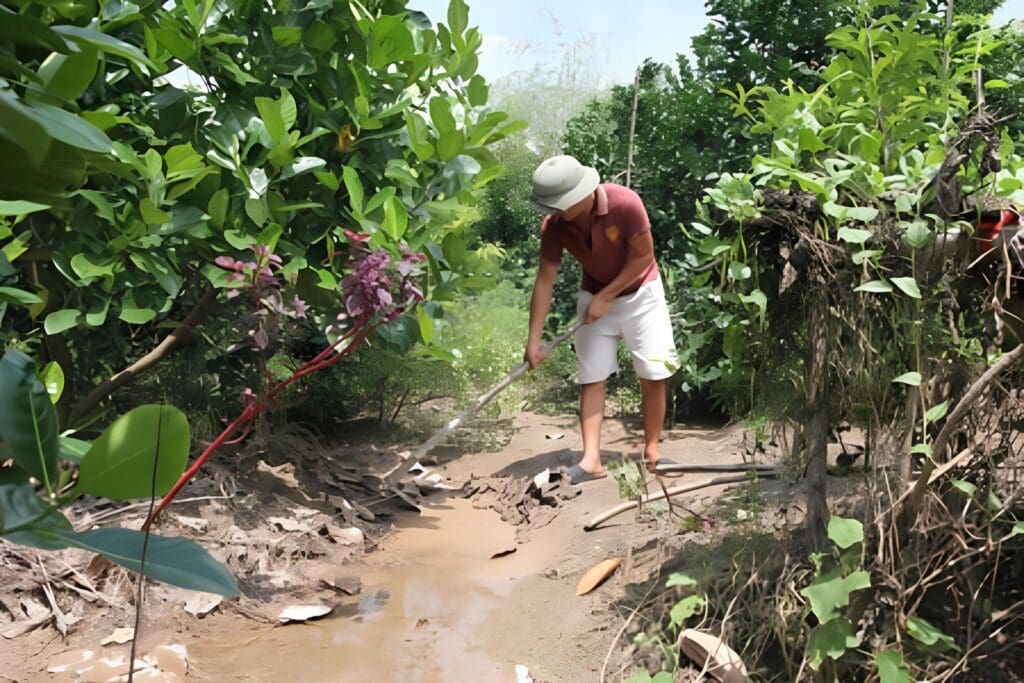
- Ensure the garden has good drainage.
In addition, it is necessary to reinforce embankments, dredge canals, and prepare pumps to combat flooding when needed. When pumping, ensure that the water level in the canals is at least 0.6 m lower than the surface of the raised beds. Minimize movement in the garden to avoid disturbing the roots of the plants and to prevent soil compaction.
If there is prolonged heavy rain, do not weed the garden because weeds can help the soil dry out quickly. Therefore, only weed around the base of the trees to improve aeration and reduce disease, and only mow low if the garden grass grows too tall.
2.2. Pruning and shaping the tree stimulates the growth of new shoots.
Pruning away overgrown branches, diseased branches, and branches unlikely to bear fruit creates better air circulation, allowing the tree to receive sufficient sunlight and wind, promoting even growth and reducing pest and disease problems. When pruning and shaping the tree canopy, only remove less than 25% of the branches. For large cuts (1-2 cm or more), apply lime or fungicide, or use plastic tape to seal the cut to prevent water penetration.
After pruning, clean up the cut branches to keep the garden well-ventilated. Apply a mixture of lime powder and water to the tree trunks, up to about 1 meter above the ground.
2.3. Proactively prevent and control plant diseases and pests.
Continuous rain and high humidity will significantly reduce the number of insect pests, but the number of plant diseases will increase, especially fungal diseases such as anthracnose, root rot, and fruit rot.
For fungal diseases that primarily attack young shoots and leaves, promoting rapid leaf maturation is also a measure to limit the disease. At the same time, it is necessary to prune old and overgrown branches to improve air circulation, collect and destroy diseased parts to prevent spread, and spray copper-based fungicides or Bordeaux mixture to control fungal diseases in the orchard.
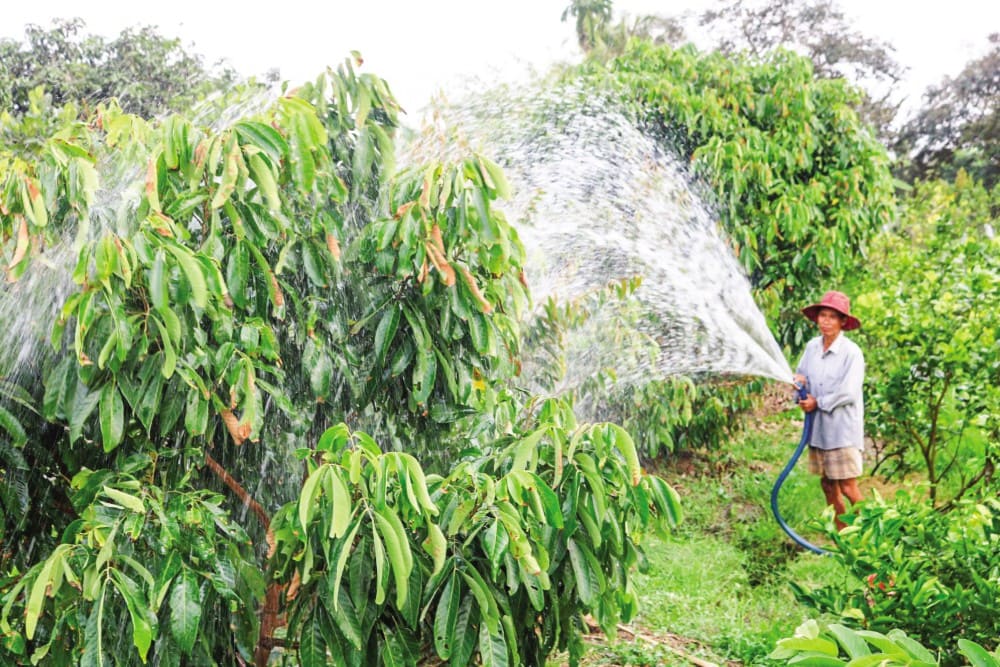
- You can use a sprinkler or shake the plants to wash away the rainwater.
In addition, if possible, after each rain, you should use a sprinkler or shake the trees to wash away the rainwater. This helps to remove the environment suitable for fungal growth and also causes fungal spores clinging to the leaves and branches to fall to the ground with the water.
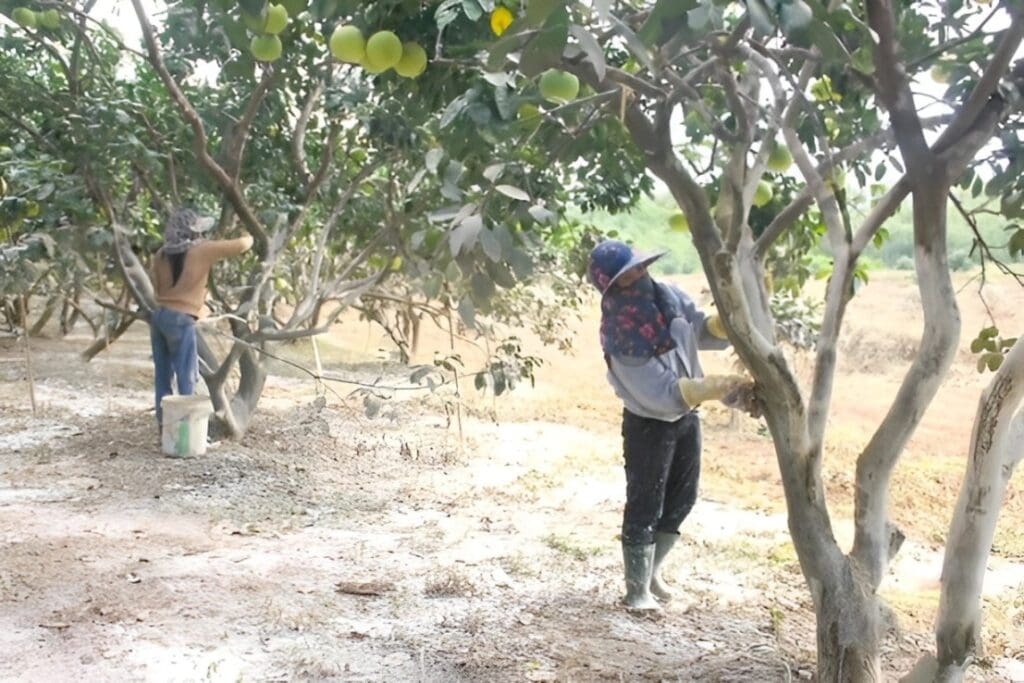
- Apply lime to the base of the tree to prevent harmful fungal diseases.
For root rot, prevention can be achieved by spreading lime (500 kg/ha) or brushing lime onto the base of the tree trunk from the ground up to 0.5-2 meters (depending on the type and height of the tree). This should be done once a year at the beginning of the rainy season.
2.4. Fertilizing fruit trees during the rainy season.
According to experts, the rainy season is the time when most plants grow and develop vigorously, so they need a lot of nutrients. However, farmers should limit the use of uncomposted organic fertilizer, as this will lead to the decomposition of organic matter by microorganisms. This decomposition will deplete the air in the soil and easily cause the plant roots to lack oxygen.
The application of inorganic fertilizers depends on the stage of the plant’s growth. If the plant is bearing fruit, it needs more nitrogen and potassium; if it is promoting new shoots, it needs more nitrogen and phosphorus. Currently, many companies on the market produce various types of fertilizers specifically for fruit trees, so follow the manufacturer’s recommendations on the packaging.
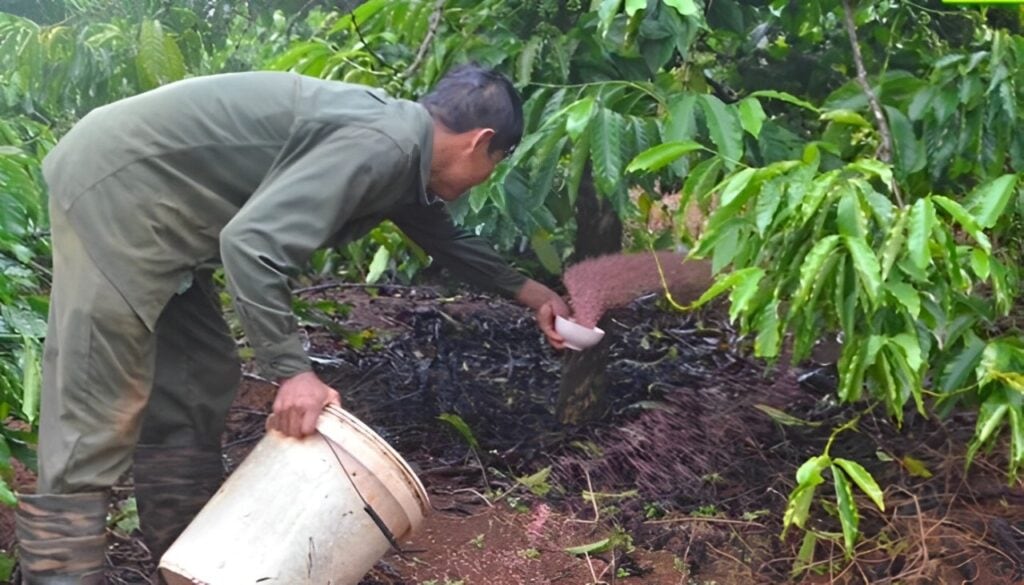
- Choosing the right fertilizer for fruit trees during the rainy season.
Fertilizing during the rainy season requires preventing leaching by lightly tilling the garden before fertilization. An additional 500 kg of lime per hectare should be applied, as it not only releases nutrients held by soil colloids and neutralizes toxins in the soil, but also provides calcium directly to the plants, resulting in better fruit quality.
According to expert recommendations, during the rainy season, farmers need to apply balanced fertilization, using fertilizers with a balanced composition such as NPK 16-16-16+TE and those supplemented with macro and micronutrients. Effective fertilizers during the rainy season are slow-release fertilizers, which help prevent the plant from growing too quickly while maintaining its health and nourishing the fruit well.
3. Note the measures to protect fruit trees during the rainy season.
– For orchards producing off-season fruit that are currently undergoing drought stress treatment to induce flower bud formation:
Use waterproof plastic film as a cover for the planting beds, and ensure good drainage in the garden to minimize the impact of rainwater on the effectiveness of flowering treatment.
– For orchards that are undergoing flowering treatment or are flowering but are almost completely affected (trees are unable to flower or flowers rot and fall off):
Remove the flower stalks, continue to care for and nurture the plant to prepare for the next flowering treatment.
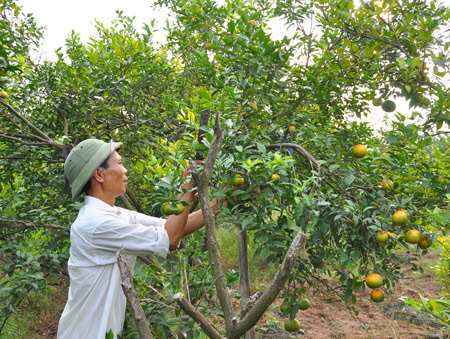
- Remove the flower stalks and nurture the plant in preparation for the next flowering season.
– For orchards in the flowering and fruiting stages, affected by light to moderate rainfall:
Enhance care and spray foliar fertilizers containing the trace element Boron (B) or plant growth regulators to reduce fruit drop and increase fruit set rate.
– For orchards with young fruit or fruit in the development stage: Spray foliar fertilizers containing calcium (Ca), copper (Cu), boron (B), and zinc (Zn) to prevent fruit cracking.
Absolutely do not fertilize plants that have not recovered from flooding; the plants will not be able to absorb the nutrients, leading to waste and counterproductive results.
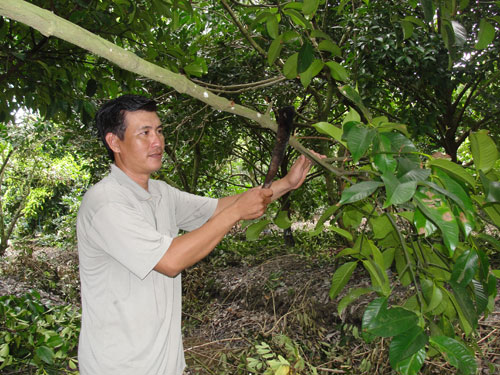
- Trim away any branches, leaves, and fruits that have become damaged or withered due to wind and storms.
If an orchard is affected by strong winds or storms, it is necessary to determine the percentage (number) of damaged trees and immediately implement the following technical measures:
– For trees that are only slightly affected: Prune away branches, leaves, and fruits that have been damaged or torn by wind and storms.
– For trees with some branches broken by strong winds: Cut off the broken branch ends, and apply lime water to the cuts and the base of the tree. When the seedlings mature, grafting can be carried out using more advanced varieties.
– For fallen trees with some roots still firmly embedded in the soil: Loosen the soil around the root tips, trim the branches and leaves, and then re-erect the tree. Use bamboo stakes to support and keep the tree upright, and provide shade using black nylon netting specifically designed for horticulture.
Conclusion
Caring for fruit trees during the rainy and stormy season is a challenging but crucial task to ensure yield and fruit quality. Adhering to preventative measures, care, and protection will help your orchard safely weather the stormy season, maintain stable growth, and yield a bountiful harvest. Always monitor the weather and apply proper care techniques to protect your orchard from the harsh changes of nature.
Wishing everyone a successful and bountiful harvest!
Related news
Caring for the Winter-Spring Rice Crop to Ensure Large, Firm Grains

Secrets to Helping Rice Plants Stay Healthy Right From the Start of the Winter-Spring Crop Season
Proper Water Management for Winter-Spring Rice Crops

Tips for Effective Fertilization of the Winter-Spring Rice Crop

What kind of fertilizer should I use to make my banana tree flower and produce large fruits?