The Indian and European rice markets are in crisis: What opportunities and challenges does this present for Vietnam?
Given the fluctuations in the global food market, especially for rice, we invite farmers to update themselves with important information from Viet Nga Fertilizer to make informed choices!
1. India officially bans rice exports.
On July 20, 2023, the Directorate General of Foreign Trade of India, the world’s leading rice exporter, officially issued a notice banning the export of all types of regular white rice. The Vietnamese government immediately issued urgent directives regarding this issue.
1.1. Reasons why India banned rice exports.
Due to the effects of El Niño, the weather has been extremely harsh, causing India’s rice production to decline significantly compared to previous years. The ban on exporting all types of rice and glutinous rice (except Basmati rice) is believed to curb inflation and ensure food security. This comes as retail rice prices in India have increased by 11.5% year-on-year and by 3% in just the past month.
Furthermore, controlling inflation is also one of the top priorities in the 2024 election for the current government. Therefore, after much consideration, the ban on rice exports was issued, and it is predicted that it will remain in effect until at least December 2023 before any further announcement.
1.2. The impact of India’s policies on the global rice market.
India has led the rice export industry for many years, consistently holding over 40% of the global market share. In 2022 alone, its rice production reached 22.2 million tons, double that of Thailand and Vietnam (the second and third-ranked countries).
This ban has significantly impacted rice exports and raised concerns about the potential for further inflation in the global food market. It is estimated that if India maintains the ban until the end of the year, the global rice market will face a shortage of at least 7 million tons.
To solve this problem, there are only two basic sources of supply: Thailand and Vietnam. The Thai market still has a relatively abundant supply of rice for export in the second half of 2023, at 4.5 million tons.
Regarding Vietnam, Mr. Nguyen Nhu Cuong, Director of the Department of Crop Production (Ministry of Agriculture and Rural Development), told Thanh Nien Newspaper on July 23rd: “If our country boosts production and increases output, Vietnam could export an additional 2.8 million tons. This figure is 1.7 million tons less than Thailand.”

2. Russia withdraws from the Black Sea Grains agreement.
On July 17, a Russian spokesperson officially announced the termination of the Black Sea Grains agreement due to the failure to reach a desired agreement.
This agreement was originally signed on July 22, 2022, in Istanbul (Türkiye), concerning the export of Ukrainian grain via the Black Sea. The agreement allows for the safe transport of Ukrainian agricultural products from three Black Sea ports, including the largest port, Odessa.
Currently, Ukraine is directly affected by this action by Russia. However, experts are concerned about the long-term impact on global food security, especially for Ukraine’s main wheat and barley export markets.
Peter Ceretti, an economist at Eurasia Group, believes that the collapse of the grain agreement will push food prices even higher in the future.
3. Opportunities and challenges for Vietnam’s rice market
These fluctuations are occurring against the backdrop of a strong increase in Vietnam’s rice exports, both in volume and value. Simultaneously, rice production in many Asian countries faces the risk of decline due to the impact of El Nino. All of this is driving up rice prices and creating both opportunities and challenges for Vietnam.
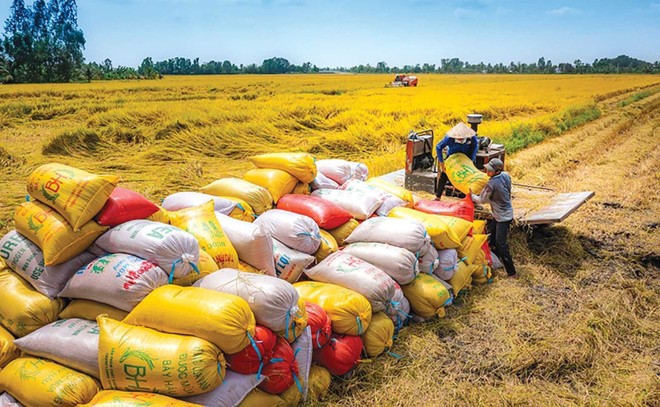
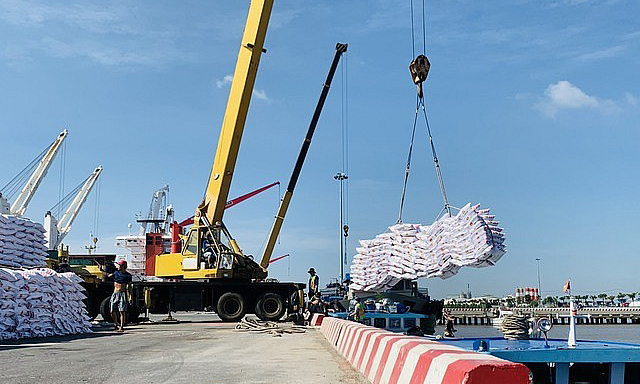
In the first five months of 2023, data from the General Department of Customs showed that Vietnam imported nearly 400,000 tons of rice from India. At the same time, it also exported 4.2 million tons to other markets (a 21% increase compared to the same period). Therefore, rice imports in Vietnam were not significantly affected, while rice exports are expected to grow strongly.
Furthermore, Indian rice primarily targets low-end markets, while Vietnamese rice is aiming for high-quality markets, so Vietnamese businesses don’t have too much to worry about at this time.
Rice prices in the Mekong Delta have recently increased by 200-400 VND/kg compared to the beginning of July 2023. In An Giang, the price of IR50404 rice is currently at 6,700-6,900 VND/kg; Dai Thom 8 rice is priced at 6,800-7,000 VND/kg; OM5451 rice at 6,700-6,800 VND/kg; OM 18 rice at 6,900-7,100 VND/kg,… and is predicted to increase further.
Given these opportunities, our country needs a wise strategy to ensure sufficient production and circulating reserves to avoid domestic rice shortages. At the same time, solutions are needed to address adverse weather conditions and shortages of agricultural supplies, especially fertilizers.

Related news
Asia’s Fertilizer Market “Out of Sync”: Crop Prices Fail to Keep Pace with Rising Costs
Middle East Conflict Drives Fertilizer Prices Higher, Supply Faces Risk of Disruption
Widespread Heavy Rain in Southern Vietnam – Farmers Need to Take Proactive Measures to Protect Their Crops
In 10 Months, Vietnam’s Cashew Industry Completed Its Export Plan
China Purchased 1.5 Million Tons of Durian in 10 Months