-
1Prevent fertilizer loss, reduce costs
-
2Develop reserve branches, fruit grows quickly
-
3Increase productivity, quality and economic efficiency
-
4Suitable for a wide variety of plants
Element
-
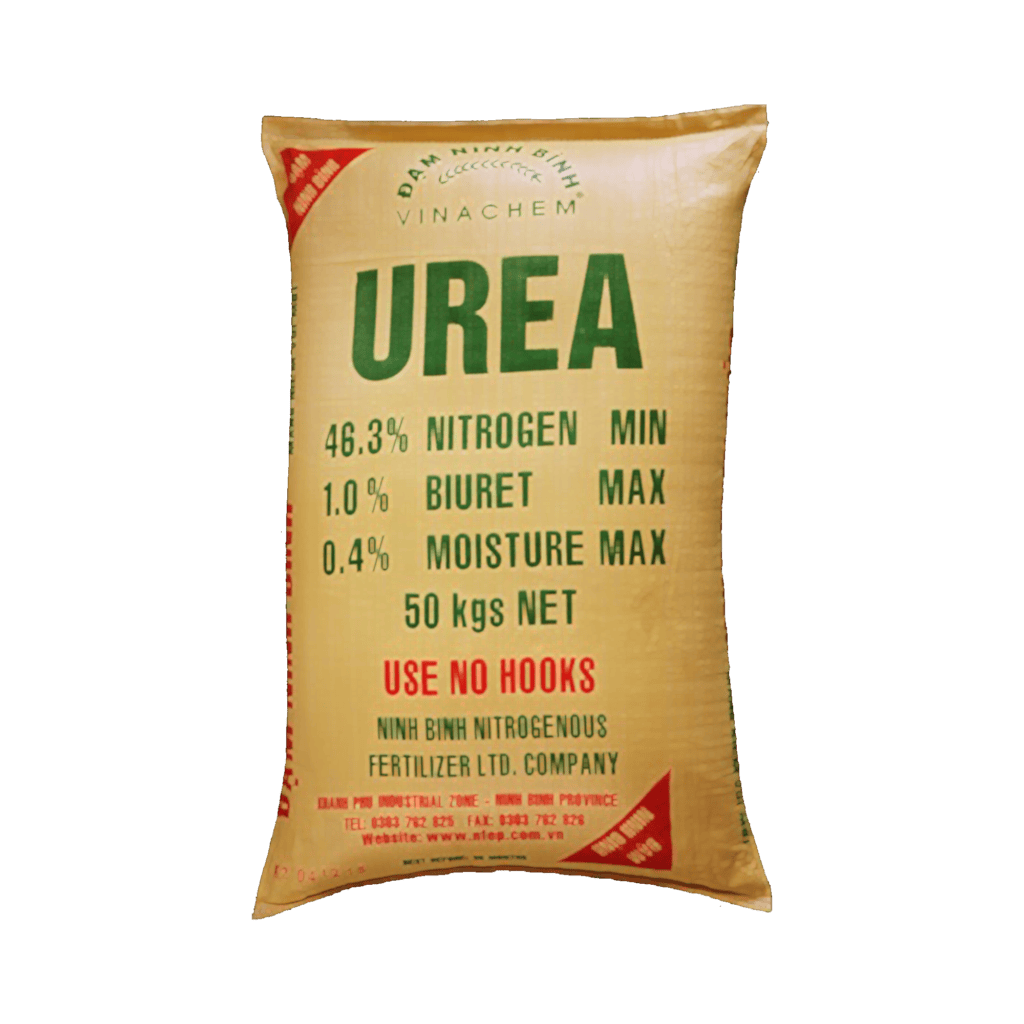
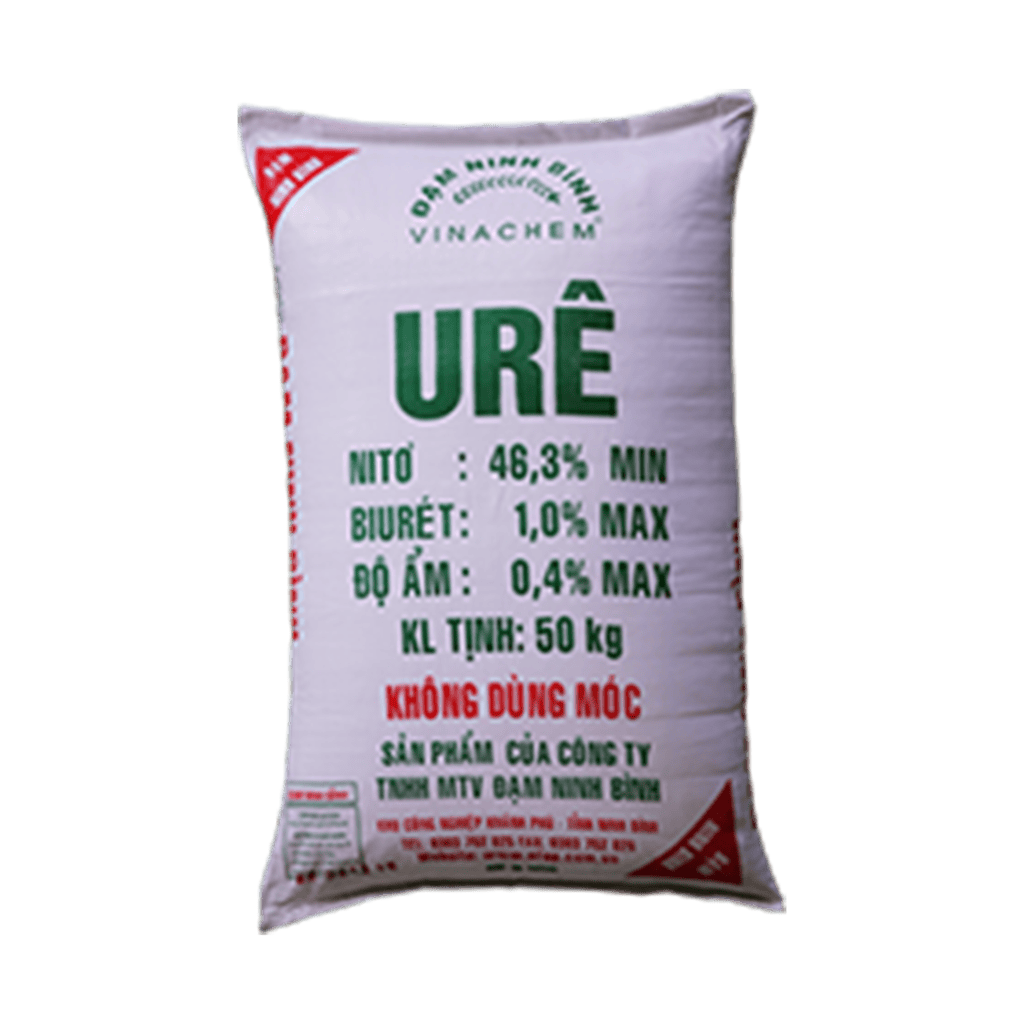
Total nitrogen (Nts)
46,3%
-
Biuret
1%
-
Humidity
0,4%
Uses of Ninh Binh Nitrogen Fertilizer
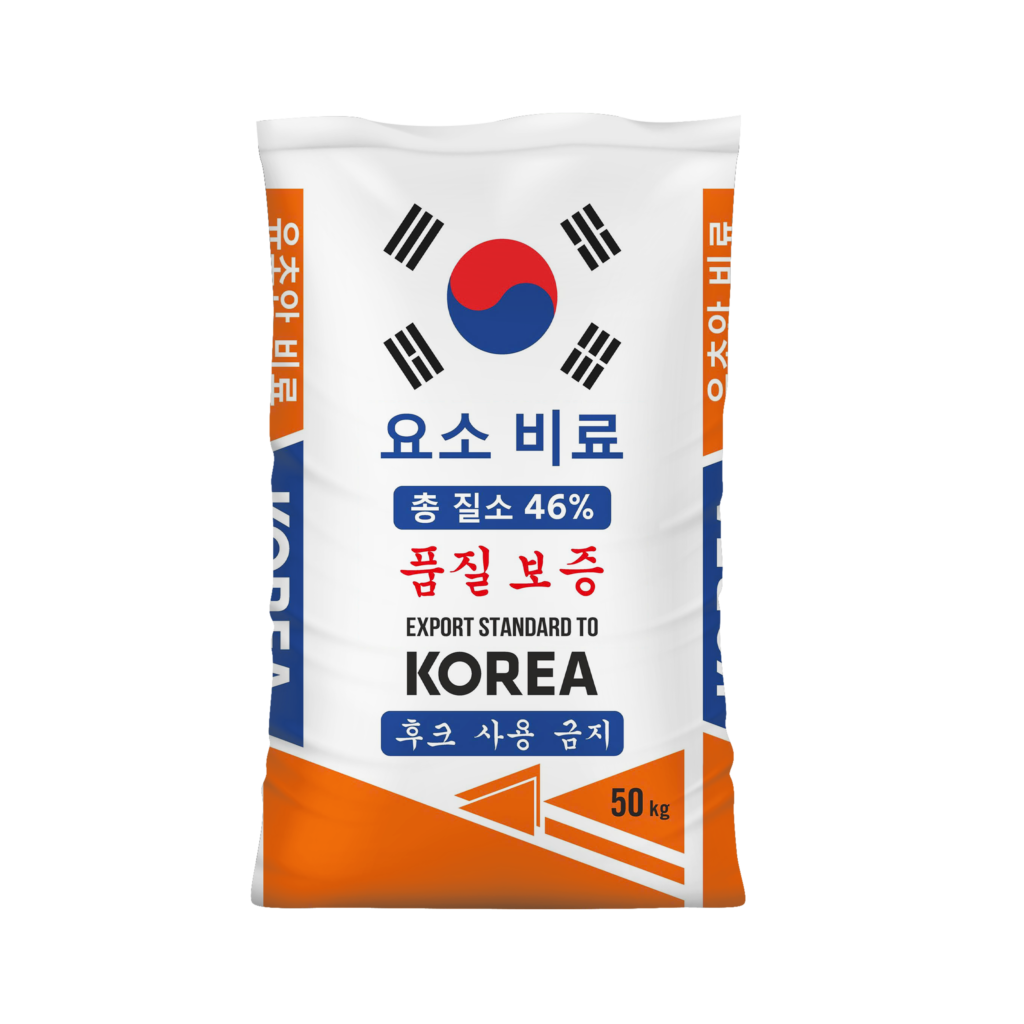
– Effectively Supplying Nitrogen for Plants: Urea fertilizer contains high nitrogen content, accounting for 46.3% of the total. Providing nitrogen content in the form of ammonium (NH4 +), helping the roots of crops to absorb thoroughly and avoid evaporation and leaching.
– Urea Fertilizer Stimulates Bud and Leaf Development: Urea fertilizer promotes plant growth, helps plants to branch, branch, and produce many leaves, leaves are large in size, green in color, perform photosynthesis well, the process of nutrient metabolism takes place smoothly, increasing crop yield.
– Necessary for the Growth Stage: Fertilizing plants with urea fertilizer will meet the nutritional needs of plants, especially during the strong growth stage. Plants that often need a lot of nitrogen are leafy vegetables such as mustard greens, cabbage, etc.
– Use for seedlings, plants after harvest or plants after pruning: Urea fertilizer can be used for all types of plants. Especially for seedlings (early stage), plants after harvest that need to recover and plants after canopy formation and pruning that need to restore leaves and young shoots.
NOTE WHEN FERTILIZING
Ninh Binh nitrogen fertilizer needs to be stored in sealed plastic bags, in a cool, dry place, not stored with other types of fertilizer.
Need to fertilize according to the characteristics and needs of the plant.
Need to fertilize nitrogen according to the characteristics of the soil.
Need to fertilize nitrogen in the right dose and balance with phosphorus and potassium.
When fertilizing nitrogen, pay attention to weather changes; do not fertilize in the early morning when it is still wet with dew or in the hot noon.
Do not apply nitrogen fertilizer in one place at a time, but divide it into several times to apply and spread it evenly on the ground in the places that need it.
For rice, nitrogen fertilizer application needs to be combined with weeding, tilling, and stirring the mud.
SAFETY WARNING
Not dangerous when inhaled under normal conditions.
Causes mild irritation to the eyes.
Keep out of reach of children.
Wash hands after use.
Ninh Binh Nitrogen is suitable for all types of crops on different lands.
- Fertilizing hybrid rice in the summer-autumn crop
| Total amount of fertilizer (per acre in the North) | Basal fertilizer | Top dressing first time (rice roots and turns green 5-6 NSC) |
Top dressing 2nd time (rice tillering 10-12 NSC) |
Third top dressing (heading promotion) | |
| Organic fertilizer | 300-400kg | ||||
| Ninh Binh Nitrogen | 7 – 12 kg | 1 -2 kg | 1 -2 kg | 4 – 6 kg | 1 -2 kg |
| Superphosphate | 10 – 20 kg | 10 -20 kg | |||
| Potassium | 6 – 12 kg | 3 – 6 kg | 3 – 6 kg |
- For pure rice varieties, the amount of fertilizer is reduced by 10 – 20% per type compared to hybrid rice varieties.
- For spring crop: increase nitrogen fertilizer as well as other fertilizers.
- If the rice plant shows signs of nutritional deficiency (yellow leaves) during the seedling stage, urea or NPK should be added to provide timely nutrients to the plant.
- Fertilizing corn
| Total amount of fertilizer (per acre in the North) | Basal fertilization (before sowing seeds or placing pots) |
Top dressing first time (when the plant has 3 – 4 leaves) |
Top dressing second time (when the plant has 7 – 9 leaves) |
Top dressing 3rd time (when the plant is twisted) |
|
| Ninh Binh Nitrogen | 6 – 12 kg | 20% | 40% | 40% | |
| Superphosphate | 17 – 26 kg | 100% | |||
| Potassium | 3 – 7 kg | 20% | 40% | 40% |
First fertilization: fertilize combined with loosening the soil to break the crust, weeding, lightly mounding soil at the base or diluting fertilizer in water to water the plant.
Second fertilization: fertilize combined with loosening the soil at the base, weeding or diluting fertilizer in water to water the plant.
Third fertilization: fertilize combined with weeding, mounding the base to avoid the plant falling or diluting fertilizer in water to water the plant.
- Fertilize tomatoes
| Total amount of fertilizer (per acre in the North) | Basal fertilization (before sowing seeds or placing pots) |
Top dressing first time (7-10 days after planting) |
Top dressing 2nd time (20-25 days after planting) |
Top dressing 3rd time (40-50 days after planting) |
|
| Organic fertilizer | 3 – 6 tạ | 100% | |||
| Ninh Binh Nitrogen | 7 – 9 kg | 20% | 20% | 40% | 20% |
| Superphosphate | 11 – 18 kg | 100% | |||
| Potassium | 9 – 11 kg | 20% | 40% | 40% |
- Fertilizing coffee plants
- Vegetative growth period
| Tree age | Fertilizer dosage (kg/ha) | |||||
| Nitrogen | Phosphate | Potassium | ||||
| N | Ninh Binh Nitrogen | P2O5 | Molten phosphate | K2O | KCl | |
| Year 1 | 90 | 195 | 60 | 364 | 50 | 85 |
| Year 2 | 120 | 260 | 100 | 606 | 60 | 100 |
| Year 3 | 200 | 432 | 120 | 727 | 150 | 250 |
- Business phase
| Tree age | Fertilizer dosage (kg/ha) | |||||
| Nitrogen | Phosphate | Potassium | ||||
| N | Ninh Binh Nitrogen | P2O5 | Molten phosphate | K2O | KCl | |
| Business period | 200 | 432 | 150 | 910 | 200 | 333 |
| Recovery period | 150-200 | 324-432 | 100-150 | 606-910 | 150-200 | 250-333 |
| Fertilization time | Fertilization rate in months of the year (%) | ||
| Ninh Binh Nitrogen | Molten phosphate | Kali | |
| March – April | 35% | 30% | |
| June – July | 40% | 40% | 40% |
| October – November | 25% | 60% | 30% |
Green manure and manure are essential for coffee. Annually, 12-15 tons/ha should be applied.
Nitrogen fertilizer should be applied early and finished early so that the fruit does not ripen too long.