
-
1Super hard tree, anti-fall, limit pests and diseases
-
2Increased resistance to harsh weather
-
3Increase productivity, quality and profits for farmers
-
4Big, firm seeds, bright yellow, beautiful big tubers
-
5Prevent flower and young fruit drop, promote early flowering
-
6Maintain and improve soil fertility and fertility
Element
-
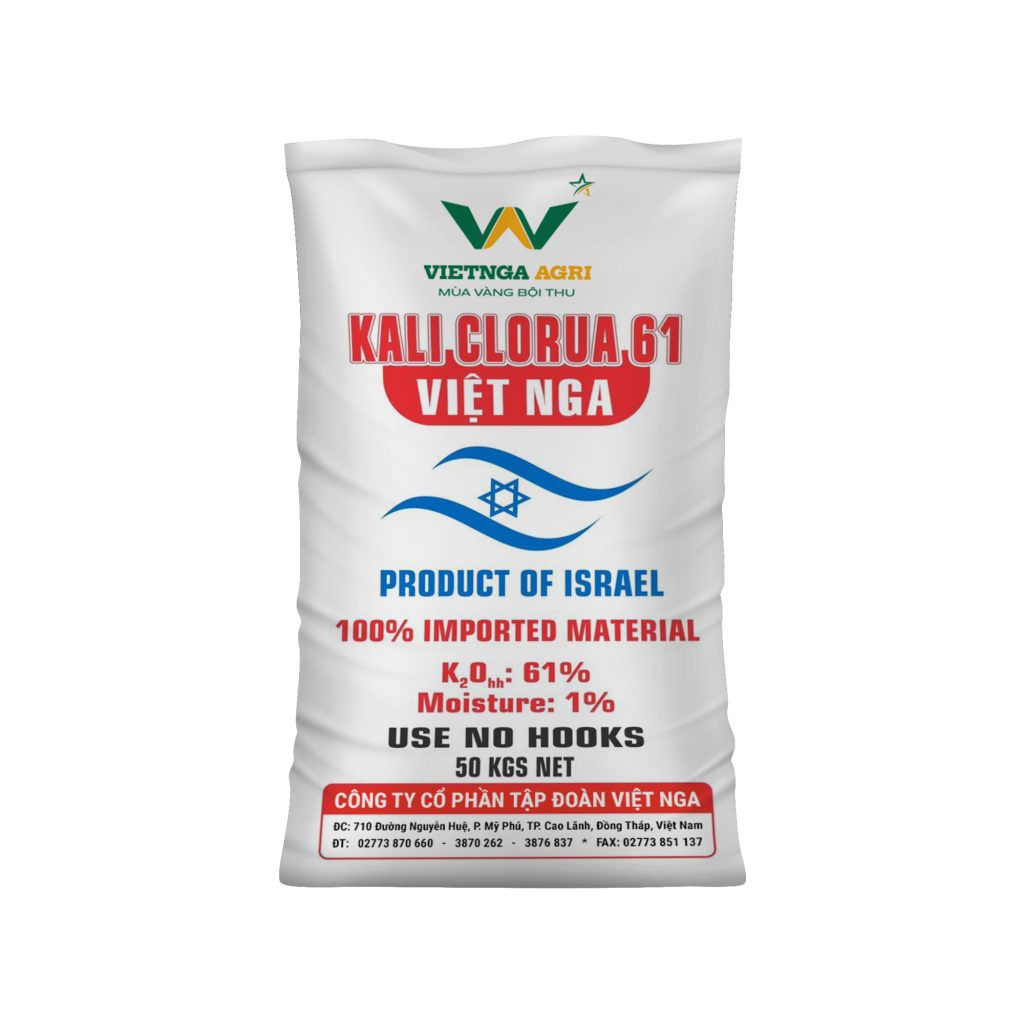
Soluble Potash (K2O)
61%
-
Humidity
1%
What is Potassium Chloride Fertilizer 61 Viet Nga?
Potassium chloride is a chemical compound widely used in agriculture and industry, used as a raw material to provide K in fertilizer production. It is easily soluble in water and can be used immediately when applied to the soil.
Potassium chloride (KCl) fertilizer is a fertilizer containing potassium and chloride, which is an important nutrient for plant growth and helps to enhance resistance.
Effects of potassium chloride fertilizer in plants
- Providing potassium to plants: Potassium is an important trace element for plant growth and development. Potassium chloride fertilizer provides potassium in an easily absorbable form to plants, helping to enhance their health and development.
- Increased disease resistance: Potassium helps plants resist disease, reduces the risk of infection, and strengthens the plant’s immune system. Potassium chloride fertilizer provides potassium and chloride, which helps plants fight off potentially harmful diseases.
- Increased productivity: Potassium plays an important role in the process of energy production and conversion in plants. Proper use of potassium chloride fertilizer helps to increase productivity and product quality.
- Improve soil structure: Manure has the ability to dissolve minerals in the soil and create better soil structure, helping plants absorb nutrients more effectively.
In summary, Potassium Chloride is an important fertilizer in agriculture, providing essential nutrients for plants. The ability to provide potassium and chloride makes this fertilizer an important factor in improving the quality and yield of agricultural products, in addition to increasing the resistance of plants to diseases and harsh environments.
In addition, understanding its effects and using it effectively will help plants grow and develop better.
Notes when fertilizing plants with Potassium Chloride
To fertilize plants with Potassium Chloride most effectively, note the following:
- Know the amount of fertilizer needed for each type of plant and stage of the plant.
- Avoid over-fertilization, which can be harmful to plants and pollute the environment.
- Fertilize at the right time and with the right method.
- Protect your hands and face by using protective gear and avoid direct contact with fertilizer.
- Ensure adequate watering to dissolve and absorb fertilizer better.
Safety Warning
- Read instructions carefully before use.
- Keep out of reach of children and food sources.
- Wash hands thoroughly after use.
How to preserve Potassium Chloride fertilizer?
| Preserve | Store in a cool, dry place, away from direct sunlight |
| Net weight | 50kg |
| Expiration date | 36 months from date of manufacture |
– Rice: 30-50 kg/ha/time (2-3 times/crop: 18-22 days after sowed, 38-42 days after sowed and grew)
– Corn: 70-80 kg/ha/time (2 times/crop: 7-10 days after planted and 40-50 after planted)
– Sugarcane: 150-200 kg/ha/time (2 times/crop: 2-3 months after planted and 4-5 months after planted)
– Fruit (mango, longan, pomelon, rambutan):
+ Basic growing stage: 100-300 g/tree/time (3 times/year, 4 months/time)
+ Fructify stage: 300-400 g/tree/time (3-4 times/year, after harvesting, pre-flowering, pre-collecting fruit and after-collecting fruit stage.
– Vegetable (chilli, tomato): top dressing fertilizer 100-150 kg/ha/time (2-3 time/crop: 15-20 days after sowed and fruit growing stage 1-2 times).
– Leaves-eating vegetable: 70-120 kg/ha/time. Fertilize 1-2 times: 7-10 days after sowed and 20-30 days after sowed.
– Coffee, black pepper:
+ Matured stage: drought season fertilize 120-170 kg/ha/time (1-2 times). Raining season fertilize 150-180 kg/ha/time (3-4 times: the beginning, middle and the end of raining season).
+ Basic growing stage: fertilize 100-120 g/tree/time (3-4 times/year: drought season; the beginning, middle and the end of raining season).
– Tea: 50-100 kg/ha/time (fertilize 6-7 times/year according to harvesting cycle).
– Rubber tree (matured stage): 70-120 kg/ha/time (2 times/year).