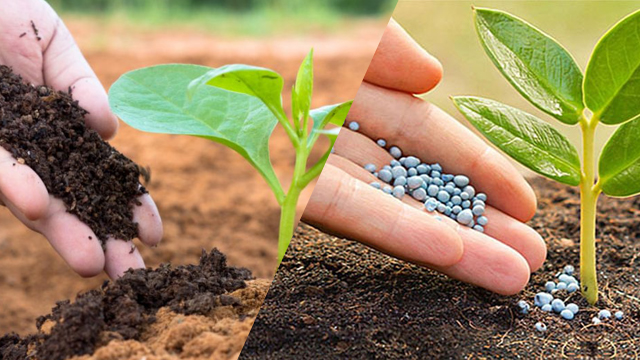
ACCOUNTING WITH FURTHER FARMERS
Things Farmers Need to Know When Fertilizing Rambutan Trees
For rambutan trees to grow well, yield high productivity, and produce quality fruit, proper fertilization is extremely important. Understanding the nutritional needs and applying appropriate fertilization techniques will help farmers not only increase production but also improve fruit quality, contributing to higher income and better living standards.
In this article, Viet Nga Fertilizer will provide detailed guidance on what to keep in mind when fertilizing rambutan trees, helping farmers achieve bountiful and sustainable harvests.
1. Conditions for rambutan tree to grow well
Rambutan is a tropical fruit tree that prefers a hot, humid climate with abundant rainfall and is not suitable for areas with altitudes above 700m. The ideal temperature is 22-30oC, with rainfall of about 2,000 mm/year, evenly distributed throughout the year.

Rambutan trees thrive in light to medium loam soils with a thick, well-drained, porous topsoil layer, rich in humus, and a pH of 5-6.
2. Nutritional requirements of the rambutan tree
Rambutan trees require the most nitrogen (N) and potassium (K), followed by calcium, magnesium, phosphorus, and other trace elements such as zinc, boron, etc. Nitrogen is needed for tree growth and increased fruit yield, while potassium helps improve fruit quality.
Potassium deficiency causes leaf tip and margin burn in plants. This phenomenon is commonly seen in orchards with unbalanced fertilization and inadequate care.
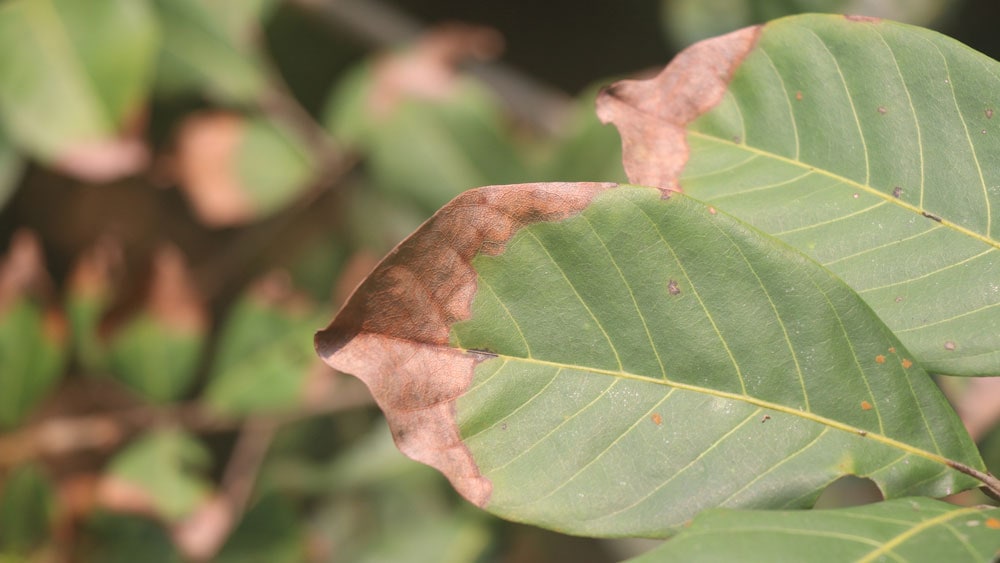
- The rambutan tree has burnt leaves.
3. Techniques for fertilizing rambutan trees
Fertilization should be adequate and balanced; the amount and ratio of fertilizers vary depending on soil properties, plant size, and crop yield.
Base fertilization
When planting, apply 10-15kg of well-rotted manure to each hole. If the soil is poor, add 200-300g of NPK 20-20-15 or 16-16-8 fertilizer.
Seedling stage
Fertilize once every 30-45 days, applying 50-100g of NPK 16-16-16 per plant. Foliar micronutrient fertilizers can also be added.
Basic construction phase
Year 2: Apply 200 g of urea and 80 g of kCl to each tree. Divide into two applications (at the beginning and end of the rainy season).
Year 3: Apply 1.5 kg of NPK fertilizer in a 2:1:2 ratio per plant. Divide into two applications (before flowering and after harvest).
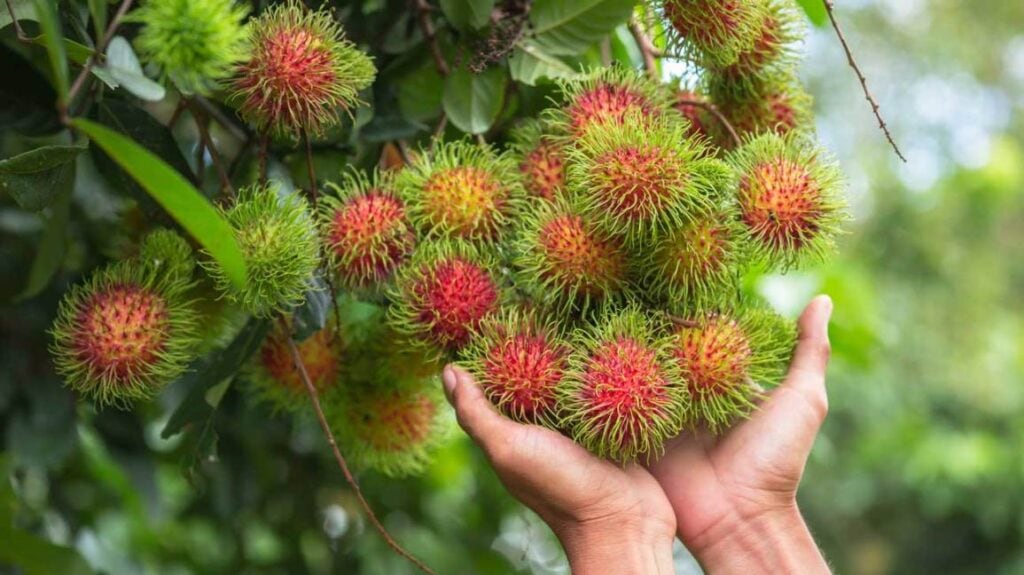
- Rambutan trees have different nutritional needs at different stages of their growth.
Business phase
After harvest: Apply 5-10 kg of well-rotted organic fertilizer to each tree, combined with 650 g of urea, 550 g of superphosphate, and 100 g of K2O.
Before flowering: Apply 300g of urea, 800g of superphosphate, and 300g of K2O to each tree. This helps the rambutan tree to better differentiate flower buds.
Fruit development (after fruit set for about 7 days): Apply 650 g urea + 550 g superphosphate, and 200 g K2O to each tree. This helps to reduce premature fruit drop in rambutan trees.
One month before harvest: Apply 300g of urea, 300g of superphosphate, and 350g of potassium chloride (K2O) to each plant.
Organic fertilizer should be added annually, and the amount of fertilizer should be gradually increased.
4. Things to note when growing rambutan trees
Watering
Water regularly, every 2-3 days during the first month if planting in the dry season. Depending on the terrain, a water-saving irrigation system should be applied to rambutan trees.
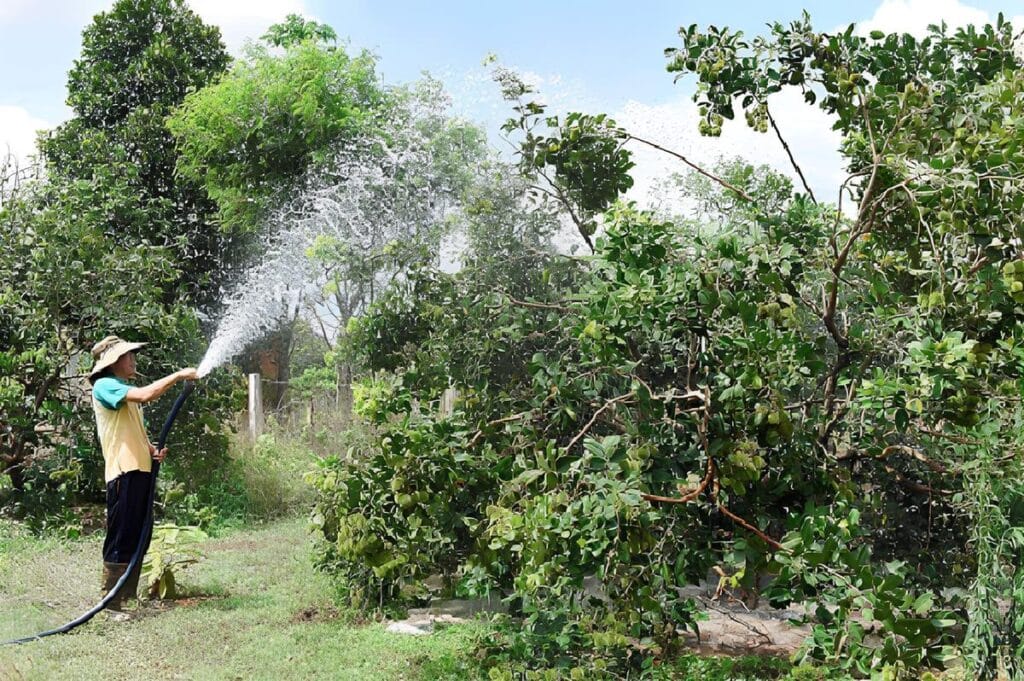
- Water rambutan trees regularly during the dry season.
Plant cover crops
Intercropping is practiced in the early years when the trees have not yet formed a canopy. Depending on the intensive farming conditions, rambutan can be intercropped with other plants such as coffee or vegetables in the early years.
However, care must be taken to ensure that the rambutan tree is well-ventilated and absorbs 80-90% of natural sunlight. Grass can also be used to cover the ground, increasing the organic matter in the soil.
Pruning and shaping
In the first year, pruning aims to give the tree a healthy, full shape with branches and leaves spreading evenly around it. In subsequent years, the tree is allowed to grow naturally, and only ineffective branches such as crooked branches, branches that cross each other, and diseased branches are pruned.
Here are some suitable fertilizer products for rambutan trees.

NPK 16-16-16+TE is specifically designed for fruit trees and vegetables, providing balanced nutrients for healthy growth and development of rambutan trees, improving flower quality, promoting branch and leaf development, and resulting in larger, more colorful fruits.
Conclusion
Proper fertilization of rambutan trees not only ensures healthy growth but also increases yield and fruit quality, bringing high economic benefits to farmers. By understanding the nutritional needs of the tree at each stage of development and applying scientific fertilization methods, farmers can optimize cultivation efficiency.
Wishing you all success!
Related news
The Role of Base Fertilization in Soil Improvement and Enhancing Agricultural Fertility
Measures to Improve and Treat Saline Soil
Winter-Spring rice blast warning – Don’t let leaf and flower burns rob you of your golden crop

Rice Sowing Techniques for the Early Winter–Spring Crop
What Is Slow-Release Fertilizer? Learn How to Use It Effectively