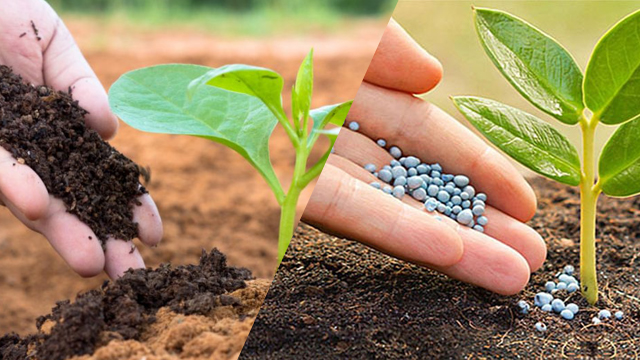
ACCOUNTING WITH FURTHER FARMERS
Are slow-release fertilizers any good?
Recently, slow-release fertilizers have become a topic of great interest to farmers in many localities. Recognizing this, Viet Nga Fertilizer Company quickly dispatched its technical staff to the following areas: Ho Dac Kien commune (Chau Thanh district, Soc Trang province), Thanh Hung commune (Tan Hung district, Long An province), and Thuong Thoi Tien commune (Hong Nguy district, Dong Thap province) to meet with, exchange information with, and provide specific guidance to local farmers. So, what are slow-release fertilizers? Are they good or bad? Let’s explore this in detail in the article below!
1. What are slow-release fertilizers?
Slow-release fertilizers are a type of fertilizer that releases nutrients into the soil gradually over time, allowing plants to absorb them slowly without excess.
Typically, slow-release fertilizers are coated with a layer of sulfur-based plastic or polymer, which slowly decomposes in water, heat, sunlight, or soil microorganisms. This allows for control over the dissolution time throughout the plant’s growth cycle.
Slow-release fertilizers consist of two main components:
- The coating: The outer coating is a flexible polymer as mentioned above. The thicker this material, the longer it takes to decompose and dissolve in the environment.
- The core: The core of slow-release fertilizer contains essential nutrients for plants, including macro, micro, and trace minerals such as Nitrogen (N), Phosphorus (P), Potassium (K), Manganese (Mn), Calcium (Ca), Zinc (Zn), etc.
2. Why should we use slow-release fertilizer?
Plants absorb nutrients from the soil slowly and continuously; they cannot absorb large amounts at once for later use. On the other hand, when fertilizers are applied to plants and dissolve quickly over a large area, the fertilizer is easily lost through the following forms:
- Evaporation.
- Wash it away.
- It sinks deep into the soil.
The benefits of slow-release fertilizers typically include:
- Providing balanced nutrient supply to plants: This fertilizer contains many essential nutrients for plant growth, delivering nutrients precisely according to the needs of each plant type and stage of development. Additionally, it eliminates the risk of fertilizer burn, and nutrients remain in the soil longer. If a large amount of fertilizer is applied at once, the plant’s roots are easily damaged or the fertilizer can become toxic.
- Time saving: Thanks to its slow dissolution in the soil, the nutrients are supplied to the plants for an extended period, meaning farmers don’t need to fertilize too many times, saving time, costs, and labor.
- Safe and environmentally friendly: Slow-release fertilizers do not increase soil electrical conductivity (EC), kill microorganisms, or leach fertilizer into groundwater. Fertilization is independent of irrigation; decomposition continues even without a water supply.
According to scientists, excess fertilizer, especially inorganic fertilizer, can degrade soil quality, pollute water sources, and negatively impact ecosystems and human health. One of the key factors in reducing emissions is to reduce the amount of fertilizer used, applying only the right amount and quantity. Thanks to the slow-release nutrient mechanism in slow-dissolving fertilizers, with slow-release fertilizers, plants can absorb nutrients optimally, increasing productivity and saving costs. Not only does it help farmers cultivate more efficiently, but the use of slow-release fertilizers also contributes to building sustainable agriculture.
3. Differences in plant growth when using fast-release and slow-release fertilizers.
- With fast-dissolving fertilizers: because the fertilizer dissolves immediately in the soil, plants absorb nutrients much sooner, resulting in a rapid greening of the leaves and faster sprouting of new shoots and leaves. Most farmers, upon applying fast-dissolving fertilizer, assume it’s a good fertilizer because the plants turn green instantly. However, this happens quickly as the fertilizer in the soil is absorbed and lost significantly (as mentioned above), leading to a nutrient deficiency compared to the plant’s needs. Consequently, the leaves quickly turn yellow again. Therefore, the fertilizer’s effectiveness is low.
- For plants using slow-release fertilizers: because the nutrients in the fertilizer are released into the soil gradually and continuously, the plants can utilize them for a longer period, resulting in higher fertilizer efficiency and no nutrient deficiency at any stage. Although the plants turn green more slowly, they are healthier and the green color lasts longer compared to plants using fast-release fertilizers. Slow-release fertilizers are treated with certain additives that reduce the rate of fertilizer dissolution.
*Note: After some time, you may still see traces of fertilizer granules, but the nutrients in the fertilizer have actually been used up by the plants. With Viet Nga fertilizers, the additives do not negatively affect the soil environment; in fact, they help improve the soil.
4. Notes on using slow-release fertilizers
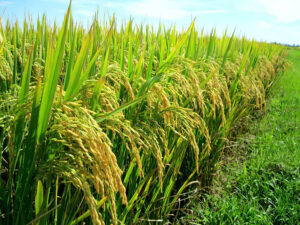
When using slow-release fertilizers, farmers need to choose the right type of fertilizer for each crop and growth stage. It’s important to apply the correct dosage as instructed to avoid waste and ensure optimal nutrient absorption. Slow-release fertilizers are very effective for all growth stages of rice and glutinous rice, especially during basal or top dressing, and in flooded fields. Their effectiveness is enhanced by mixing them evenly with the soil or burying them in the topsoil. Maintaining appropriate moisture levels will help the fertilizer release nutrients more effectively. Additionally, farmers should monitor soil pH and temperature to adjust the fertilizer application as needed.
On the other hand, proper fertilizer storage is also crucial for maintaining long-term quality. Fertilizers should be stored in a dry, cool place, away from direct sunlight and high humidity. Seal the packaging tightly after use to prevent loss of content, discoloration, melting, clumping, and to ensure effectiveness. Proper use not only promotes healthy plant growth but also saves costs and protects the environment.
The concepts of “slow-release” or “fast-release” fertilizers are actually relative. From a nutritional perspective, slow-release fertilizers provide a more stable supply of nutrients, better suited to the continuous growth needs of plants. However, depending on farming conditions, local practices, and specific needs, farmers can flexibly use either fast-release or slow-release fertilizers.
It is important to choose products from reputable brands that have earned consumer trust and positive reviews. Viet Nga Fertilizer is proud to be a company awarded the “High-Quality Vietnamese Product” label in 2025, with a laboratory system that meets ISO 17025:2017 standards. This is clear evidence of our commitment to quality, effectiveness, and transparency. In particular, if farmers want to verify the nutrient content of fertilizers, the most accurate way is to send samples to testing centers designated by the Plant Protection Department for in-depth analysis.
5. Conclusion
Farmers often understand that fertilizers that dissolve completely when applied to the soil or mixed with water are usually good quality and dissolve quickly. Conversely, fertilizers that don’t dissolve immediately are of poor quality. Viet Nga Fertilizer hopes that the above information will help farmers better understand the characteristics of slow-release fertilizers and provide useful information to choose the right nutritional solution for their orchards. Don’t forget to regularly visit vietnga.vn to update yourself on more agricultural knowledge, farming techniques, and the latest product information!
Related news
The Role of Base Fertilization in Soil Improvement and Enhancing Agricultural Fertility
Measures to Improve and Treat Saline Soil

Winter-Spring rice blast warning – Don’t let leaf and flower burns rob you of your golden crop

Rice Sowing Techniques for the Early Winter–Spring Crop
What Is Slow-Release Fertilizer? Learn How to Use It Effectively