Philippines: Q3/2026 Rice Output Falls Nearly 18%, Risk of a 10-Year Low
Date
Contents· 5 sectionsExpandCollapse
According to the Philippine Statistics Authority (PSA), Philippine rice output in Q3/2026 reached 3.08 million tonnes, down 17.8% year on year, while the harvested area also shrank significantly. Facing rising farm input costs and other unfavorable conditions, the Philippine Department of Agriculture forecasts that full-year 2026 rice output could fall to its lowest level since 2016. This raises notable questions about the country's rice supply and import market.
Philippine rice output in Q3/2026 down 17.8%
According to PSA data reported by BusinessMirror, Philippine rice (palay) output in Q3/2026 reached about 3.08 million tonnes, down 17.8% from 3.75 million tonnes in the same period of 2025.
Along with the drop in output, the harvested rice area in the Philippines also shrank significantly to 755,369 ha, down 17.6% from 916,772 ha a year earlier. The figures show that both rice output and harvested area in the Philippines declined in Q3/2026.

Output fell in both irrigated and rainfed areas
Statistics show that rice output declined year on year in both of the Philippines' main farming area groups.
Specifically, irrigated areas produced about 2.35 million tonnes, down 15.82%. Meanwhile, rainfed areas recorded a steeper decline of 23.45%, to 733,571 tonnes.
By region, Cagayan Valley recorded the largest rice output at 375,396 tonnes, followed by Central Luzon at 270,795 tonnes in Q3/2026. Overall, the data show that output fell under both farming systems, with rainfed areas declining more sharply than irrigated areas.
El Niño and input costs put pressure on Philippine rice production
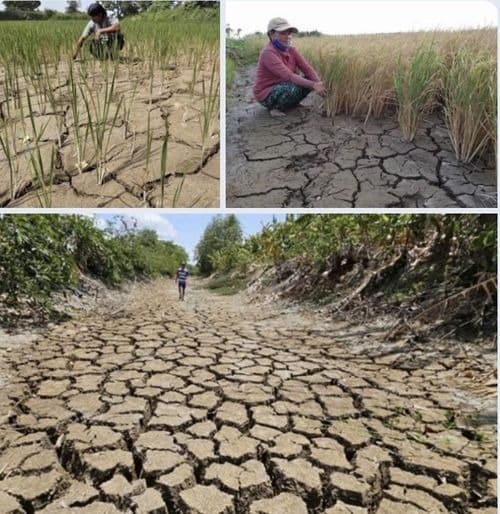
Besides the smaller harvested area in Q3/2026, the risk of El Niño and rising input costs are also factors cited by the Philippine press when assessing the country's rice production outlook.
According to the Philippine Department of Agriculture (DA), higher fertilizer and fuel prices, as global energy markets are affected by tensions in the Middle East, are adding cost pressure on agricultural production.
As reported by BusinessMirror, the Philippine Agriculture Secretary said rising fertilizer prices are one of the factors affecting the 2026 rice output outlook. High input costs have led some farmers to cut back on fertilizer use, which may affect crop yields.
Philippine rice output in 2026 may be the lowest since 2016
Amid difficulties in agricultural production, the Philippine Department of Agriculture (DA) forecasts that the country's total rice output in 2026 could fall by about 1 million tonnes from the previous year.
According to BusinessMirror, Philippine rice output in 2025 reached 19.67 million tonnes. If the forecast decline materializes, 2026 output could be only about 18.67 million tonnes, a drop of about 5.1% from 2025.
Notably, if the forecast comes true, this would be the lowest Philippine rice output since 2016, when the country recorded about 17.63 million tonnes.
However, 18.67 million tonnes is still a forecast by the Philippine Department of Agriculture, not the official full-year 2026 production result. Actual output will be determined by harvest results and statistics released in the coming period.
Philippine rice output falls: what should the Vietnamese rice market watch?
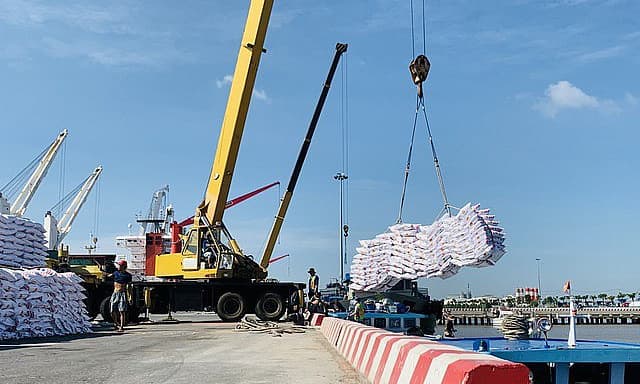
The Philippines is one of Vietnam's key rice import markets. According to BusinessMirror, rice imports into the Philippines as of October 8 reached 4.15 million tonnes, of which about 2.74 million tonnes came from Vietnam.
With domestic rice output declining, the Philippine Department of Agriculture (DA) said rice imports in 2026 could exceed 5 million tonnes to secure domestic supply.
However, according to S&P Global, the Philippines' rice import outlook is still affected by many factors, especially stock levels and import policy. Therefore, Philippine rice output is worth watching for Vietnam's rice export market, but it is not yet enough to conclude that rice prices or import demand will rise in the near future.
Follow the market closely and use farm inputs wisely
Amid fluctuations in the international rice market, farmers in the Mekong Delta should regularly follow supply and demand, the import policies of major markets, and domestic paddy purchase prices as a reference when planning production and sales.
In addition, balanced fertilizer use that matches the rice plant's nutrient needs at each growth stage and actual field conditions is also important to help farmers use inputs efficiently and reduce waste in production.
Viet Nga Fertilizer will continue to update domestic and international agricultural market news, providing useful reference information for our dealers and farmers.
References: BusinessMirror (Philippines), S&P Global.
Get a fertilizing schedule for your rice field
Leave your phone number; a Viet Nga agronomist will call back about your area and sowing date.
Specialized fertilizers for rice