
ACCOUNTING WITH FURTHER FARMERS
Brown Spot Disease on Dragon Fruit – Causes and Effective Control Measures
Brown spot disease on dragon fruit is one of the most common plant diseases that seriously affects both yield and fruit quality.Early detection and proper management not only help protect the crop but also reduce production costs for farmers. In this article, Viet Nga Agri will guide you through how to identify brown spot symptoms and apply effective, easy-to-practice solutions right in your orchard.
What Is Brown Spot Disease?
Brown spot disease on dragon fruit is a newly emerging problem in Vietnam, and many farmers still lack the knowledge to recognize and manage it in time. This disease can seriously affect all stages of plant growth, leading to significant yield loss and reduced fruit quality if not handled properly. Under humid, cool, and wet conditions, the fungus develops rapidly and spreads across the entire plantation.
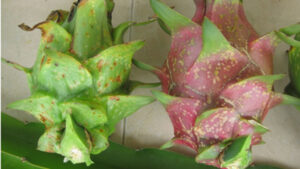
Causes of Brown Spot Disease on Dragon Fruit
To effectively prevent brown spot disease, farmers first need to understand the main causes that trigger and accelerate its spread in dragon fruit orchards.
Below are the most common factors leading to the outbreak of this disease:
- Pathogen: The disease is caused by the fungus Neoscytalidium sp., a highly aggressive pathogen capable of rapid infection and wide-spreading damage if not treated promptly.
- Common Conditions That Trigger Brown Spot DiseaseTo prevent brown spot disease from spreading, it is essential to understand the conditions that favor its development. The disease tends to appear and spread rapidly when the following factors occur:
- Unclean Orchard Conditions : Failing to remove diseased branches and fruits allows the fungus to survive and spread throughout the orchard.
- Dense Canopy : When branches are not pruned properly, sunlight cannot reach the lower parts of the plant, creating a humid environment that favors fungal growth.
- Unbalanced Fertilization : Excessive nitrogen and lack of organic fertilizer or essential secondary and micronutrients make the plant weak and reduce its resistance to disease.
- Poor Water Management : When the orchard is constantly damp or uses contaminated water for irrigation or spraying, the disease spreads more quickly.
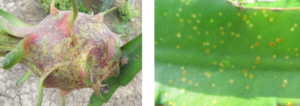
Early Signs of Brown Spot Disease on Dragon Fruit
On Stems and Branches
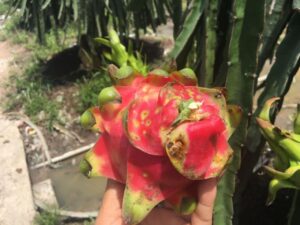
Brown spot disease usually attacks the young branches of dragon fruit first.Initially, small, round, slightly sunken spots appear on the branch surface. After about 2–3 days, these spots turn whitish, then gradually become lemon-yellow, with a distinct brown dot in the center. Over time, the lesions change to dark brown and slightly raised, resembling “crab eyes.” If left untreated, the spots expand and merge into large patches, causing the branches to become rough, dry, and eventually rot or lose vitality.
On Dragon Fruit (Young and Mature Fruit)
Both young fruits and near-harvest fruits are highly susceptible to brown spot infection.
The symptoms are similar to those found on stems and branches: The disease first appears as small, sunken spots, which later turn white, then yellow, and finally brown, becoming slightly raised. As the infection progresses, the fruit skin becomes rough and scaly, and dry rot patches may appear. In severe cases, the disease causes darkened, blemished skin across the fruit surface, making it unattractive, unmarketable, and unsuitable for export due to quality standards.
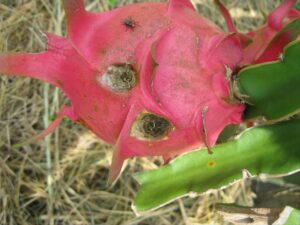
Distinguishing Brown Spot Disease from White Spot or Sunburn
Because small white spots appear on branches and fruits in the early stages, many farmers often mistake brown spot disease for white spot disease or sunburn.
However, the differences are clear: White spot disease does not turn yellow or develop a brown center, unlike brown spot disease. Sunburn usually occurs only on the side directly exposed to sunlight, and does not form circular, sunken lesions or spread across the plant as brown spot does.
Accurately distinguishing between these conditions helps farmers apply the correct treatment promptly, avoiding confusion and ineffective disease control.
Impact of Brown Spot Disease on Dragon Fruit Orchards
Brown spot disease not only weakens dragon fruit plants but also leads to significant economic losses for farmers. The most common impacts include:
- Dry Rot and Rough Branches : Infected branches become rough and dry, with young shoots developing poorly and gradually weakening, which affects the overall health and vitality of the plant.
- Damaged Fruits : The disease causes rotting, scarring, and blemishes on dragon fruit, resulting in the loss of its natural shine and visual appeal. Affected fruits are often unsellable, sold at lower prices, or rejected for export due to poor quality.
- Reduced Yield : Diseased plants produce fewer and smaller fruits with lower quality, leading to a noticeable decline in orchard productivity.
- Loss of Commercial Value : Fruits with uneven color, rot spots, or surface blemishes suffer a sharp drop in market value, making them difficult to sell or only marketable at low prices.
- Management Challenges : Brown spot disease spreads quickly, especially during the rainy or humid seasons, making control and treatment more labor-intensive and costly.
- Severe Economic Losses : All these factors combined lead to a significant decline in farmers’ income each season, especially for large-scale orchards or those growing dragon fruit for export markets.
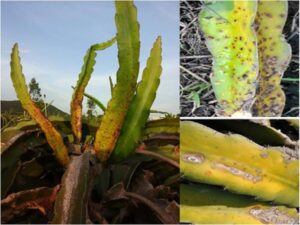
Effective Ways to Control Brown Spot Disease
Prune Branches and Remove Infected Areas
When brown spot symptoms appear on dragon fruit plants, farmers should immediately prune and remove all infected branches. For mature plants, carefully cut away the diseased tissue that has penetrated deep into the stem. After pruning, collect and destroy all infected branches and plant debris — do not leave them on the ground, as this can cause the disease to spread further. Additionally, thin out excess shoots and dense branches that no longer bear fruit to improve air circulation and sunlight exposure, especially during humid or rainy seasons.
Use of Fungicides – How to Choose and Apply Correctly
Farmers can use specialized fungicides to control brown spot disease effectively. It is recommended to choose products with clear origins that are approved or advised by agricultural engineers or local authorities. During application: Mix and spray at the correct dosage and timing, especially when the first symptoms appear. Avoid overusing chemical fungicides, as excessive use can harden the soil and harm human health with prolonged exposure.
Once the disease has been brought under control, farmers should switch to biological fungicides to maintain effectiveness, while also protecting the soil and ensuring long-term plant health.
Combine Biological Products for Greater Effectiveness and Fruit Safety
After applying chemical fungicides, switching to biological control products is a sustainable and safe solution.
These products not only help suppress remaining fungal pathogens but are also environmentally friendly and leave no harmful residues on the fruit. In addition, farmers should: Apply balanced fertilization, Supplement secondary and micronutrients, and Regularly apply agricultural lime to improve soil pH, strengthen plant health, and enhance resistance to fungal diseases.
Preventive Measures for Brown Spot Disease During the Rainy Season
The rainy season is the period when brown spot disease on dragon fruit develops most rapidly due to high humidity and prolonged cloudy weather. To effectively prevent the disease, farmers should combine both cultural and chemical control methods:
- Cultural Practices :
- Plant at proper spacing and prune branches regularly to create good ventilation, reduce humidity, and improve the effectiveness of spraying treatments.
- After harvest, thoroughly clean up plant debris, remove and destroy infected branches, and clear shade from large trees around the orchard.
- Build raised beds with proper drainage to prevent waterlogging, and avoid using water from nearby canals or ditches for irrigation or spraying, as it may contain fungal spores.
- Balanced Fertilization and Proper Care, Apply balanced fertilizers and supplement with well-decomposed organic manure enriched with Trichoderma, along with secondary and micronutrients during the stages of shoot, flower, and fruit development.
- Regularly apply agricultural lime to disinfect and improve soil quality. Avoid overstimulating off-season flowering and fruiting, and provide appropriate care to prevent plant exhaustion.
- Choose healthy, disease-resistant varieties, and inspect the orchard frequently to detect and treat early signs of infection promptly.
- Chemical Control
- When the plant develops young shoots and rainy weather persists, apply fungicides containing the active ingredients difenoconazole or azoxystrobin to prevent fungal infection.
- If the plants show no symptoms but rainfall is frequent and prolonged, farmers can use contact fungicides such as Mancozeb or rotate with Asmaitop, spraying every 7–14 days, depending on weather conditions.
Consistently combining both cultural and chemical control methods helps effectively reduce the risk of brown spot outbreaks during the rainy season, protecting the yield and quality of dragon fruit.
Conclusion
If brown spot disease on dragon fruit is not detected and treated in time, it can cause serious losses in both yield and fruit quality. Therefore, accurate identification and the application of appropriate prevention and control measures — especially during the rainy season — are crucial. Viet Nga Agri hopes that the information shared in this article will help farmers take proactive steps to protect their dragon fruit orchards, ensuring healthy crops, high productivity, and stable market output for their agricultural products.
Related news
The Role of Base Fertilization in Soil Improvement and Enhancing Agricultural Fertility
Measures to Improve and Treat Saline Soil
Winter-Spring rice blast warning – Don’t let leaf and flower burns rob you of your golden crop

Rice Sowing Techniques for the Early Winter–Spring Crop
What Is Slow-Release Fertilizer? Learn How to Use It Effectively