
ACCOUNTING WITH FURTHER FARMERS
Experience in Fertilizing Coffee Plants at Each Stage of Development
During the development process, proper and timely fertilization of coffee plants is crucial to ensure their growth and development. Let’s explore with Viet Nga Fertilizer how to fertilize coffee plants at each stage of growth!
1. Nutritional requirements of coffee plants
Coffee plants can achieve high yields when provided with adequate nutrition. Macronutrients such as nitrogen, phosphorus, and potassium are three crucial elements for growth, development, and yield.
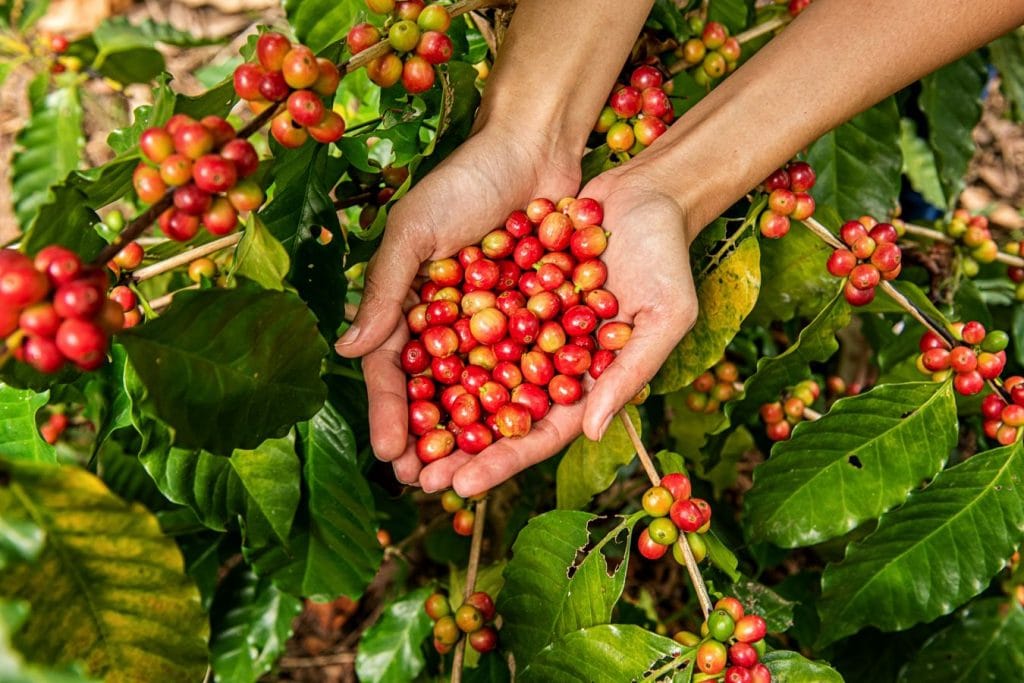
- Balanced nutrients are necessary for the plant to grow well.
Nitrogen is a crucial element for coffee plants. It promotes photosynthesis, branching, root development, and the later growth of flowers and fruit. A lack of nitrogen results in stunted growth and yellowing of the leaves throughout the plant.
Phosphorus is an element just as important as nitrogen. It plays a role in photosynthesis and the accumulation of dry matter. Plants deficient in phosphorus have smaller, narrower leaves that tend to stand upright. Before the leaves turn purplish, their color darkens compared to plants with sufficient phosphorus. Phosphorus deficiency slows plant growth and prolongs the ripening process.

- Nitrogen deficiency causes stunted growth in plants, with all leaves turning yellow.
Potassium plays a role in enhancing plant resistance and increasing the synthesis of carbohydrate compounds. Potassium deficiency results in small fruits, increased fruit drop, low yields, and a low bean-to-fruit ratio. Potassium deficiency is often most evident at the end of the rainy season because coffee plants concentrate nutrients on fruit development, increasing their potassium needs while potassium fertilization is often insufficient.
2. Expert advice on fertilizing coffee plants at each stage.
In general, fertilizing coffee plants is divided into two main stages: the basic development stage and the commercial stage (the stage when the coffee plants bear fruit).
2.1 Basic construction phase (after planting):
This period is calculated from the first year to the third year after planting the coffee tree.
– Soil preparation stage: During this stage, you apply lime to improve the soil, raise the pH, and kill bacteria… with a lime application rate of 2-4 tons/ha, spread throughout the garden. Then, wait for 1 to 2 rain showers for the lime to dissolve completely before planting the coffee.
– About 5-7 days before planting coffee trees, you can apply about 0.5 kg of organic fertilizer to each planting hole, mixing it thoroughly into the soil before planting. Remember to take measures to retain moisture in the planting hole after fertilizing.
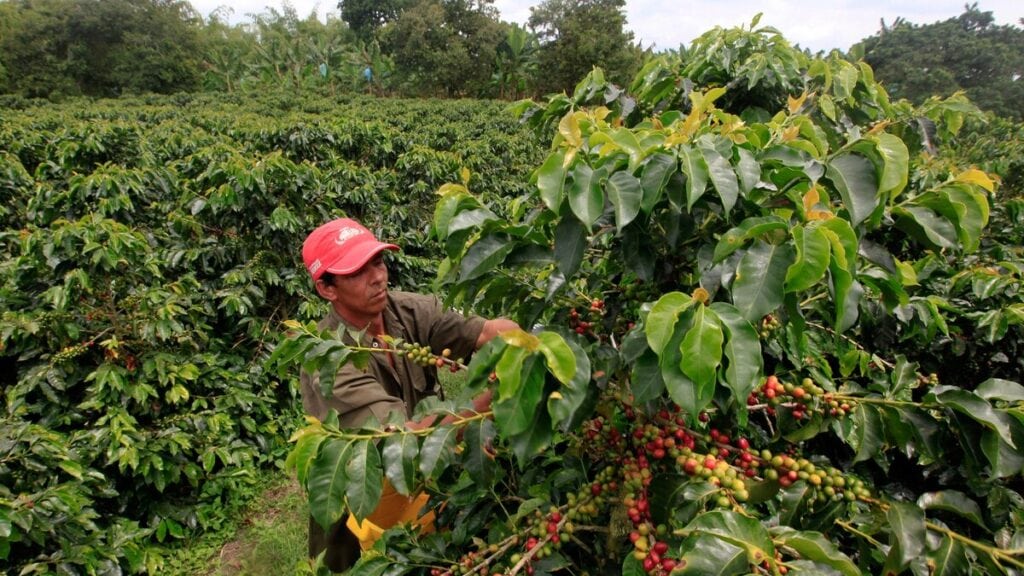
- Coffee plants should be fertilized with a balanced amount of fertilizer as recommended by experts.
The amount of fertilizer to be applied to coffee plants during the initial establishment period is as follows:
– Year 1 (1-year-old trees): Fertilize 1 hectare with: 300kg NPK 16-16-8 (divided into 4 applications/year) + 200kg Superphosphate (divided into 2 applications/year) + 500kg Organic fertilizer (divided into 2 applications/year).
– In the second year (2-year-old trees): fertilize 1 hectare with 600-700kg of NPK 16-16-8 (divided into 4 applications/year) + 750kg of organic fertilizer (divided into 2 applications/year).
– In the third year (3-year-old trees): fertilize 1 hectare with 800-900kg of NPK 16-16-8 (divided into 4 applications per year) + 1 ton of organic fertilizer (divided into 2 applications per year).
2.2 Commercial coffee stage (coffee during the fruiting period)
This is a very important stage for the coffee plant, so attention should be paid to it.
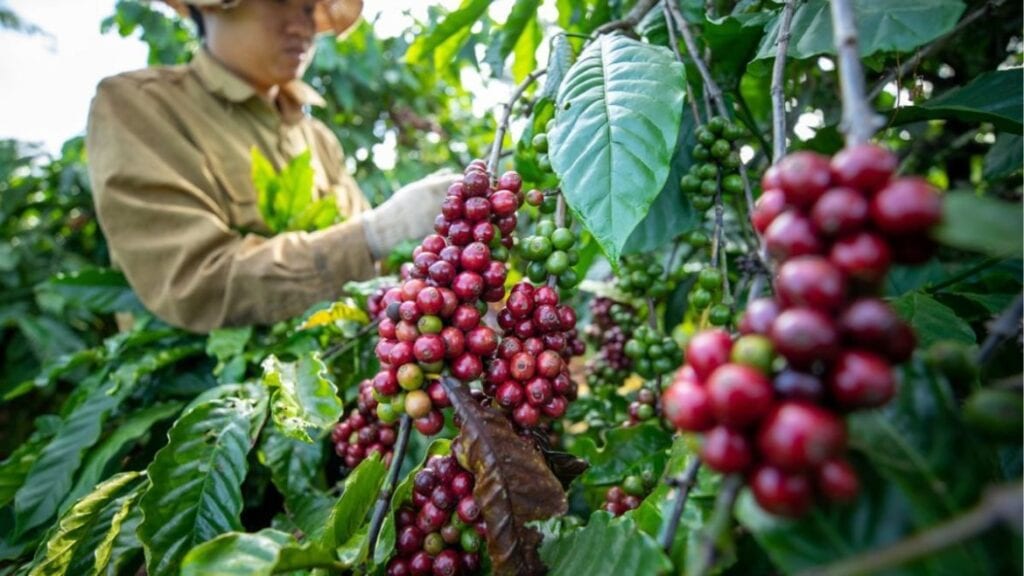
- Providing plants with adequate nutrients directly impacts their yield.
According to official research, to achieve a coffee yield of 3 tons of beans/hectare/year, we need to fertilize 1 hectare/year with: 200-250 kg of pure nitrogen, 80-100 kg of pure phosphorus, 200-250 kg of pure potassium, and 10-15 tons of manure.
The amount of fertilizer applied in each of the year is divided into the following percentages:
- First application (during the dry season, around January and February): apply 15% of the total amount of fertilizer expected for one year.
- Second application (at the beginning of the rainy season): apply 25% of the total amount of fertilizer expected for one year.
- Third application (mid-rainy season): apply 30% of the total amount of fertilizer expected for one year.
- Fourth application (at the end of the rainy season): apply 30% of the total amount of fertilizer expected for one year.
Apply fertilizer with the following ratios of Nitrogen, Phosphorus, and Potassium (NPK formula) in each application:
- First application (during the dry season, around January and February): apply a fertilizer formula with an N-P-K ratio of 3-1-1 or 2.5-1-1 (for example: NPK 30-10-10, NPK 25-9-9…).
- Second application (at the beginning of the rainy season): apply fertilizer with an N-P-K ratio of 2-2-1 or 1-1-1 (for example: NPK 19-16-8, NPK 16-16-8, NPK 16-16-16…).
- Third application (mid-rainy season): apply fertilizer with an N-P-K ratio of 2-1-2 (for example: NPK 16-8-16, NPK 18-6-18…)
- Third application (mid-rainy season): apply fertilizer with an N-P-K ratio of 2-1-2 (for example: NPK 16-8-16, NPK 18-6-18…)
2.3. Add organic fertilizer.
Besides applying inorganic fertilizers to coffee plantations in a timely manner during the rainy season according to the plant’s growth and development stages, the application of organic fertilizers is also important, as it is indispensable for sustainable farming practices today.

- In addition to chemical fertilizers, farmers should also apply organic fertilizers to coffee plants.
Organic fertilizers possess properties that chemical fertilizers lack. When applied to the soil, in addition to providing nutrients to plants, organic fertilizers also improve the physical, chemical, and biological properties of the soil, thus improving the soil environment.
| Type of fertilizer | Dosage |
| Manure | – For new plantings: 8-10 tons/ha – For subsequent years: 10 tons/ha (applied once every 2 years) |
| Microbial organic fertilizer | 1.2-2 tons/ha/year |
| Organic plant residues (weeds, by-products from pruning, coffee fruit husks) | Keep all plant residues in the coffee plantation (except for diseased stems and branches, which must be removed and destroyed). |
Organic fertilizer is applied in furrows at the beginning or middle of the rainy season. The furrows are dug in a ring shape along one side of the planting bed, 20cm wide and 25-30cm deep. After applying the fertilizer, the furrows should be filled with soil.
2.4. Watering
Basic construction period
– Traditional irrigation method: Irrigation cycle: every 5-6 days; amount of water: 100-150 liters/plant/time.
– Water-saving irrigation method: Irrigation cycle: every 2 days; amount of water: 20 – 30 liters/plant/time.

- Watering coffee plants is an important step that farmers should pay attention to.
Business period
The first watering is determined when the flower buds have fully developed (the flowers have a beak-like shape and are grayish-green), 2-2.5 months after harvest.
– Traditional irrigation method (basin irrigation): After the first irrigation, irrigate every 10 days for basaltic red soil, and every 7 days for brown and black soils with gravel. The amount of water is 200-250 liters per tree.
– Water-saving irrigation method (automatic irrigation system): After the first irrigation, continue irrigation every two days, using approximately 20-25 liters of water per plant.
Note: Adjust the amount of water according to the plant’s condition and soil moisture.
3. Notes on applying NPK fertilizer to coffee plants
When applying NPK fertilizer to coffee plants, farmers should note the following important points:
– Correct dosage: Follow the fertilizer dosage instructions provided by the manufacturer or as recommended by a specialist.
– Right time: Apply fertilizer at the appropriate time in the coffee plant’s growth cycle.
– Proper mixing ratios: This ensures that the plants receive sufficient nutrients and supports their growth and yield.
– Choose quality fertilizers: Buy fertilizers from reliable sources to ensure trustworthy chemical composition and nutrients.
Viet Nga Fertilizer specializes in the production, distribution, and import of reputable, high-quality fertilizer products. With a diverse range of products for all types of crops and soils, we meet all the farming needs of our customers.
– Monitoring effectiveness: This helps adjust the amount and timing of fertilizer application to achieve optimal yields.
Conclusion
With the above guidance, we hope you have understood how to fertilize coffee plants at different stages of development. Proper fertilization not only helps coffee plants grow vigorously but also ensures a successful harvest of high-quality coffee beans. We wish you success and a bountiful harvest of quality coffee!

Related news

The Role of Base Fertilization in Soil Improvement and Enhancing Agricultural Fertility
Measures to Improve and Treat Saline Soil

Winter-Spring rice blast warning – Don’t let leaf and flower burns rob you of your golden crop

Rice Sowing Techniques for the Early Winter–Spring Crop
What Is Slow-Release Fertilizer? Learn How to Use It Effectively