Rambutan Care and Fertilization Techniques
Date
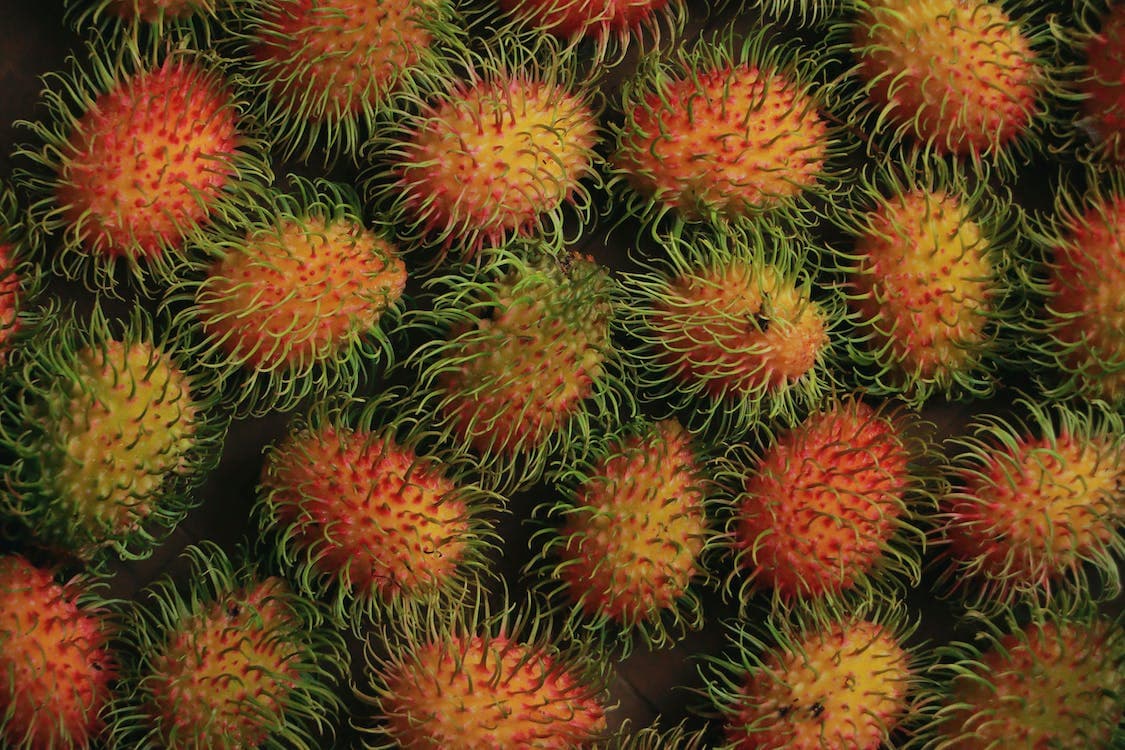
These past days have marked the peak harvest season for rambutan trees in the Mekong Delta and the Southeast region. Besides being eaten fresh as usual, this fruit is becoming more popular than ever when prepared in special dishes such as chicken and rambutan salad.
Vietnam’s total rambutan area is 26,000 ha, with an annual output of 340,000 tons. The time from planting rambutan to harvest is not very long and the yields are large, making it a crop of high economic value.
That is why we invite farmers to join Viet Nga Fertilizer in reading this article on care techniques and the right fertilizer for rambutan trees for bumper harvests and good prices!
1. Rambutan Care Techniques
1.1. Spacing Requirements
Rambutan trees need room to grow and plenty of sunlight. Therefore, farmers should maintain an average spacing of 10 x 10 m between rambutan trees.
1.2. Irrigation
The best time to plant this tree is at the beginning of the rainy season, as it saves the labor of frequent watering and there is no need to worry about water shortage.
In the dry season, water regularly, especially during the first month after planting. However, balance the amount to avoid waterlogging. Overwatering can also cause the roots to deteriorate.
1.3. Variety Selection
There are many rambutan varieties, but 3 main ones are popular in Vietnam:
– Java rambutan: sweet, fragrant flesh that does not cling to the seed, large fruit and long hairs. This variety was introduced from Indonesia and Thailand and is widely grown in the Mekong Delta.
– Longan rambutan (chom chom nhan): round fruit with short hairs; when ripening, the skin gradually turns from green to yellow, pink and finally red. It is also called sugar rambutan because its flesh is crisp, separates easily from the seed, and is “sugar-sweet” and fragrant.
– Thai rambutan: fairly large fruit, thick flesh that separates from the seed, and a very small flat seed; when ripe, the hairs on the skin are green. Thai rambutan has crisp, tasty, mildly sweet flesh, so you can eat a lot without tiring of it.
Depending on soil conditions and market demand, farmers can choose a suitable variety.
1.4. Pruning and Canopy Shaping
– After planting, top the tree at a height of about 60 – 70 cm to form strong primary branches.
– Keep 4 – 5 primary branches evenly spaced around the trunk, with the lowest branch about 70 cm above the base. At the same time, prune away other small, weak or poorly developed branches.
– Secondary and tertiary branches should be pruned and kept at a length of about 30 – 40 cm.
– Prune rambutan trees regularly during the first 18 months after planting. After that, prune only when the tree is affected by pests or diseases or when branches grow overlapping.
2. Rambutan Fertilization Techniques
Before planting, dig a hole (about 50 x 50 x 50 cm) and apply a basal dose of 10 – 15 kg of organic fertilizer (VNG Organic Green 666 or GRONN 75%) and 0.2 – 0.3 kg of DAP 18 – 46 Viet Nga so the roots can absorb nutrients and the tree has a solid foundation for growth.
2.1. Rambutan Establishment Stage
During the first 3 – 4 years after planting, apply NPK 16-16-16+TE Viet Nga or NPK 20-20-15+TE Viet Nga at 2 – 3 kg/tree/application, supplemented with the micronutrients boron, zinc and iron, to provide the necessary nutrients while the root system is not yet strong enough.
Depending on soil conditions and the growing area, farmers may consider fertilizing every 3 – 4 months. Dilute the fertilizer in water and use a watering can with a shower nozzle to water around the area 15 – 30 cm from the base so the roots grow and spread out.
2.2. Rambutan Bearing Stage
From the 4th year onward, when the tree begins to bear fruit and gives its first harvest, fertilization is divided into 4 main stages.
– After harvest: apply 5 – 10 kg of organic fertilizer (VNG Organic Green 666 or Gronn 75%) and 1 – 2 kg of NPK 16-16-16+TE Viet Nga per tree, depending on the tree’s growth, to help it recover.
– Before flowering: 1 – 2 kg/tree of NKP 0-52-34 helps good flower bud differentiation, uniform flowering and a higher fruit set rate.
– 1 – 2 weeks after fruit set: apply 1 – 2 kg of NPK 16-16-16+TE Viet Nga per tree to reduce young fruit drop and promote good fruit development.
– In the 9th week after fruit set (about 2 months before harvest): apply 1 – 2 kg of NPK 16-16-8-13S Viet Nga per tree to make the fruit bigger, with thicker and sweeter flesh.
Besides supplying nutrients to the crop through fertilizers, farmers also need to inspect their orchards regularly to prevent and control pests and diseases on rambutan trees such as mold spot, sooty mold, flower blight, mealybugs, powdery mildew, fruit borers, etc. to achieve the highest yield!
We wish our dealers brisk business and farmers bumper harvests at good prices.
Content summary: rambutan fertilizer, rambutan fertilizer prices, fertilizing rambutan trees, rambutan growing techniques, how to care for rambutan trees, specialized fertilizer for rambutan trees