Specialized Rice Fertilizer Set: NPK 20-15-7+TE and NPK 15-7-20+TE
Date
Contents· 7 sectionsExpandCollapse
- Why Choose an NPK Formula Suited to Rice Growing Conditions?
- What Makes the NPK 20-15-7+TE and NPK 15-7-20+TE Rice Fertilizer Set Stand Out?
- NPK 20-15-7+TE – Nutrition for the Rooting, Tillering and Canopy Expansion Stage
- NPK 15-7-20+TE – Nutrition for the Panicle Initiation Stage
- Which Growing Conditions Suit the NPK 20-15-7+TE and NPK 15-7-20+TE Duo?
- How to Use the NPK 20-15-7+TE and NPK 15-7-20+TE Set
- Notes on Using the Specialized Rice Fertilizer Set
The specialized rice fertilizer set NPK 20-15-7+TE and NPK 15-7-20+TE from Viet Nga Fertilizer was developed with nutrient ratios suited to each growth stage of the rice plant. NPK 20-15-7+TE is used in the early applications to support root, stem and leaf development and tillering, while NPK 15-7-20+TE, with its higher potassium content, is used at panicle initiation to support panicle formation and grain filling. Choosing and using the right NPK formula also depends on the rice variety, soil characteristics, season and actual crop growth, so that the plant absorbs nutrients in line with its needs at each stage. Join Viet Nga Fertilizer in the article below to learn in detail about the characteristics, roles and use of this specialized rice fertilizer set.
Why Choose an NPK Formula Suited to Rice Growing Conditions?
Throughout a rice crop, the plant's need for nitrogen, phosphorus and potassium changes as it develops. During rooting, tillering and canopy expansion, the plant focuses on building its root system, stems, leaves and productive tillers to lay the initial foundation. As it moves into the stem elongation, panicle formation and pre-heading stages, its nutrient requirements also change to serve reproductive growth and yield formation. Therefore, the NPK ratio should be balanced according to the care objective at each stage rather than kept fixed throughout the season.
Besides the plant's development pattern, the fertilizer rate and formula are also influenced by soil properties and fertility, the rice variety, the season, the weather, crop vigor and local farming practices. Even fields planted with the same rice variety may need different fertilization if their soil characteristics or actual field conditions differ.
Therefore, specialized rice fertilizer does not necessarily come in a single NPK ratio for every situation. A range of formulas gives farmers more options to balance nutrient supply according to field characteristics and the care objective at each stage. Among them, the NPK 20-15-7+TE and NPK 15-7-20+TE set is designed to shift the NPK ratio from the tillering applications to the panicle initiation application, matching the plant's requirements at each point in the season.
What Makes the NPK 20-15-7+TE and NPK 15-7-20+TE Rice Fertilizer Set Stand Out?
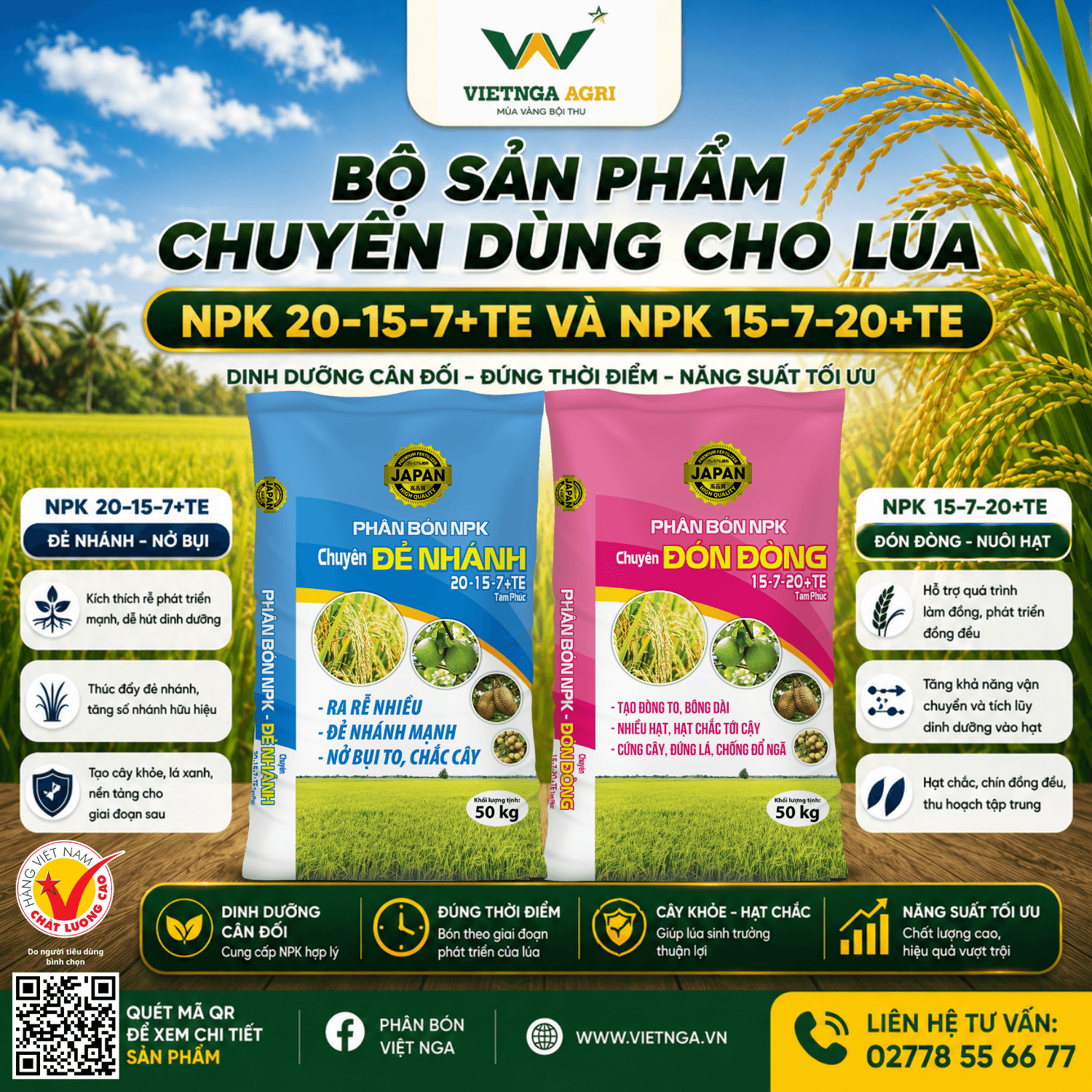
What makes the specialized rice fertilizer set NPK 20-15-7+TE and NPK 15-7-20+TE stand out is the way the two formulas follow one another along the plant's development. Instead of using the same NPK ratio all season, each product serves its own care objective, from rooting, tillering and canopy expansion through to panicle initiation and panicle formation.
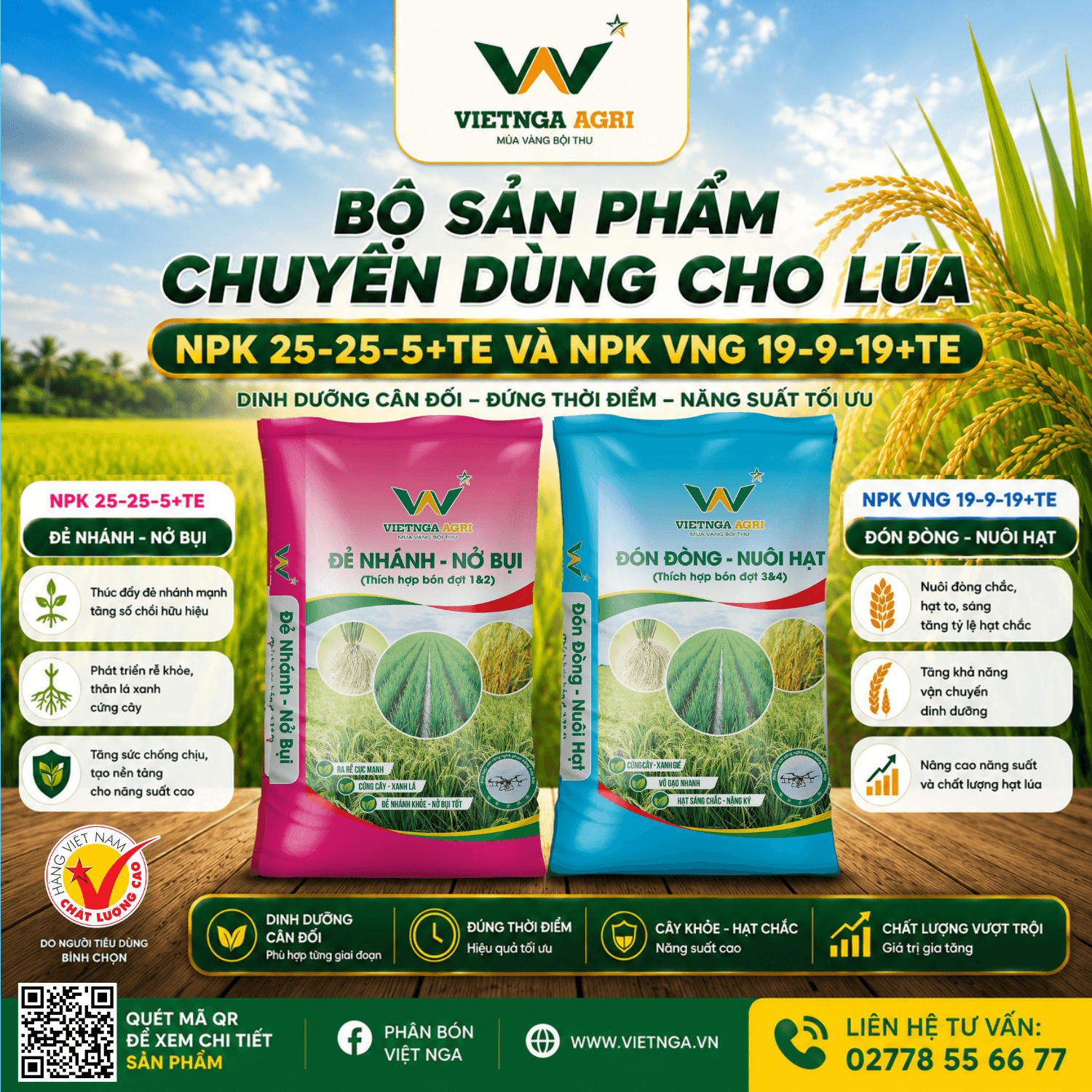
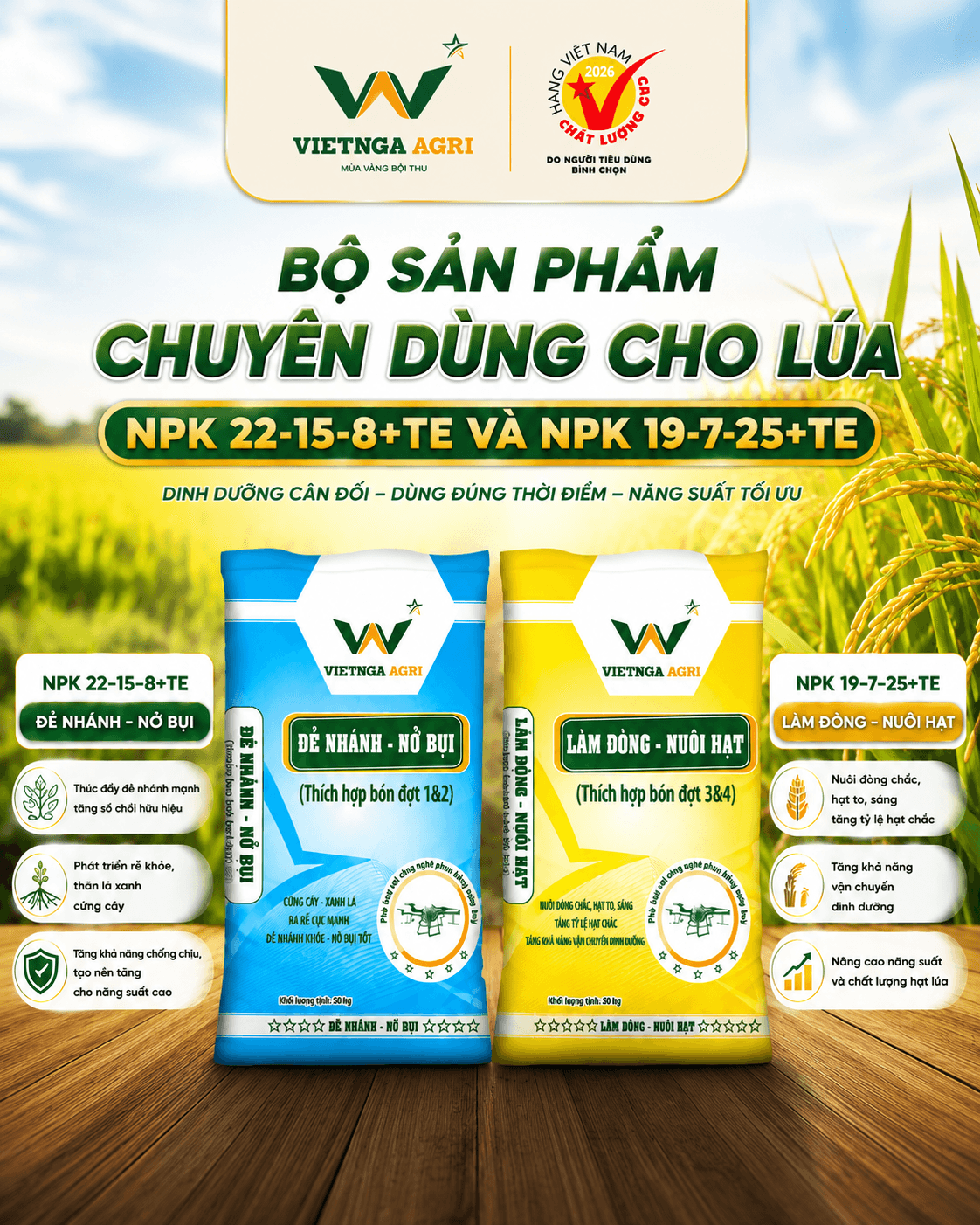
In the early applications, NPK 20-15-7+TE focuses on supplying nutrients for root, stem and leaf development and tiller formation, laying the foundation for the following stages. When the rice enters panicle initiation, NPK 15-7-20+TE, with a higher potassium ratio, is used to meet the plant's requirements as it shifts to reproductive growth, contributing to panicle formation and preparing for heading, grain formation and grain filling later on.
Using NPK 20-15-7+TE followed by NPK 15-7-20+TE allows the NPK ratio to be adjusted at each stage instead of staying fixed all season. Depending on the rice variety, soil characteristics, season and actual field conditions, farmers can consider this set as one option in their rice care program and adjust application rates to their growing conditions.
NPK 20-15-7+TE – Nutrition for the Rooting, Tillering and Canopy Expansion Stage
During rooting, tillering and canopy expansion, the rice plant needs nutrients to strengthen its roots, form stems and leaves and produce tillers. This is an important time for the plant to establish its initial foundation before moving into stem elongation and panicle formation.
Nutrient Composition of NPK 20-15-7+TE
NPK 20-15-7+TE contains 20% nitrogen (N), 15% available phosphate (P₂O₅), 7% available potash (K₂O) and 50 ppm Fe. Its higher nitrogen and phosphate ratio relative to potassium matches the nutritional focus of the tillering stage, when the plant concentrates on forming roots, stems, leaves and tillers.
Nitrogen supports stem and leaf growth and tillering; phosphorus plays an important role in root development and early growth; and potassium together with micronutrients helps provide balanced nutrition for the plant.
The Role of NPK 20-15-7+TE in the Tillering and Canopy Expansion Stage
NPK 20-15-7+TE is used in the early applications to support root development, stem and leaf growth, tillering and canopy expansion. A well-developed root system allows the plant to absorb water and nutrients more easily, while the nutrients supplied during this period enable the plant to keep forming and developing tillers.
Proper care and nutrition during the tillering stage help build a healthy plant base, preparing for stem elongation and panicle formation in the next stage.

NPK 15-7-20+TE – Nutrition for the Panicle Initiation Stage
After tillering and canopy expansion, the rice plant gradually enters stem elongation, panicle differentiation and panicle formation. At this point, the plant no longer focuses mainly on forming new stems, leaves and tillers but shifts to preparing for panicle formation, heading and grain formation. Therefore, the NPK ratio used should also be adjusted to the plant's development at this stage.
Nutrient Composition of NPK 15-7-20+TE.
NPK 15-7-20+TE contains 15% nitrogen (N), 7% available phosphate (P₂O₅), 20% available potash (K₂O) and 50 ppm Fe. Compared with NPK 20-15-7+TE used during tillering, this formula has a higher potassium content, matching the care focus as the plant shifts to reproductive growth.
In this formula, nitrogen continues to help sustain stem and leaf activity; phosphorus takes part in the plant's metabolic and developmental processes; while potassium, at a higher ratio, plays an important role in transporting and accumulating assimilates and provides the nutrients needed for panicle formation, heading and later grain filling.
The Role of NPK 15-7-20+TE in Panicle Initiation and Panicle Formation
NPK 15-7-20+TE is used in the panicle initiation application, when the rice plant begins stem elongation and panicle formation. Switching from NPK 20-15-7+TE to a formula with a higher potassium ratio adjusts the nutrient balance to the plant's development, contributing to panicle formation and preparing for heading, grain formation and subsequent grain filling.
Nutrients supplied at this time also help promote the transport and accumulation of assimilates into the grain in the following stages, aiming for well-filled grains, uniform ripening and a concentrated harvest. By using NPK 20-15-7+TE in the tillering applications followed by NPK 15-7-20+TE in the panicle initiation application, the plant receives NPK ratios that match the care objectives from tillering and canopy expansion through stem elongation, panicle formation and preparation for heading.

Which Growing Conditions Suit the NPK 20-15-7+TE and NPK 15-7-20+TE Duo?
Choosing the NPK 20-15-7+TE and NPK 15-7-20+TE set should be based on soil characteristics, fertility, rice variety, season, crop growth and the actual farming program. The defining feature of this set is the shift from prioritizing growth and tillering in the early applications to an increased role for potassium as the rice enters panicle initiation.
However, this is not a fixed formula for every rice field. Before choosing among specialized fertilizer sets, farmers should assess their field conditions and actual nutrient needs; especially for fields with distinctive soil or growth characteristics, they should consult the Viet Nga Fertilizer technical team to choose a suitable formula and application rate.
The NPK 20-15-7+TE and NPK 15-7-20+TE set has also been applied in Viet Nga Fertilizer's field demonstration models, recording actual farming results for farmers' reference.
How to Use the NPK 20-15-7+TE and NPK 15-7-20+TE Set
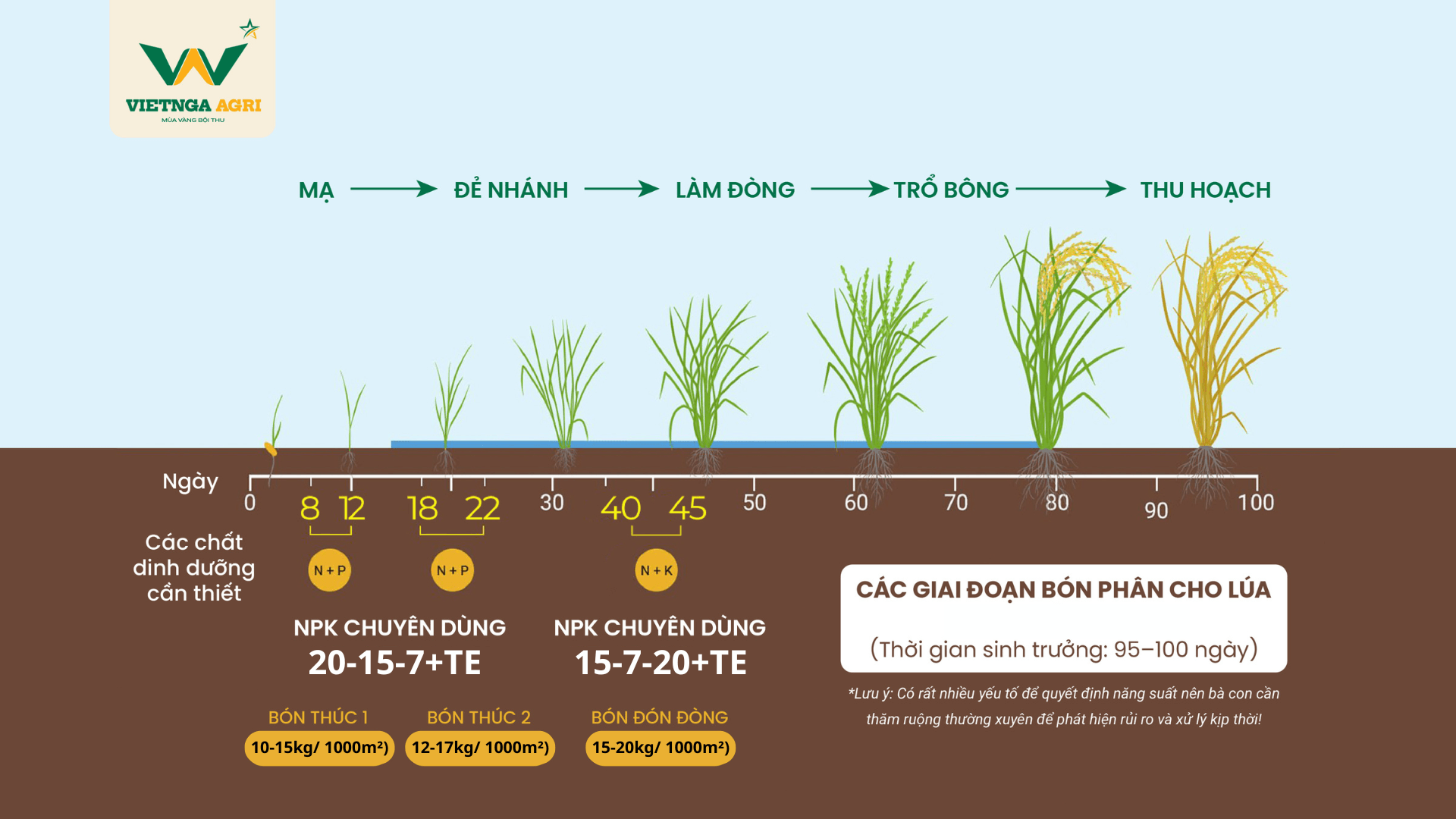
For the specialized NPK 20-15-7+TE and NPK 15-7-20+TE set to be effective, fertilizer applications should be scheduled according to each growth stage of the rice plant. Following Viet Nga Fertilizer's usage instructions, NPK 20-15-7+TE is used in the first two applications to supply nutrients for rooting, tillering and canopy expansion; then switch to NPK 15-7-20+TE in the panicle initiation application, when the plant's nutrient needs begin to change.
Application 1: 8-12 Days After Sowing – NPK 20-15-7+TE
At 8-12 days after sowing (DAS), apply NPK 20-15-7+TE at a reference rate of 10-15 kg/1,000 m². This is when the rice establishes roots and begins tillering; this application focuses on supplying nutrients for roots, stems, leaves and canopy expansion.
Application 2: 18-22 Days After Sowing – NPK 20-15-7+TE
Continue applying NPK 20-15-7+TE at around 18-22 DAS, at a reference rate of 12-17 kg/1,000 m². This application focuses on supplementing nutrients during tillering and canopy expansion, helping the plant sustain growth and build a strong base before moving into stem elongation and panicle formation.
Application 3: 40-45 Days After Sowing – NPK 15-7-20+TE
At around 40–45 DAS, when the rice enters panicle initiation, switch to NPK 15-7-20+TE at a reference rate of 15–20 kg/1,000 m². The higher potassium ratio matches the care focus during panicle formation and preparation for heading and grain filling.
Application | Reference timing | Stage | Product | Reference rate (per 1,000 m²) |
Application 1 | 8-12 DAS | Rooting – start of tillering | NPK 20-15-7+TE | 10-15 kg |
Application 2 | 18-22 DAS | Tillering – canopy expansion | NPK 20-15-7+TE | 12-17 kg |
Application 3 | 40-45 DAS | Panicle initiation – panicle formation | NPK 15-7-20+TE | 15-20 kg |
Note: The rates above are for reference only. The fertilizer rate and timing may be adjusted according to the rice variety, soil characteristics, season, crop growth and actual local growing conditions.
Notes on Using the Specialized Rice Fertilizer Set
To use the NPK 20-15-7+TE and NPK 15-7-20+TE set effectively, farmers should combine the application guidelines with actual field observation and adjust the timing and rate according to the condition of the crop.
Apply the Right Product at Each Stage
Each formula in the set is designed for a different nutritional objective. NPK 20-15-7+TE is used in the tillering and canopy expansion applications, while NPK 15-7-20+TE is used at panicle initiation and panicle formation. Using the right product at each stage ensures the plant receives the NPK ratio that matches the care objective.
Monitor Crop Growth Before Each Application
Days after sowing are a reference point for timing fertilizer applications, but they should not be applied mechanically to every rice field. Before each application, observe tillering, leaf color and actual field conditions to decide on timing rather than relying solely on the number of DAS.
Adjust Fertilizer Rates to Soil, Variety and Season
Even with the same NPK formula, nutrient needs and fertilizer rates can vary depending on soil fertility, rice variety, season, weather and crop growth. Therefore, the recommended rates are for reference. Depending on soil fertility, rice variety, season, weather and crop vigor, the actual rate should be increased or reduced to avoid under- or over-fertilization.
Combine with Water and Pest Management
The effectiveness of a nutrition program also depends on field management practices. Farmers should manage water appropriately at each stage, inspect their fields regularly and monitor pests and diseases so they can act promptly. A sound combination of nutrition, water and pest management helps the rice plant maintain favorable growth throughout the season.
The specialized rice fertilizer set NPK 20-15-7+TE and NPK 15-7-20+TE offers a sequential nutrition solution from tillering to panicle initiation, allowing farmers to proactively change the NPK ratio as the plant develops instead of using one formula all season. To get better results from fertilizer use, application rates and timing should be adjusted based on the rice variety, soil characteristics and actual field conditions. Contact the Viet Nga Fertilizer technical team for advice on choosing the right product set and building a fertilization program for your actual growing conditions.