
ACCOUNTING WITH FURTHER FARMERS
Some Notes on Planting for the Autumn-Winter 2024 Crop
To ensure a high yield and good quality for the autumn-winter crop, thorough preparation right from the planting stage is crucial. During this stage, farmers need to understand the important points regarding land preparation, selecting suitable varieties, planting time, fertilization methods, and rice care techniques in the face of unfavorable weather conditions to ensure healthy growth and development of the rice plants.
Let’s explore useful information from Viet Nga Fertilizer to achieve the best results in your upcoming crop season.
1. Tình hình xuống giống vụ Thu Đông
As of August 2nd, 2024, the Mekong Delta provinces had harvested 700,000 out of 1.48 million hectares of summer-autumn rice; yields ranged from 6.2-6.6 tons/ha, estimated at approximately 4.5 million tons of rice. Currently, rice prices are high and stable, so farmers have taken advantage of this to replant about 370,000 hectares of autumn-winter rice.
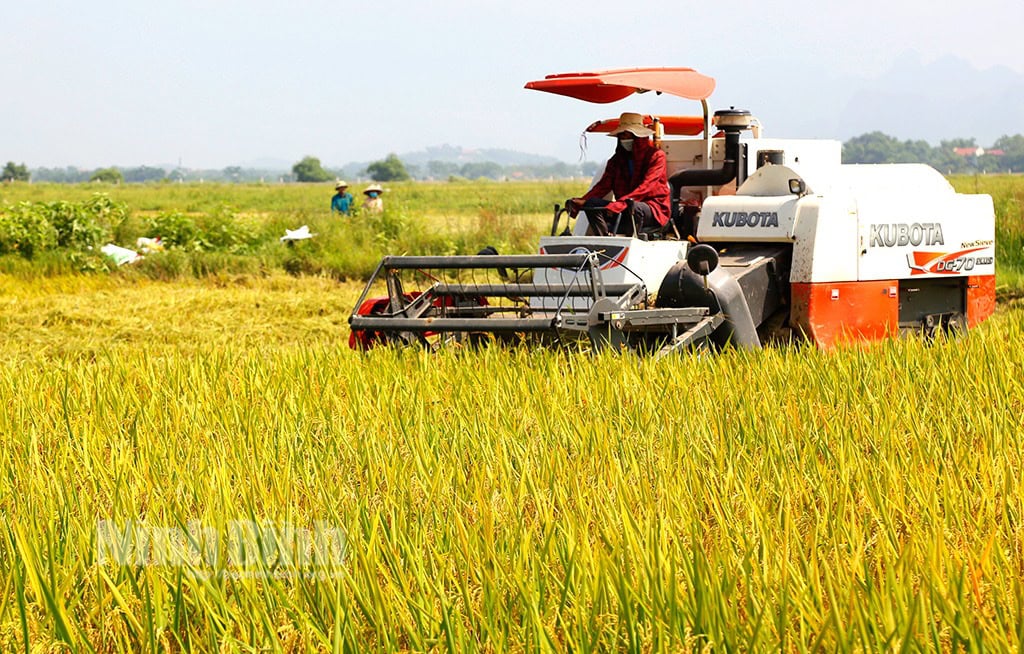
According to the Department of Crop Production, the Mekong Delta will plant approximately 700,000 hectares of autumn-winter rice in 2024, 6% lower than last year. The largest areas of autumn-winter rice cultivation are currently concentrated in the provinces of An Giang, Dong Thap, Kien Giang, and Tra Vinh.
This is the second rice crop piloted by the Ministry of Agriculture and Rural Development under the Project for Sustainable Development of 1 million hectares of high-quality, low-emission rice monoculture linked to green growth in the Mekong Delta by 2030, in five localities: Can Tho, Tra Vinh, Soc Trang, Kien Giang, and Dong Thap.
2. Difficulties when planting the Autumn-Winter crop.
The weather at the end of the summer-autumn rice crop season was quite unpredictable, with many consecutive and prolonged periods of heavy rain, which greatly affected the harvesting progress.
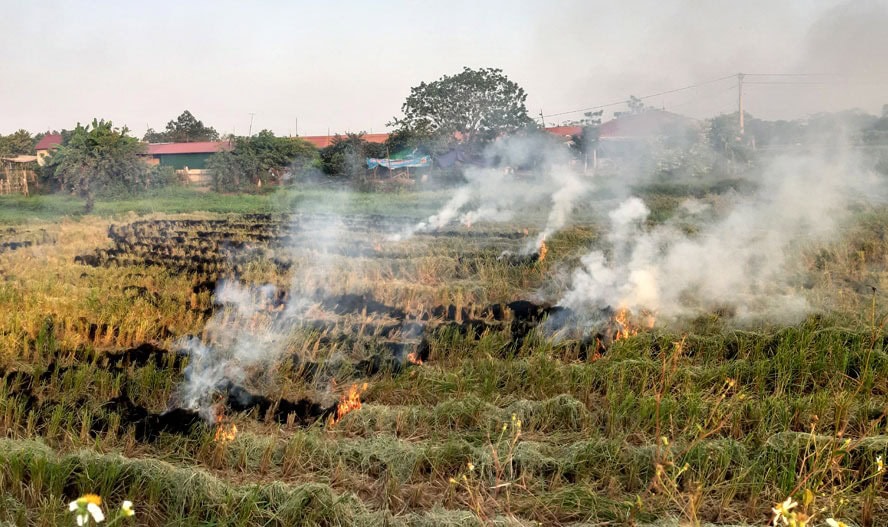
Processing rice straw is difficult, so most farmers choose to harrow and bury it in preparation for planting to ensure timely crop production. However, with this burying method, if not properly treated, the rice plants are very susceptible to organic poisoning in the later stages.
Furthermore, the 2024 rainy season is expected to be very complex due to the influence of the La Nina phenomenon. Farmers need to regularly monitor weather forecasts to minimize damage from rain and storms when deciding to plant. In particular, late planting may encounter heavy rain and storms during the ripening stage, leading to yield losses.
To proactively ensure safe cultivation of the autumn-winter rice crop, minimize damage from rain and storms, and achieve high pest control efficiency, it is necessary to implement a package of technical measures at the beginning of the season based on the application of scientific and technical advancements in rice cultivation such as: 3 reductions 3 increases, 1 must 5 reductions, SRI, alternating wet and dry irrigation, etc.
3. Things to note when planting the Autumn-Winter 2024 crop.
3.1. Regarding land preparation
– Field sanitation:
Process the straw, stubble, and grass around the edges of the field by collecting and transporting the fresh straw out of the field after harvest.
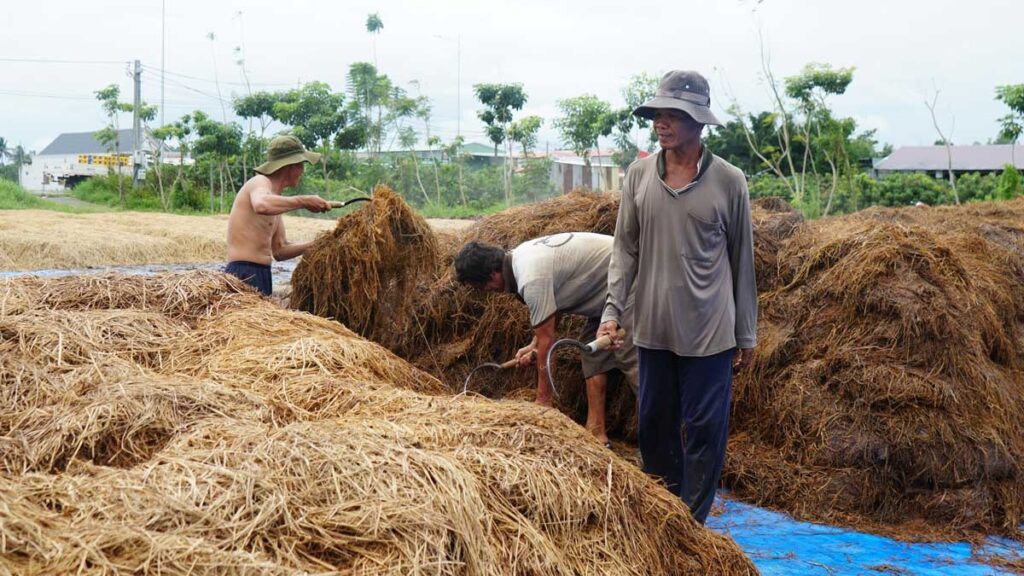
Avoid burning rice straw to prevent nutrient and organic matter loss, reduce environmental pollution, and collect straw from the fields for processing and reuse.
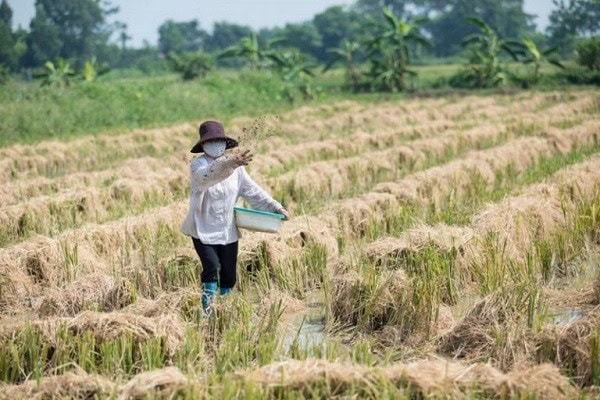
Trichoderma fungi or other biological preparations can be used to decompose rice straw, followed by plowing and drying the soil for 7-15 days to mineralize organic matter, thereby reducing root rot in rice (due to poisoning) and breaking the host source for pests and diseases in the field. This is especially effective in minimizing organic poisoning in the early stages of rice plant growth.
See also: Detailed Guide: Proper and Environmentally Safe Straw and Rice Husk Handling
– Apply lime to the soil at a rate of 50-100kg per 1,000m2 5-7 days before sowing.

– Take advantage of every opportunity to thoroughly plow, till, and prepare the land, applying mechanization to rice production to reduce costs and adapt cultivation to rainy and stormy conditions; combine this with digging many drainage ditches to limit flooding.
3.2. Seed selection and sowing
– Use rice varieties recommended by the industry, certified seed varieties, high-yielding and high-quality varieties, with the potential to meet market demand, wide adaptability, and resistance to adverse weather conditions and diseases.
Farmers are encouraged to use high-quality rice varieties that meet market demands, are strong, resistant to lodging, and tolerant to pests, diseases, and salinity, such as OM 18, OM 4900, OM 5451, Dai Thom 8, ST 5, ST24, ST 25, etc.
– Apply the method of sowing rice in rows or sparsely, using less than 100kg of seed per hectare.
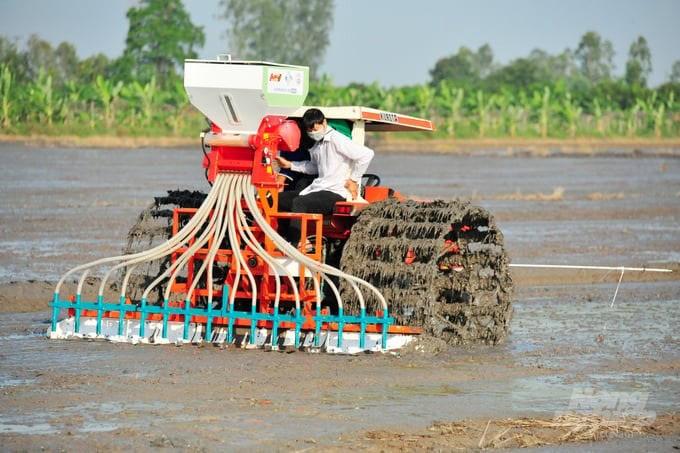
– Applying advanced rice cultivation processes such as “3 reductions – 3 increases”, “1 must – 5 reductions“, applying IPM, and ecological technology in pest management. Planting seeds in a concentrated and simultaneous manner across each field, avoiding planthoppers to limit the occurrence of yellow dwarf and leaf curl diseases.
3.3. Caring for rice crops during the Autumn-Winter season.
– Managing irrigation water resources:
Adjust the amount of water according to the rice plant’s growth needs. Farmers should maximize the application of water-saving irrigation solutions (alternating wet and dry periods) for each growth stage of the plant.
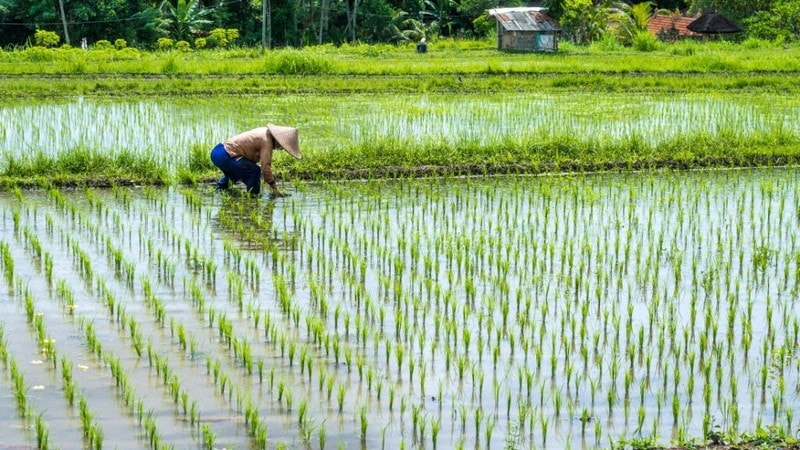
During the flowering and ripening stages, farmers should adjust the water level to prevent lodging and reduce losses during harvesting.
– Trimming:
Rice plants should not be planted too densely in the field, as this will result in fewer tillers, a low percentage of effective panicles, and increased susceptibility to pests and diseases.
Early thinning should be carried out when rice plants are 12-15 days after sowing (maximum 18 days after sowing) to help the rice plants stabilize their density per square meter, promoting uniform growth and development, increasing the number of effective tillers, and ensuring the number of panicles per square meter.
– Using fertilizers for the autumn-winter rice crop:
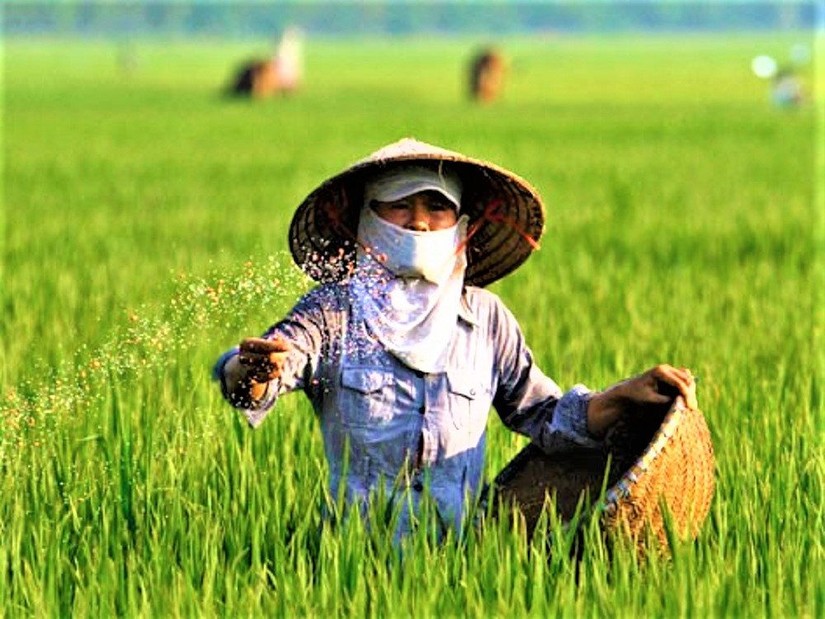
Fertilize according to the rice plant’s growth needs, balancing nitrogen, phosphorus, and potassium. NPK compound fertilizers can be used at recommended dosages for rice plants or based on practical experience to promote good tillering and increased effective tillering.
The Autumn-Winter crop season is when rice plants grow during periods of heavy rain and storms. Therefore, choosing reputable, high-quality products is crucial to ensure the rice plants can withstand and thrive in all adverse situations.
Viet Nga Fertilizer, with its specialized fertilizer lines for rice cultivation, has received numerous prestigious awards and is trusted and chosen by many farmers across the 13 provinces of the Mekong Delta.
The Viet Nga specialized rice fertilizer solution is produced based on the nutritional needs of rice, providing appropriate levels of N, P, and K for each stage of rice growth and development. In addition, the fertilizer also supplements micronutrients to help plants become strong and resistant to pests and diseases.
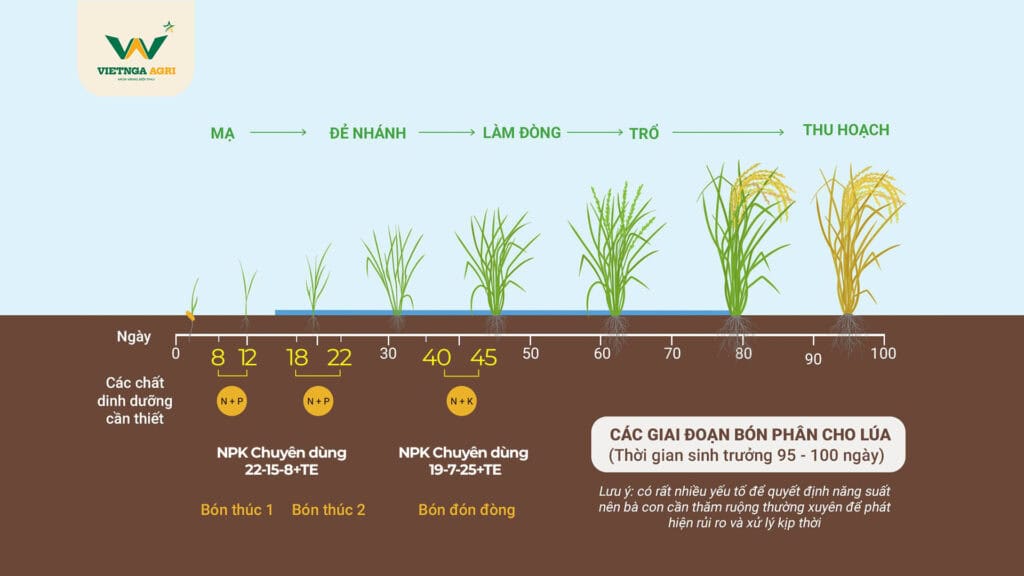
Using this product set will save farmers the effort of mixing fertilizers, making it suitable for air-spreading technology, thus saving costs and delivering superior yields.

Tillering stage:
When rice plants reach 8-12 days after sowing, it’s time to apply the first topdressing. Use 10-15 kg/1000m2 of NPK 22-15-8 +TE fertilizer specifically designed for rice tillering.
Rice plants at 18-22 days after sowing:
– The next stage is the second topdressing application to help the plants tiller better. The most important thing at this time is using the correct amount and type of fertilizer.
– During this stage, rice needs a lot of nitrogen and phosphorus, so use 12-17 kg/1000m2 of NPK 22-15-8 +TE fertilizer. Farmers should pay attention to the appropriate dosage based on the total area being fertilized.
NPK 22-15-8 +TE (tillering – bushing) is specifically used for rice plants as the first and second fertilizer applications to promote root growth, tillering, increase the number of effective tillers, and stimulate bushing.

At the same time, it helps plants stay healthy, maintain nutrient balance in the soil, increase resistance to pests, diseases, and saline soil conditions, thereby increasing rice yield and quality.
Heading stage:
Fertilizing at the heading stage is extremely important and determines the overall yield of the rice crop. Careful care is needed during this time to achieve a high yield for the season.
– There are 3 criteria for deciding when to apply fertilizer to promote panicle initiation in rice plants:
1. Based on the number of days after sowing, depending on the variety.
2. Based on the panicle stage; the best time to apply fertilizer is when the panicle (head) is 1-3 mm long.
3. The condition of the rice plant, when the leaves turn a yellowish-green color.
During the heading stage, supplementing with NPK fertilizer high in potassium helps to produce long panicles, bright and firm grains, and reduce lodging. Approximately 15-20 kg/1000 m² of
NPK 19-7-25 + TE (for heading and grain development) provides micronutrients in the soil, helping plants grow healthy, flower, bear fruit, and produce firm grains.

At the same time, it prevents lodging and resists pests and diseases, so the rice plants always grow and develop strongly, with large, evenly flowering panicles, large ears, firm grains, and increased yield.
3.4. Pest control in the field
During the autumn-winter season, frequent rain and storms create favorable conditions for the emergence, development, and damage caused by certain pests. To manage and control these pests during the autumn-winter season, farmers should regularly inspect their fields, detect pests early, and take preventative measures to avoid widespread outbreaks.
In addition, pesticide spraying should be limited during the growth and development stages of rice plants, especially for rice crops less than 40 days after sowing, in order to preserve natural enemies and prevent outbreaks of pests in later stages.
Conclusion
Thorough preparation for planting the autumn-winter crop is not only the first step towards a bountiful harvest but also helps farmers effectively cope with the weather challenges characteristic of this season.
With a focus on seed selection, cultivation techniques, and care methods, farmers can be confident of a successful harvest with high yields and good quality. Always remember that every meticulous investment in the early stages will bring worthwhile results at the end of the season.
Viet Nga Fertilizer wishes all farmers a bountiful autumn-winter harvest!

Related news

The Role of Base Fertilization in Soil Improvement and Enhancing Agricultural Fertility
Measures to Improve and Treat Saline Soil
Winter-Spring rice blast warning – Don’t let leaf and flower burns rob you of your golden crop

Rice Sowing Techniques for the Early Winter–Spring Crop
What Is Slow-Release Fertilizer? Learn How to Use It Effectively