ACCOUNTING WITH FURTHER FARMERS
Top 7 most popular fertilizer technologies today
Fertilizer technology is modern techniques that help improve efficiency and reduce environmental impact. The article introduces 7 popular fertilizer technologies such as nano hydroxyapatite, liquefied urea, high tower, slow release, compression and mechanical mixing. Viet Nga Fertilizer will provide farmers with suitable solutions, each technology has its own benefits.
1. Nano Hydroxyapatite Technology
Nano Hydroxyapatite (HA) technology is a method of coating urea fertilizer particles with nanoparticles of hydroxyapatite (HA) – a mineral found in human bones and teeth, very safe and environmentally friendly. Such coating helps fertilizer dissolve more slowly, reduces loss and increases absorption efficiency for plants. This research was conducted by scientists such as Nilwala Kottegoda and his colleagues, published in the American Chemical Society journal on January 25, 2017.
Benefits of coating urea with nano HA:
- Reduce the dissolution rate of urea fertilizer: Instead of dissolving quickly as usual, HA-coated fertilizer dissolves 12 times slower, helping plants absorb more slowly and fully.
- Reduce environmental pollution: Urea fertilizer is not washed away into rivers and streams, thus limiting eutrophication (algae bloom, dirty water). In addition, this fertilizer technology also helps reduce greenhouse gas emissions such as ammonia and nitrous oxide.
- Save fertilizer costs: Thanks to high absorption efficiency, only about 50% of the amount of fertilizer is needed compared to before, and plants still grow well.
- Friendly to plants and soil: Hydroxyapatite is a natural mineral, does not harm the soil, does not harden the soil like many other chemical fertilizers.
- Towards sustainable agriculture: This solution is considered a green breakthrough, helping farmers both cultivate effectively and protect the environment in the long term.
2. Liquefied urea fertilizer technology
Liquefied urea technology is a modern technology applied in the production of NPK fertilizer in the form of one granule, allowing to increase the nitrogen content and total nutrients in the fertilizer. This technology helps to overcome the limitations of traditional NPK fertilizer in Vietnam which has a low urea ratio and low efficiency.
Benefits of liquefied urea technology:
- Increase nitrogen and nutrient content: Thanks to liquefied urea, NPK fertilizer produced can achieve much higher nutrient content than conventional fertilizer.
- Production of single-grain NPK fertilizer: Fertilizer is mixed evenly in each grain, without separation or unevenness like mechanical compost.
- Combine additional substances to reduce loss: Agrotain can be added to nitrogen to reduce evaporation, Avail to phosphorus to reduce fixation, helping plants absorb optimally.
- Reduce the amount of fertilizer needed: Thanks to higher absorption efficiency, it is possible to reduce about 30% of fertilizer while plants still grow well.
- Save costs and labor: Less need to re-fertilize, fertilize many times → reduce labor and fertilizer costs for farmers.
- Reduce environmental pollution: Limit fertilizer leaching and evaporation, so it is less harmful to soil and water sources.
3. High tower technology NPK fertilizer
This is a modern fertilizer technology in the production of NPK fertilizer, where the mixed ingredients are heated to form a liquid mass and then fed into a high tower. The liquid is sprayed into granules, flying freely in the tower and blown from the bottom up by a strong fan, drying and forming granules in the air. Thanks to that, the granules are even, beautiful, highly nutritious and completely soluble in water.
Benefits of high tower technology:
- Creating round, even, and beautiful fertilizer granules: Fertilizer granules are centrifuged and dried in the air, making the fertilizer smooth and shiny, without clumping.
- High nutritional content: Especially the protein content is 20% or more, much higher than conventional fertilizers.
- Creating fertilizers that are completely soluble in water: Fertilizers can be used effectively with drip irrigation systems, very suitable for high-tech agriculture.
- High total nutrition: The total of three components, nitrogen, phosphorus, and potassium, can be up to 60-65%, helping to provide enough and the right amount of nutrients for plants.
- Reduce loss, increase absorption efficiency: Thanks to fertilizers that are completely soluble in water and evenly dispersed, plants absorb them more easily, reducing loss due to leaching or evaporation.
- Save costs and fertilizer costs: Even fertilizers, high efficiency, so less re-fertilization is needed, saving fertilizer and labor.
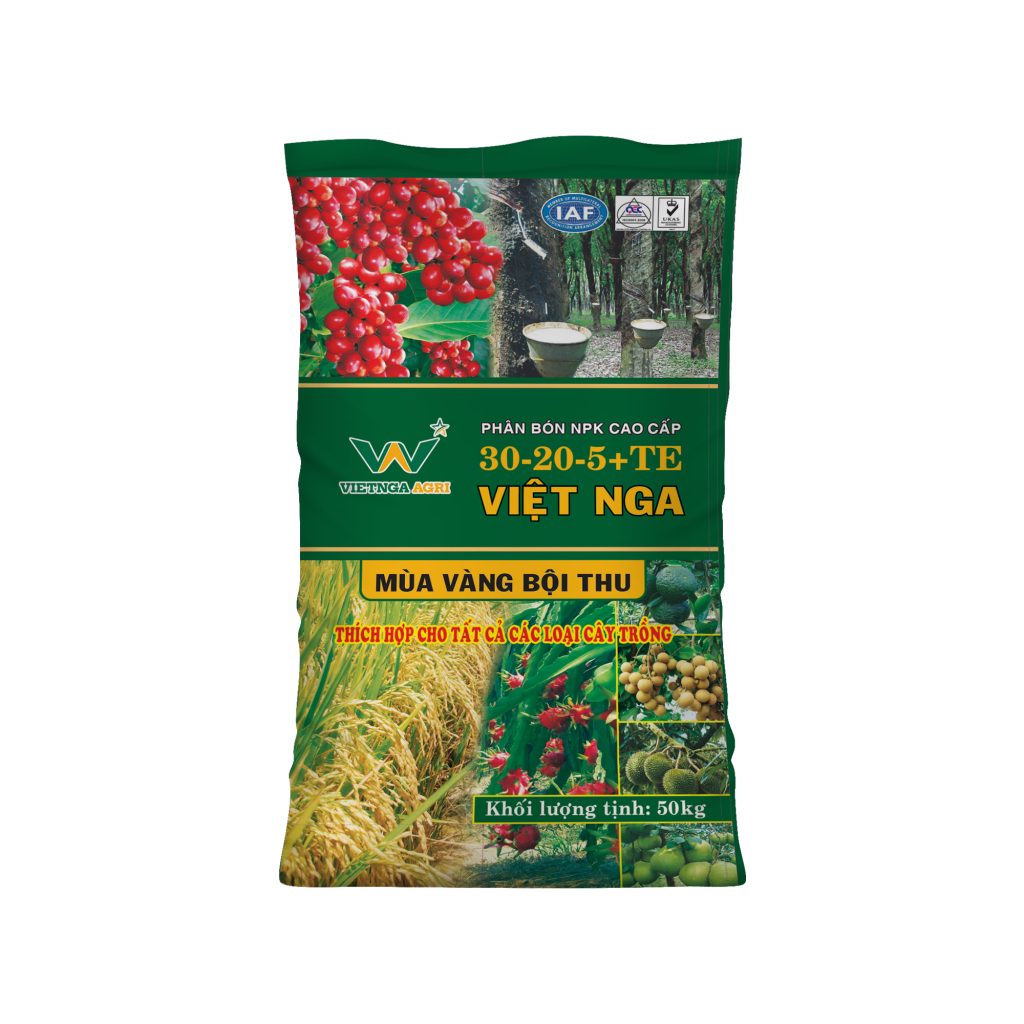
- Flexible formula customization: Can produce many different NPK ratios such as 30:20:5, 20:10:30, 25:15:15,… depending on the type of plant and growth stage. In addition, can be adjusted to any ratio in the range:
- Nitrogen: 5 – 30%
- Phosphate: 5 – 20%
- Potassium: 5 – 30%
- Total N + P + K: not exceeding 65%
4. Controlled slow-release fertilizer technology
This type of fertilizer is produced using special physical and chemical technology, helping to release nutrients slowly and in a controlled manner, providing them regularly to plants for a long period of time from 3 to 24 months, depending on the design of each product. The fertilizer is coated with a safe polymer layer, preventing loss of nutrients, reducing fertilization work and protecting the environment.
Benefits of controlled slow release fertilizers:
- Providing stable, long-term nutrition: Nutrients are released slowly over 3, 6, 9, 12 to 24 months, suitable for the absorption needs of plants at each stage.
- Reduced fertilization: Due to the long nutrient release time, farmers do not need to fertilize frequently, saving labor.
- Limit leaching and evaporation: Thanks to the polymer shell, nutrients are not lost to the environment due to rain or high temperature.
- Increase fertilizer efficiency: Almost all N, P, K and trace elements such as Mn, Bo… are gradually absorbed by plants, without being wasted.
- Environmentally friendly: After the minerals are completely diffused, the polymer shell will decompose by itself, leaving no toxic residues in the soil.
- Suitable for many types of crops: Depending on the slow release time, fertilizer can be applied to short-term, long-term plants, fruit trees, industrial plants…
5. Steam fertilizer technology
Known as the technology of producing NPK fertilizer by mixing raw materials, then using steam and liquefied urea to bind and create granules in a rotating machine. After granulation, the fertilizer is dried, cooled, classified, polished and packaged. Steam fertilizer technology is a popular method in the production of mixed NPK in Vietnam.

Benefits of steam technology:
- Round, shiny fertilizer particles: The created particles have a beautiful, uniform and eye-catching shape.
- Flexible adjustment formula: The formula can be designed to suit each type of plant and growth stage.
- Stable nutrition: The content of substances in the fertilizer remains highly stable during storage and use.
- High nitrogen is not required: The technology is suitable for formulas that do not require high nitrogen content, helping to optimize for many different types of plants.
Disadvantages of steam technology:
- Formula and raw material limitations: Not all formulas can be produced – the ingredients need to be suitable for the heat and steam conditions to produce good granulation.
- Limited nitrogen content: Urea content must usually be kept low, making it difficult to produce fertilizers with high nitrogen content.
- Lower physical quality of granules: The resulting granules have lower strength and hardness than chemical granulation technologies such as high tower technology.
6. Compression granulation technology
Compression granulation is a method of using mechanical force to compress dry materials (powder or loose granules) into hard fertilizer pellets, without using water or chemical reactions during the granulation process.
Advantages of compression granulation technology:
- Nutritional composition as desired: All nutritional components are compressed into one pellet, easy to control the formula.
- Simple production: Simple production process, low energy consumption, easy to change the formula.
- Cost savings: Low investment cost, less labor, easy to operate.
- Flexible raw materials: Can use a variety of raw materials to create many types of fertilizers.
Disadvantages:
- Limiting raw material moisture: Raw materials must have low moisture content, easily broken if high moisture content.
- Cannot use some types of fertilizers: Limit the use of urea, superphosphate and ammonium nitrate.
- Fragile grains: The edges of the grains can break, creating fine dust if not handled carefully.
- Uneven shape: The grains are not round, creating a less attractive feeling compared to other technologies.
7. Mixing from separate ingredients
This is a fertilizer technology method that mechanically mixes single or separate granular fertilizers together in a certain ratio without any chemical reaction.
Benefits of mixing from separate components:
- Low cost: Low investment capital, simple equipment, easy to operate.
- Flexible formula: Easy to change NPK ratio depending on crops and seasons.
- Fast: Fast implementation process, suitable for small and medium scale production.
Disadvantages:
- Depends on the quality of raw materials: Raw materials must be compatible and of good quality to avoid stratification and moisture absorption.
- Easy to separate components: If the particle size is not uniform, the components are easily separated and inconsistent when fertilizing.
- Difficult to add micronutrients: Micronutrients are difficult to adhere to the main fertilizer particles, easily lost or uneven.
Conclusion
Applying the right fertilizer technology will help optimize costs, increase farming efficiency and reduce negative impacts on the environment. If you have any questions about each type of technology, how to apply it to each type of crop or specific production process, do not hesitate to contact us. Viet Nga Fertilizer is always ready to accompany you to choose the most effective and suitable fertilizer solution. Together towards a more modern, sustainable and safer agriculture.
Related news
The Role of Base Fertilization in Soil Improvement and Enhancing Agricultural Fertility
Measures to Improve and Treat Saline Soil

Winter-Spring rice blast warning – Don’t let leaf and flower burns rob you of your golden crop

Rice Sowing Techniques for the Early Winter–Spring Crop

What Is Slow-Release Fertilizer? Learn How to Use It Effectively