
ACCOUNTING WITH FURTHER FARMERS
Simple ways to fertilize strawberry plants for abundant fruit production.
To achieve optimal yields, proper fertilization of strawberry plants is crucial. In this article, Viet Nga Fertilizer will guide farmers on how to fertilize strawberry plants simply and effectively, helping them grow vigorously and produce abundant fruit.
1. Nutritional requirements of strawberry plants
Strawberries are water-loving plants that require special nutrients to thrive and produce delicious, sweet fruit.

Here are the essential nutrients needed for strawberry plant growth:
– Water: Strawberries need plenty of water to maintain soil moisture. Ensure you water regularly, especially during dry periods, to keep the plants thriving.
– Nitrogen (N): An essential nutrient, nitrogen helps strawberry plants grow vigorously, producing healthy green leaves and large fruits. Using nitrogen-containing fertilizers will ensure the plants receive sufficient amounts of this nutrient.
– Phosphorus (P): Phosphorus is crucial for root development and fruit formation. It is especially necessary in the early stages of plant growth, helping the plant develop a strong and healthy root system.
– Potassium (K): Potassium plays a crucial role in producing delicious and sweet strawberries. Furthermore, it helps the plant resist disease and enhances its ability to withstand harsh environmental conditions.
– Calcium (Ca) and Magnesium (Mg): Calcium and magnesium maintain the cellular structure of plants and fruits, helping them grow steadily and avoid problems related to cellular structure.
– Trace minerals: To maintain resistance and healthy growth, strawberry plants need several trace minerals such as iron, manganese, zinc, and copper.
– Soil pH: Strawberry soil should have a pH between 5.5 and 6.5 so that the plants can easily and effectively absorb nutrients from the soil.
– Organic matter: Soil rich in organic matter improves drainage and provides essential nutrients for strawberry plants. Adding organic matter to the soil helps the plants grow vigorously and achieve high yields.
Understanding and providing these essential nutrients will help strawberry plants grow well, produce delicious fruit, and achieve high yields, while also enhancing their resistance to diseases and adverse environmental conditions.
2. Signs of nutrient deficiency in strawberry plants
2.1. The leaves are turning yellow.
One of the first signs that a plant is lacking nutrients is yellowing leaves. When older leaves begin to turn yellow, especially in the middle of the leaf veins, this is often a sign of nitrogen deficiency. Balanced fertilization or the use of organic fertilizers can help improve this condition.
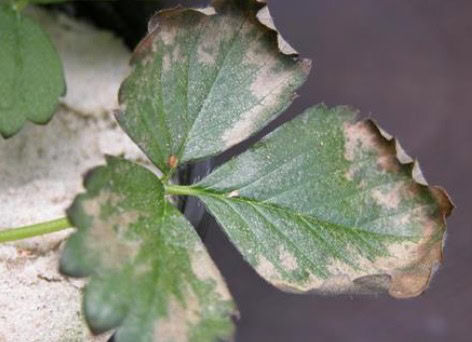
- Strawberry leaves turn yellow and wilt due to nutrient deficiency.
2.2. Stunted tree
If your plants are growing slowly and have smaller-than-normal leaves, they may be deficient in phosphorus. To remedy this, you can add bone meal or phosphate rock to the soil. This will help the plants recover and continue to grow vigorously.
2.3. Underdeveloped fruit
When strawberries are small and lack flavor, it’s likely the plant is deficient in potassium. Potassium is a crucial nutrient for improving fruit quality. You can use potassium-rich fertilizers or wood ash to provide the plant with extra potassium, thereby improving fruit quality and flavor.
2.4. Leaves change color
Leaves turning red or purple can be a sign of magnesium deficiency. To remedy this, farmers need to provide the necessary amount of magnesium, helping the leaves return to their normal color and ensuring healthy plant growth.
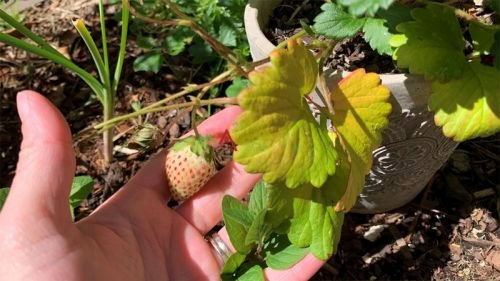
- Strawberry leaves turn yellow and fruit develops poorly due to a lack of essential nutrients.
3. Common types of fertilizers for high-yielding strawberry plants
Nowadays, growing strawberries has become easier thanks to the support of many nutrient-rich fertilizers. Common fertilizers for strawberries include NPK fertilizers, organic fertilizers, and micronutrient fertilizers.
Organic fertilizer
Organic fertilizers are fertilizers containing macro, micro, and trace nutrients in the form of organic compounds. The special thing about organic fertilizers is their ability to provide diverse and long-lasting nutrients, not only benefiting plants but also improving soil fertility. Organic fertilizers provide approximately 20-10% of the humus in the soil, making them very suitable for strawberry plants.
Farmers can choose from various sources of organic fertilizer such as well-rotted manure, fertilizer from kitchen waste, peat fertilizer, and many other commercially available organic fertilizers.
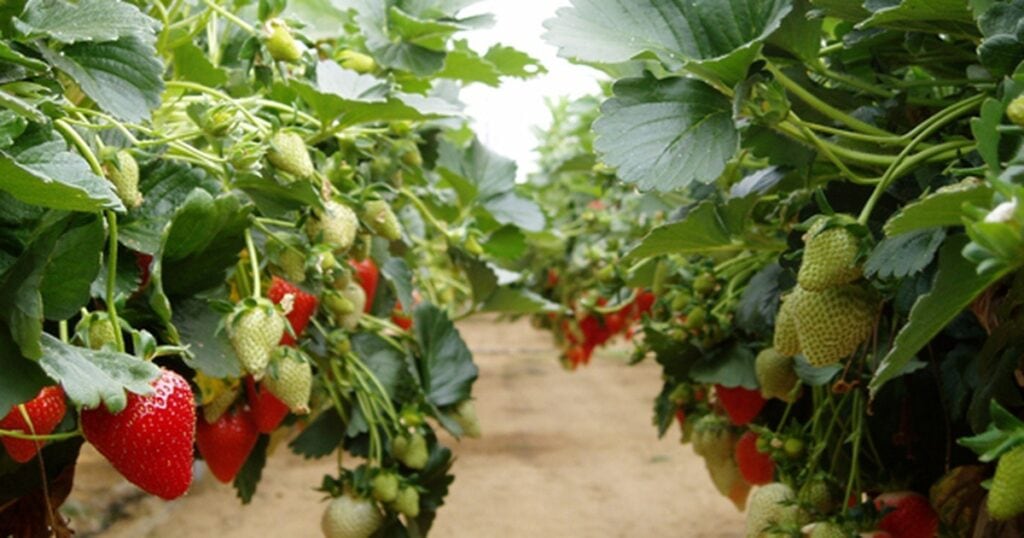
- Using the right type of fertilizer will help strawberry plants grow healthily, flower and bear fruit regularly, and achieve high yields.
NPK fertilizer
NPK fertilizer is a mixed fertilizer containing many important nutrients such as Nitrogen (N), Phosphorus (P), and Potassium (K) that help plants grow healthily and produce flowers and fruits. For strawberry plants, NPK fertilizer helps the plant develop comprehensively.
– The nitrogen component in fertilizers supports leaf production and photosynthesis in plants during their growth phase.
– Phosphorus helps plants develop roots and shoots, and particularly affects their ability to flower and bear fruit.
– Potassium enhances disease resistance, stimulates photosynthesis, and improves fruit quality.
– Trace elements such as calcium, boron, and magnesium also affect fruit quality.
NPK fertilizers with all the necessary nutrients will help strawberry plants grow vigorously, producing better leaves, flowers, and fruit.
Choosing and using the right type of fertilizer will help strawberry plants grow healthily, flower and bear fruit regularly, and achieve high yields, bringing economic benefits to growers.
4. Simple ways to fertilize strawberry plants for abundant fruit production.
Providing adequate nutrients to strawberry plants is crucial; only when the plants receive sufficient nutrients can they grow and develop well and achieve high yields.
The following are the recommended fertilizer dosages for 1 hectare of strawberry cultivation land, as advised by the Lam Dong Agricultural Extension Center.
– Well-rotted manure: 40 – 50 m3 + Lime: 1,500 kg + Microbial organic fertilizer: 1,000 – 2,000 kg.
– Chemical fertilizers (amount of pure substances): 100 kg N – 120 kg P2O5 – 120 kg K2O; MgSO4: 40 kg; Boric: 80 kg.
Note: Convert the following amounts of pure chemical fertilizers to equivalent single fertilizers: Urea: 217 kg; Superphosphate: 750 kg; KCl: 200 kg.
| Item | Total | Base fertilization | Top fertilization | |
| 20 days after planting | Periodically once a month | |||
| Composted manure | 40-50 m3 | 40-50 m3 | ||
| Lime | 1,500 kg | 1,500 kg | ||
| Urea | 220 kg | 20 kg | 20 kg | |
Superphosphate
| 750kg |
750kg |
|
||
| KCL | 200 kg | 20 kg | 20 kg | |
| Boric | 80kg | 40kg | 4 kg | 4 kg |
| Microbial organic fertilizer | 1000-2000kg | 1000-2000kg | ||
| MgSO4 | 40 kg | 15 kg | 2,5 kg | 2,5 kg |
Note: Apply lime twice a year: First application: 1000 kg as base fertilizer; Second application: 500 kg as supplementary fertilizer 6 months after planting.
– The amount of fertilizer applied periodically in the first year is 10 times; if fertilizing once every two months, use double the amount. If using single fertilizers, each periodic fertilization can include 20 kg of urea and 20 kg of potassium. Boric acid and MgSO4 should be sprayed periodically on the leaves.
– The fruiting cycle of strawberry plants lasts up to 2 years or more. If the strawberry plants are over 1 year old, the physiological function of the roots is impaired, affecting nutrient absorption. Therefore, foliar fertilizer should be applied periodically, spraying once every 10-15 days.
– Fertilize according to the principle of applying small amounts but frequently throughout the year. The recommended amount of fertilizer for periodic application may be increased or decreased depending on the growth, development, peak harvest stage, and fruiting cycle of the strawberry plant.
5. Notes on fertilizing strawberry plants
Nutrient and drainage
Strawberry plants need a sufficient supply of nutrients to thrive. Although they prefer water, the soil must have good drainage to prevent waterlogging. Loose soil will help the plants absorb nutrients and water efficiently.
Prune old leaves and manage flowers.
Strawberry plants shed their leaves regularly, so remove old leaves to allow the plant to concentrate nutrients on the fruit. When the plant flowers, manage the blooms by thinning out underdeveloped or deformed flowers. Ensure the plant only retains about 3-4 flowers at a time to focus nutrients on the fruit.
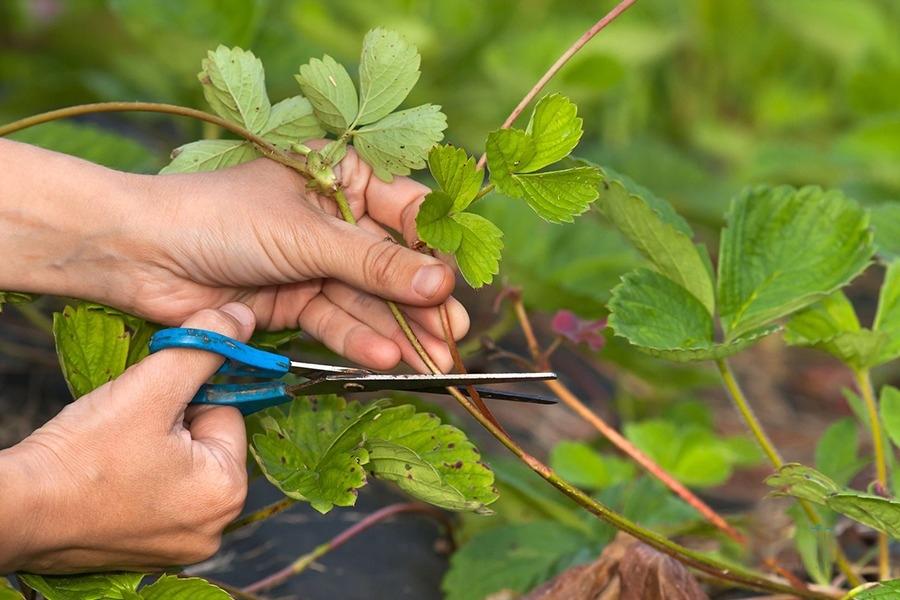
- Manage the flowers by pruning away underdeveloped or deformed blooms.
Loosen the soil around the base of the tree.
Regularly loosen the soil around the base of the strawberry plants to keep it aerated, allowing the plants to easily absorb nutrients. When loosening the soil, be careful not to damage the roots. After loosening the soil, fertilize to provide additional nutrients to the plants.
Observe and control pests.
Monitor the plants regularly during flowering and fruiting. Pay special attention to pest control, especially ants, as they can eat the fruit while it is still green. If growing strawberries in pots, orient the fruit outwards so that it develops evenly and is easier to observe.
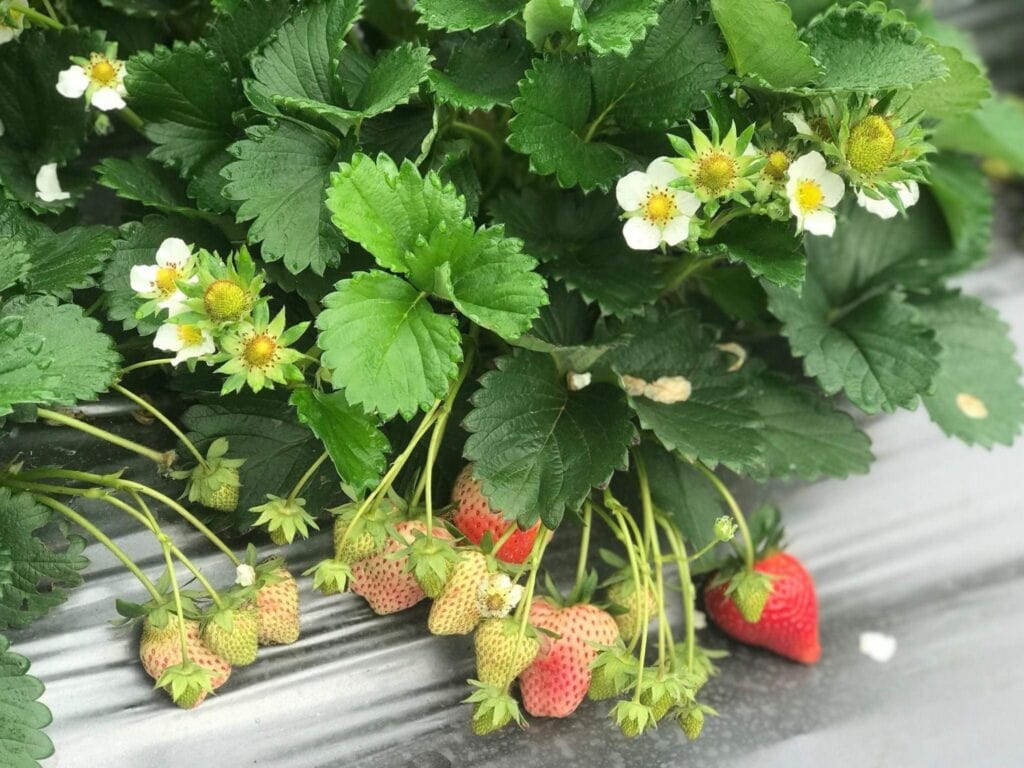
- Proper strawberry plant care not only helps the strawberry plants grow healthily.
Conclusion
Proper fertilization of strawberry plants not only promotes healthy growth but also enhances fruit production and quality. Follow these fertilization steps to ensure your strawberry garden thrives and yields high productivity.
If you have any further questions, please do not hesitate to contact Viet Nga Fertilizer via hotline 02778 55 66 77 for more information.
Wishing you success with your strawberry garden!

Related news
Caring for the Winter-Spring Rice Crop to Ensure Large, Firm Grains

Secrets to Helping Rice Plants Stay Healthy Right From the Start of the Winter-Spring Crop Season
Proper Water Management for Winter-Spring Rice Crops

Tips for Effective Fertilization of the Winter-Spring Rice Crop

What kind of fertilizer should I use to make my banana tree flower and produce large fruits?