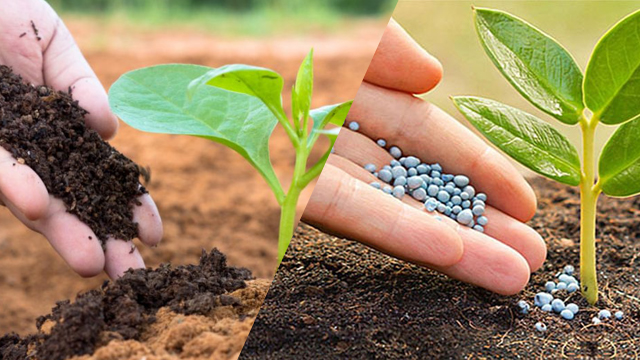
ACCOUNTING WITH FURTHER FARMERS
How to grow sugarcane with the latest techniques
Proper sugarcane planting is a decisive factor in the yield and quality of sugarcane in each crop. When farmers apply the correct technical process, it not only increases farming efficiency but also saves costs and increases economic value. The following article will guide farmers on how to plant sugarcane according to the latest techniques, helping the farming process achieve the highest efficiency.
Sugarcane growing techniques for juice extraction
1. Choosing the soil
Choosing the soil is the first and extremely important step to ensure good growth and high yield of sugarcane. Although sugarcane is not too picky about soil, if you choose the right type of soil, it will help the plant grow strong, with deep roots, thick stems and sweet water.
The ideal soil for growing sugarcane should be loose, well-drained, with a 60-80 cm thick arable layer for strong root development. The soil pH should be between 6.0 and 7.5, rich in nutrients, high in organic matter, and not contaminated with alum or salt. Suitable soil types are usually loam, sandy loam, red basalt soil or new alluvial soil, especially if the soil is of volcanic origin, it will be even better because it is rich in trace minerals.
In addition, farmers need to ensure that the groundwater level is at a depth of 1.5 – 2 m and if the land has a slope, it should be between 7 – 15% to facilitate drainage. Before planting, farmers should plow the soil thoroughly about 30-40 cm, and clean weeds and old crop residues to create a disease-free environment, helping sugarcane take root quickly.
2. Land improvement
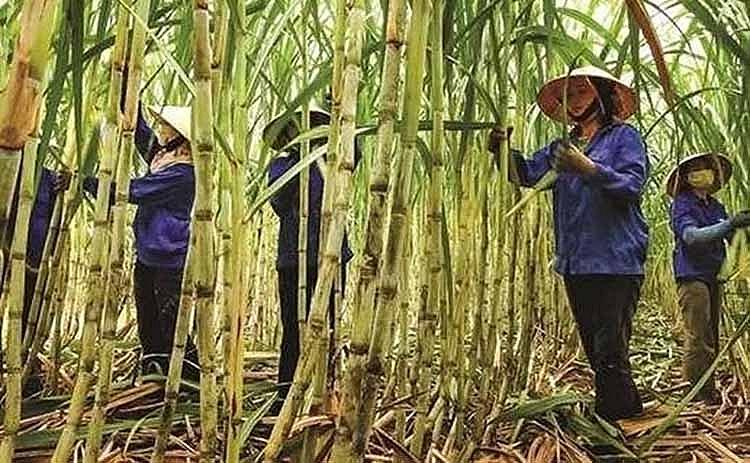
To grow sugarcane properly and achieve high productivity, land improvement and preparation is a step that cannot be overlooked. Depending on each type of land – alluvial land, rice fields, hilly land, low-lying land or acid sulfate soil – farmers need to apply appropriate land preparation techniques to create the best conditions for sugarcane to grow:
- For alluvial soil and rice fields, farmers should plow 30-35cm deep, applying the process of plowing 3 pans twice, harrowing twice, then plowing 7 pans 3 times. Note that the direction of plowing later should be perpendicular to the direction of plowing earlier to avoid the phenomenon of soil cores.
- For hilly land, farmers should make sugarcane rows along contour lines to limit erosion. The land should be prepared 40-60 days before planting to allow time for drying and killing pests.
- For low-lying land, farmers should make beds 6-20m wide, 25-35cm high, 20-25cm deep planting trenches and cover the bottom of the trench with a layer of loose soil about 5-10cm thick.
- For acid sulfate soil, more careful treatment is needed. Farmers should make beds 4.5 – 5m wide, 25 – 30cm high, and cover the bottom of the trench with a 5 – 10cm layer of loose soil to limit the effects of acid sulfate on sugarcane roots.
- With newly reclaimed land or land plowed to break the root, farmers need to plow many times (2-4 times), after each plowing is a harrowing perpendicular to the previous time. If possible, farmers should plow underground to break the plow base layer, helping to increase the depth of the cultivated layer to 35-40cm. After completion, farmers proceed to make planting rows, 0.8-1.2m apart, depending on the sugarcane variety and mechanical conditions.
Trước khi đặt hom, bà con nên bón lót toàn bộ phân hữu cơ (như phân chuồng hoai mục, phân trùn quế…), phân lân và một phần phân đạm, kali, kết hợp một ít thuốc phòng sâu bệnh như Furadan hoặc Basudin. Tất cả nên rải dọc theo rãnh và trộn đều với lớp đất mỏng để hom mía khi đặt xuống sẽ tiếp xúc tốt với dinh dưỡng.
Before planting the cuttings, farmers should apply all organic fertilizers (such as decomposed manure, vermicompost, etc.), phosphate fertilizers and some nitrogen and potassium fertilizers, combined with a little pesticide such as Furadan or Basudin. All should be spread along the furrow and mixed well with a thin layer of soil so that the sugarcane cuttings will have good contact with nutrients when placed.
3. Selection of varieties and propagation of sugarcane
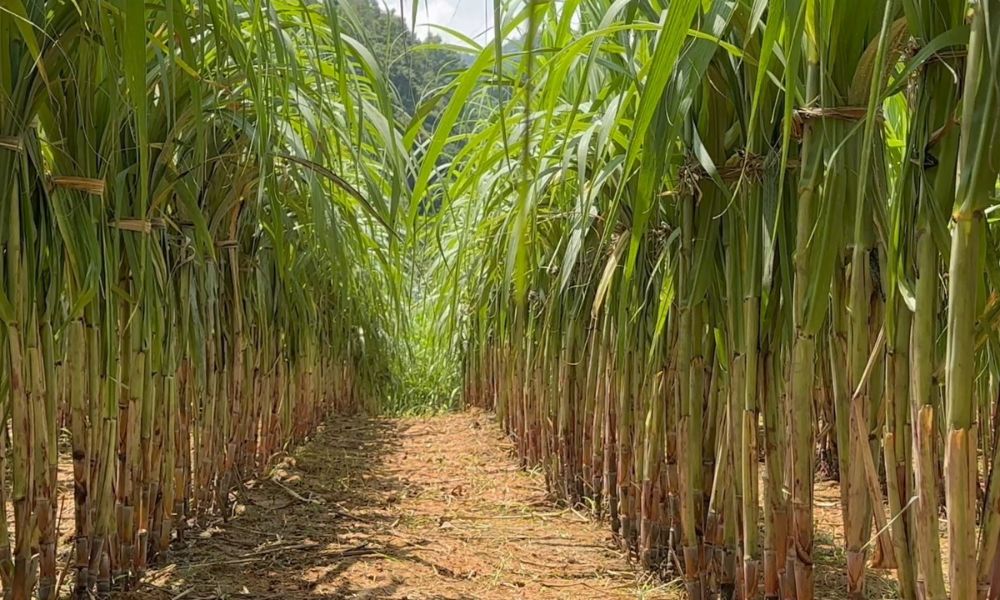
To grow sugarcane with high yield, the first and most important step is to choose good varieties, suitable for the climate and soil conditions of each region. Each sugarcane variety produces different juice quality, sweetness and growth ability, so choosing the right variety will greatly determine production efficiency.
Depending on the region, farmers can refer to some popular sugarcane varieties as follows:
- Northern mountainous region: ROC22, VD 93-159, QD 94-119
- North Central region: VD55, ROC10
- Central Highlands: K83-29, K84-200, VD93-159
- Southeast region: K84-200, K83-29, K95-84, R579
When choosing sugarcane seeds, farmers should prioritize fields that meet the standards: plants 6-8 months old, young sugarcane or sugarcane with a purity of over 98%, healthy growth, characteristic green leaves, no pests or diseases, and no falling. Avoid choosing seeds from fields with signs of diseases such as smut, red rot, mosaic, white leaves or high levels of rust.
Good sugarcane cuttings need to have 2-3 clear buds, no scratches or withers, and a aerial root ratio of less than 10%. The plant is not bent, crushed, or has pests or diseases, and has a diameter and internode length that meet the variety’s standards.
Regarding propagation methods, there are currently two popular ways to grow sugarcane:
- Propagation by cuttings: Easy to germinate but weak resistance, susceptible to pests and diseases.
- Propagation by stem cuttings: Chosen by many farmers because the seedlings are healthy and have higher resistance.
4. Sugarcane planting season
Sugarcane growing season in our country is divided into two main crops: Winter-Spring crop and Autumn crop, however the specific planting time will vary depending on the region due to climate and soil conditions.
- North:
- The Winter-Spring crop is the main crop, planted from November to March of the following year, with a harvest time of about 10-12 months.
- The Autumn crop is planted from August to September, with a harvest time of 13-15 months, usually around October of the following year.
- Some areas also plant from September to December, suitable for sugarcane to grow before winter comes.
- Central region:
- Winter-Spring crop is planted from December to March of the following year, and can be extended to April – May if irrigation water is available.
- Autumn crop is planted in August – September, suitable for areas with stable rainfall at the end of summer.
- Central Highlands:
- The main season falls during the rainy season from April to June.
- In places with good irrigation systems, planting can also be done during the dry season from November to March of the following year.
- Southeast:
- The first crop of the rainy season (Crop I) is planted from April 15 to June 15, preferably before May 30, and harvested after 10-12 months.
- The last crop of the rainy season (Crop II) is planted from October 15 to November 30, and harvested after 13-14 months. Notably, the yield of Crop II is usually 25-30% higher than that of Crop I.
- Southwest:
- The first crop of the rainy season (Crop I) is planted from April to June on raised land, harvested after 10-12 months.
- The last crop of the rainy season (Crop II) is planted in November-December on land that is often flooded, harvested after 8-10 months.
5. Density and planting method by region
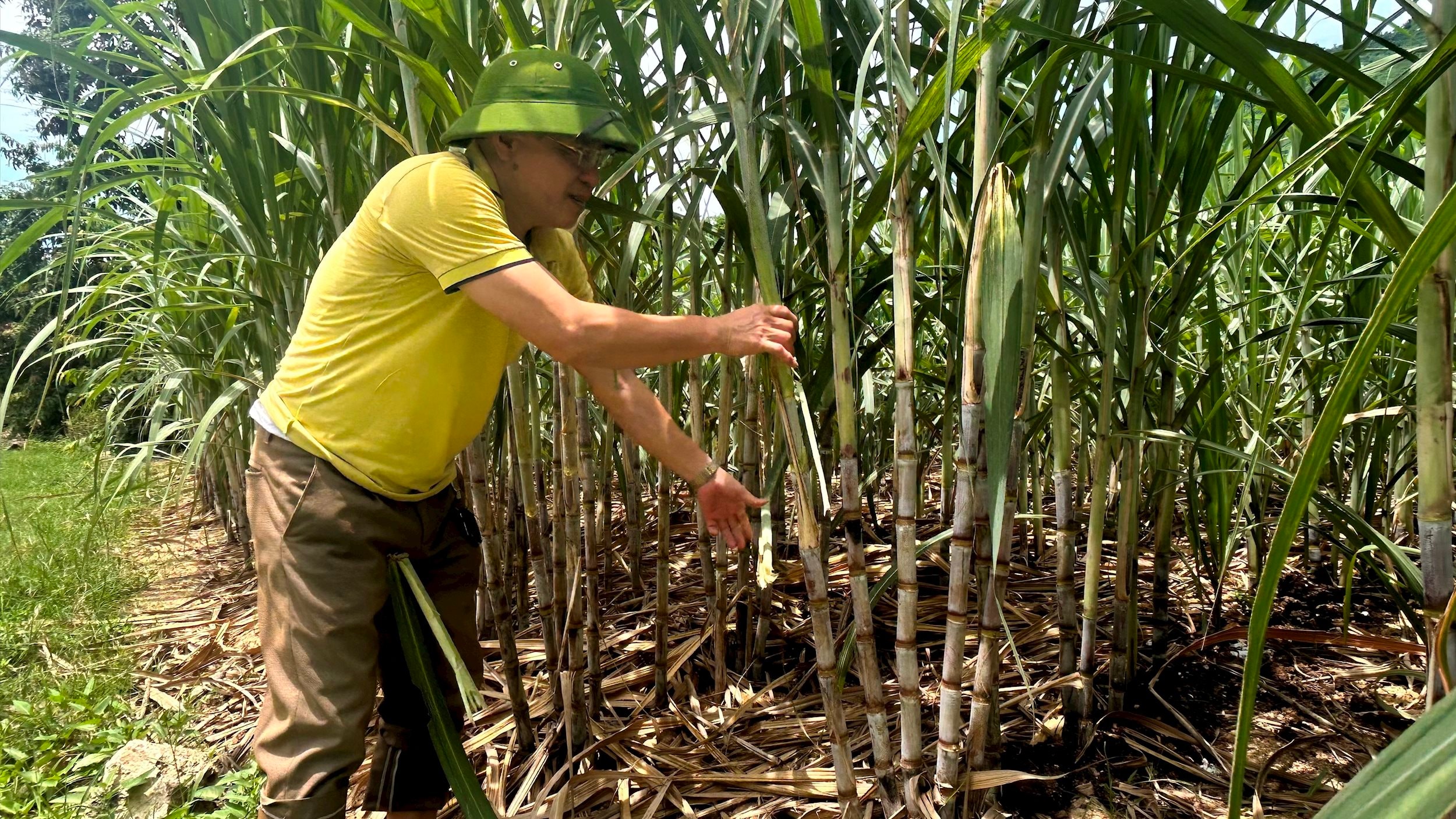
Determining the correct density and planting method for each region helps the plants grow healthily, reduces pests and optimizes productivity. Depending on terrain, climate and farming methods, row spacing and planting depth will vary.
North
- Plains: Row spacing 1.2m, planting depth 12 – 20cm.
- Midlands: Row spacing 1.3 – 1.4m, planting depth 25 – 30cm.
Central region
- Row spacing is 1.0 – 1.2m, planting depth is 15 – 20cm. The land is often sloping so attention should be paid to keeping moist and preventing erosion.
Southeast
- Manual cultivation: Row spacing 1.0 – 1.2m, planting depth 20 – 25cm.
- Mechanical cultivation: Row spacing 1.3 – 1.4m, planting depth 25 – 30cm.
Southwest
- Raised land: Row spacing 0.8 – 1.0m, depth 15 – 20cm.
- Unraised land: Row spacing 1.0 – 1.2m, depth 15 – 20cm.
In addition to distance and depth, farmers also need to pay attention to the number of cuttings and how to place them to ensure the plants grow evenly and the roots develop well:
- Number of cuttings: From 25,000 – 35,000 cuttings/ha, each cutting has 3 – 4 healthy buds.
- How to place cuttings: The following methods can be applied:
- One row of cuttings next to each other.
Two rows are placed alternately like crocodile teeth.
Two parallel rows next to each other.
- One row of cuttings next to each other.
3 Care Tips Once You Know How to Grow Sugarcane
1. Fertilization
Fertilization is an important step to help sugarcane grow healthily, increase sugar content and limit pests and diseases. In the basal fertilization stage, farmers should use about 1,200 – 1,500 kg of organic fertilizer/ha, apply evenly at the bottom of the furrow, then water and wait 2 days before planting the cuttings. You can cover with a thin layer of soil 1-3 cm before planting. In the top dressing stage, you need to use NPK fertilizer:
- 1st time: When sugarcane is 75 days old, apply 200–300kg NPK 16-16-8/ha.
- 2nd time: 30 days later, apply 300–400kg NPK 16-9-21/ha.
2. Irrigation
Sugarcane needs water but is prone to waterlogging, so a drainage system is needed around the field. During the dry season, especially during the sprouting, tillering and elongation stages, farmers should only water supplementarily. Farmers can irrigate by drip, sprinkler or flood irrigation. On average, each irrigation is about 400-500m³/ha, done 1-2 times/month, depending on soil moisture and weather.
3. Weed and pest prevention
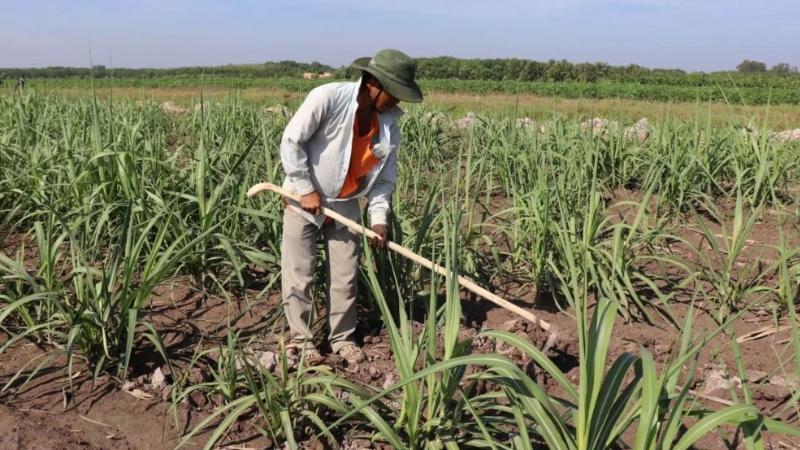
During the first 4 months, sugarcane is vulnerable to competition for nutrients from weeds. Farmers need to weed early by hand, hoe or spray herbicide 2-5 days after planting, making sure the soil is moist enough when spraying. In addition, sugarcane is vulnerable to stem borers, anthrax, red stem rot and black beetles that damage the roots.
- Stem borers weaken the internodes, wilt the tips, and reduce productivity.
- Anthracnose causes stunted growth, long, curved tips, and stops forming internodes.
- Red stem rot smells like alcohol when split, and red spots appear in the stem.
- Black beetles destroy the base, causing the top to dry out or wilt.
How to harvest sugarcane at the right time
To harvest sugarcane effectively, farmers need to determine the right time for the plant to ripen. Sugarcane should be harvested after about 10-12 months of planting, when the plant shows signs such as: many dry leaves, about 5-6 yellow-green leaves remaining, little water in the sheath, short leaf tips forming a fan-shaped canopy.
The sugarcane stalks now turn dark, shiny, and firm; when tapped, they make a clear sound. In particular, the sweetness between the base and the top is almost equal – this is a sign that the sugarcane has reached raw material or physiological maturity. When harvesting, farmers should cut close to the base, limit bruising the stalk to preserve the quality of the raw material.
Conclusion
Growing sugarcane with the right technique not only helps to increase the productivity and quality of sugarcane but also contributes to increasing economic efficiency for farmers. From seed selection, land preparation, care to harvesting, each step must be carried out correctly and at the right time. Hopefully, the information shared by Viet Nga Fertilizer in the article will help farmers successfully apply it to actual cultivation, thereby having highly effective and sustainable sugarcane crops.
Related news
The Role of Base Fertilization in Soil Improvement and Enhancing Agricultural Fertility
Measures to Improve and Treat Saline Soil
Winter-Spring rice blast warning – Don’t let leaf and flower burns rob you of your golden crop

Rice Sowing Techniques for the Early Winter–Spring Crop
What Is Slow-Release Fertilizer? Learn How to Use It Effectively