ACCOUNTING WITH FURTHER FARMERS
Instructions on how to grow chayote effectively and in the most detail
Growing chayote is becoming a popular trend thanks to its easy-to-grow characteristics, low pest and disease resistance, and suitability to many climates in Vietnam. This plant not only provides a source of fresh vegetables and fruits for daily meals but also helps save costs and ensure food safety. In this article, Viet Nga Fertilizer will guide you on how to grow chayote effectively from seed selection to care and harvest.
What month should chayote be planted?
Chayote is a climbing vegetable that prefers cool climates and grows especially well in cold weather. Therefore, the ideal time to plant chayote is from the 9th lunar month to the 12th lunar month. During this period, the temperature is quite stable, the plant takes root easily, develops strong stems and leaves, thereby flowering and fruiting better.
If planted at the right time, chayote will start to be harvested from the 12th lunar month to February or March of the following year. On the contrary, if planted too early or too late, the plant may have growth disorders, difficulty flowering or low yield.
How to choose chayote varieties
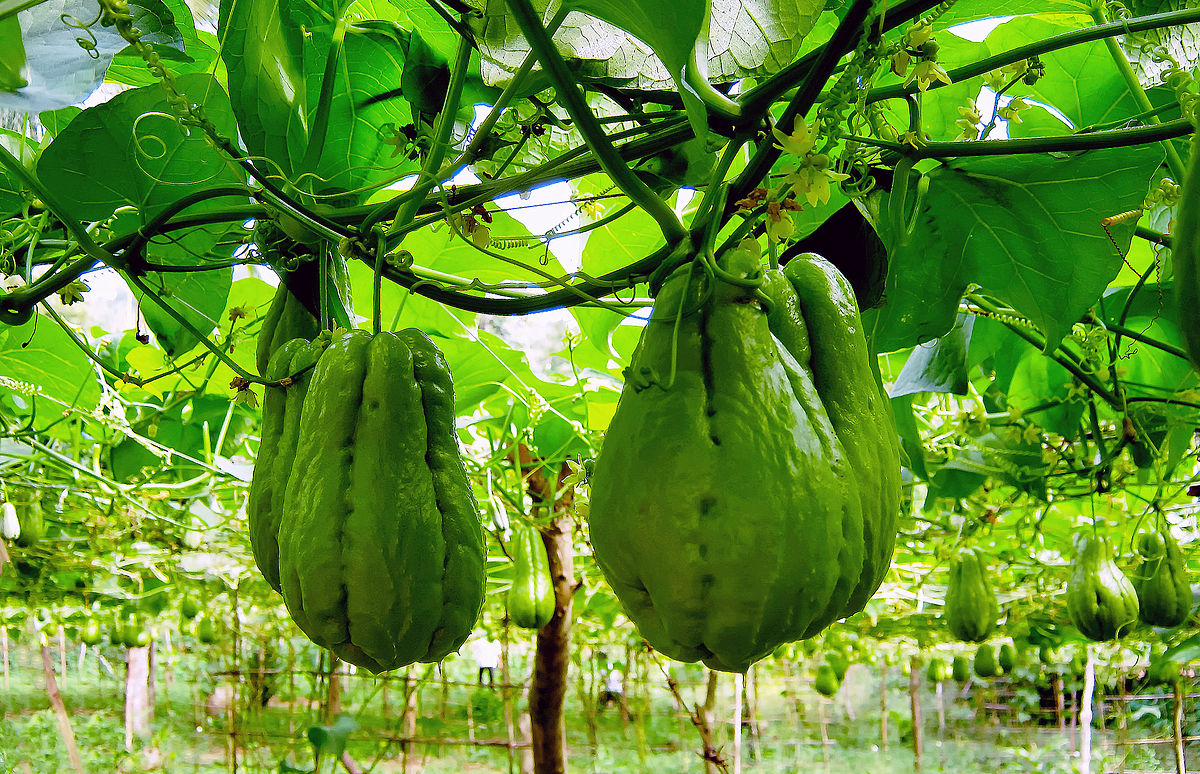
For the chayote plant to grow healthily, produce high yields and be resistant to pests and diseases, seed selection plays a key role. Farmers should choose sprouted chayote, large, firm, not crushed or diseased. The thorns on the fruit need to be hard, the sprouts should be about 10-15cm long and have 2-3 true leaves to meet the standards for planting.
When choosing seeds, farmers should consider the climate and growing area. For example, when planting in high mountainous areas such as Sapa, Tam Dao, farmers can preserve the chayote plant by leaving about 2m of vines close to the base and then covering it with soil to keep the plant warm through the winter; in the spring, the plant will regenerate naturally.
On the contrary, in the plains, the seeds should be collected around May, planted in baskets or wooden boxes containing a mixture of soil and compost in a ratio of 7 parts soil, 1 part compost. After a few months, the chayote will germinate strongly, ready for the next crop.

In addition, it is also necessary to choose varieties suitable for the needs and growing conditions such as Japanese, Chinese or American chayote. These varieties can be imported and preserved at professional seed suppliers, helping people easily access high-quality seeds.
How to grow chayote
1. Soil treatment, fertilization and planting methods
Chayote is easy to grow, not picky about soil, can grow well on many different types of soil such as garden soil, alluvial soil, even in foam boxes, plastic pots or planting trays. However, to achieve high productivity and healthy plant growth, farmers should choose loose, nutritious and well-drained soil. The steps are as follows:
- Soil treatment and planting hole preparation: Before planting, farmers need to clean weeds, waste and loosen the soil thoroughly to make the soil airy. If planting in the garden, farmers should dig holes 80-100cm wide, about 40-50cm deep, keeping the distance between holes from 2.5-3m so that the tree has enough space to climb the trellis and develop its canopy. If planting in foam boxes or pots, farmers should prioritize large sizes to have enough space for the roots to develop, and holes should be drilled at the bottom to avoid waterlogging.
- Fertilizing before planting: After digging the hole, farmers should fertilize with organic fertilizer to increase soil fertility. Each hole should be fertilized with about 10-15kg of decomposed manure combined with 1kg of superphosphate and 1kg of potassium sulfate. Farmers should mix the fertilizer with the soil and fill it up, wait about 7 days before placing the seeds to avoid burning the sprouts.
- How to plant chayote with seeds: Choose healthy, germinated chayote with firm, even thorns, not damaged or soft, and place 3-4 fruits in each hole, 30-40cm apart. When placing the seeds in the hole, gently cover the soil so that only the sprouts are above ground. On average, each hectare needs about 250-360kg of seeds to reach a density of 1,000-1,500 plants/ha.
2. Chayote care
After going through the simple steps of growing chayote above, Viet Nga Fertilizer would like to continue to support you with the work of caring for chayote with the right techniques so that the plant can grow healthily and produce many fruits.
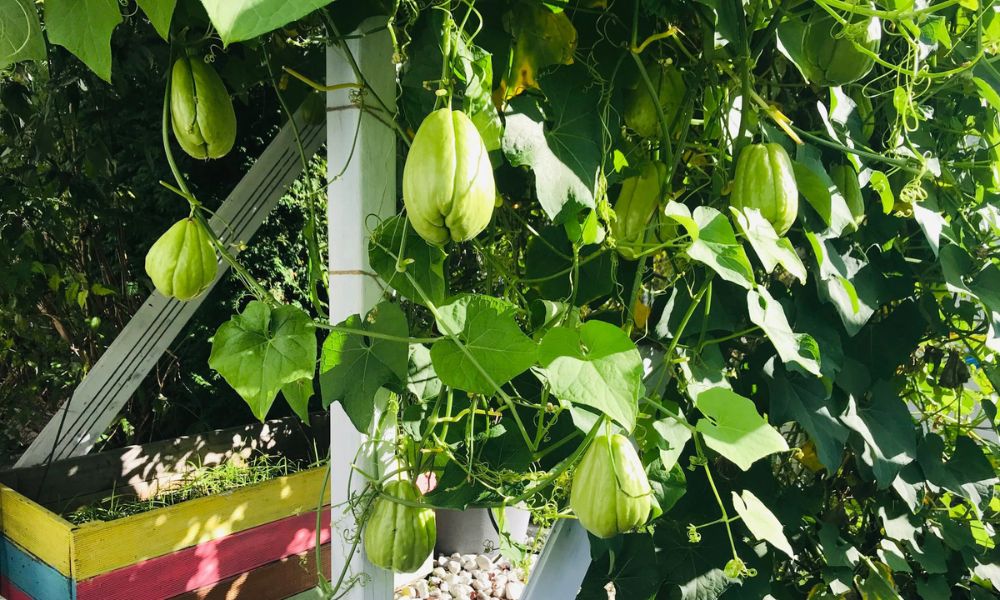
- Make a sturdy trellis: Chayote is a climbing plant, so making a trellis is an important step that cannot be skipped. When the plant is about 25-30cm tall, with 3-5 true leaves, farmers need to make a trellis similar to a squash trellis, about 1.8-2m high. You can use bamboo, wood or iron to build the trellis, then use rope to gently tie the stem to the pole to help the plant climb easily. Farmers should note not to pinch off the top or cut the branches like when growing squash because chayote grows in a natural climbing direction.
- Water regularly to keep moist: Chayote likes cool climates and moist soil, so it is necessary to maintain humidity at 70-75%. Every day, farmers water 1-2 times, early in the morning and cool in the afternoon. If it rains a lot, the water must be drained promptly to avoid waterlogging. On the contrary, if the weather is hot and the soil is dry, farmers should increase the number of waterings to ensure that the roots do not dry out.
- Fertilize at the right time: Việc bón phân cần thực hiện theo từng giai đoạn sinh trưởng của cây:
- 7-10 days after planting: Apply organic fertilizer such as compost, vermicompost or biofertilizer to help the plant take root quickly and grow evenly.
- Trellis stage: Use organic fertilizer combined with NPK fertilizer to water around the base, helping the plant absorb nutrients well and develop foliage. You can spread a layer of pond mud or clean sewer mud on the bed surface to keep the soil moist and increase fertility.
- Fruiting stage: Apply nitrogen fertilizer combined with potassium to help the fruit firm, bright and limit early fruit drop.
3. How to prevent pests
When the chayote plant is about 0.5m high – this is the stage when the plant begins to grow strongly, and is also the time when it is susceptible to pests and diseases. One of the most common targets is aphids, which often curl the tops, causing the plant to shrink, making it difficult to continue growing and produce less fruit. If not treated promptly, the yield will decrease significantly.
In addition, when the plant begins to bear fruit, wasp stings are a worrying pest. They sting young fruit, causing the chayote to become deformed, stunted, fall off early or lose its original freshness. If this situation persists, it can reduce yield by up to 60%, greatly affecting the efforts and income of farmers.
Effective prevention measures:
- The trellis should be low, making it easier to observe and treat pests.
- Spray insect repellent periodically, especially when the plant is 0.5m or taller and when the plant begins to bear fruit.
- Prioritize the use of safe biological products that are both effective in eliminating aphids and bee stings, while ensuring no harm to consumers and the environment.

4. Harvest
After about 2-3 months from planting, the chayote plant will begin to bear fruit and can be harvested. The best time to pick is when the fruit reaches a size of about 8-12cm, the skin is shiny, feels firm in the hand, not too young or too old. If left for a long time, the chayote will harden the skin, lose its sweetness, become fibrous, and no longer taste good.
Each harvest should be spaced 5-7 days apart to ensure the fruit is of good quality and does not exhaust the plant. When harvesting, farmers should use scissors or a specialized knife to cut, avoid using hands to pluck directly because it can cause the trellis to loosen, the leaves to fall off or the base of the plant to shake.
In addition to the fruit, farmers can also harvest chayote shoots for vegetables, choose young shoots with many branches and leaves, soft and crispy, limit picking shoots near the base because they are often old, tough and fibrous. Currently, to have a stable yield of 30-50 tons/ha (about 1-1.7 tons per sao), adequate fertilization is very important. Farmers can refer to specialized fertilizers to help the plant grow strongly, produce fruit evenly and maintain its natural sweetness.
5. How to grow chayote to produce many fruits
To produce many fruits on the chayote plant, it is important to provide proper care when the plant begins to bear fruit. At this time, the plant needs to be supplemented with adequate nutrients to limit the loss of young fruit and help the fruit grow evenly, firm and juicy.
Farmers should add NPK fertilizer combined with potassium fertilizer around the base of the tree. This is a fertilizer duo that helps the tree increase its ability to nourish fruit, making the fruit grow quickly and evenly. After fertilizing, farmers should use a water hose to water gently from top to bottom, avoiding letting the fertilizer stick to the leaves, causing the leaves to burn or rot.
When the main shoots of the chayote plant are about 2 meters long, farmers should pinch off the top, prune off weak branches and old leaves. This helps concentrate nutrients to nourish the fruit, while creating an airy canopy, limiting pests and diseases, helping the tree produce more fruit.
Conclude
As the article above, growing chayote is not too complicated, you just need to master the techniques from selecting seeds, preparing the soil, caring for the fruit growing stage, then having a chayote trellis full of fruit is completely achievable. Hopefully, the sharing in the article Viet Nga Fertilizer will help you feel more confident when starting to grow this nutritious fruit right in your home garden. Wishing you a bountiful harvest, green plants, lots of fruit and high productivity!
Related news
The Role of Base Fertilization in Soil Improvement and Enhancing Agricultural Fertility
Measures to Improve and Treat Saline Soil
Winter-Spring rice blast warning – Don’t let leaf and flower burns rob you of your golden crop

Rice Sowing Techniques for the Early Winter–Spring Crop
What Is Slow-Release Fertilizer? Learn How to Use It Effectively