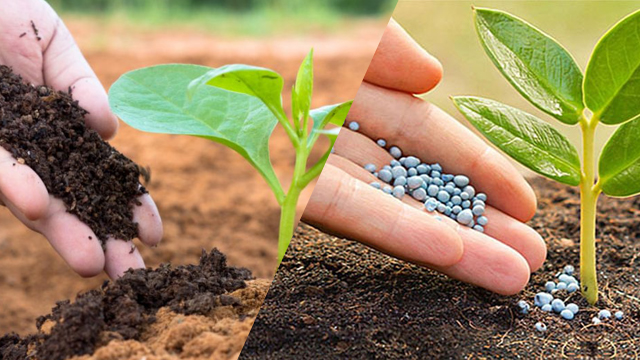
ACCOUNTING WITH FURTHER FARMERS
Protecting Durian Trees from Heat Shock During Hot Weather
Durian is a finicky crop, sensitive to weather conditions and not very drought-tolerant. Therefore, in recent days, the prolonged hot weather, coupled with the complex situation of saltwater intrusion, with salinity penetrating deeply, early, and at high levels in many areas, has caused the trees to suffer from heat shock, leading to premature fruit drop and the risk of crop failure this year.
To protect durian trees from heat stress, farmers need to implement several measures to achieve the best results. What exactly are these solutions? Let’s explore them with Viet Nga Fertilizer in the following article!
1. Causes of heat shock in durian trees
1.1. Extreme heat
According to the agricultural sector, this year’s dry season is expected to be harsh with intense heat and high temperatures, and many areas will be at risk of salinization. Durian trees are classified as a crop sensitive to salinity and also have poor drought tolerance.
According to the National Center for Hydro-Meteorological Forecasting, average temperatures nationwide are about 0.5-1.5 degrees Celsius higher than the multi-year average, and the heatwave will arrive early and last longer, with temperatures ranging from 36-38 degrees Celsius. At night, temperatures will drop to 22-27 degrees, and the large temperature difference between day and night will cause heat shock to durian trees.
1.2. Drought and water shortages are occurring.
Due to the impact of climate change and the effects of the El Niño phenomenon, weather and natural disasters are becoming increasingly unpredictable.
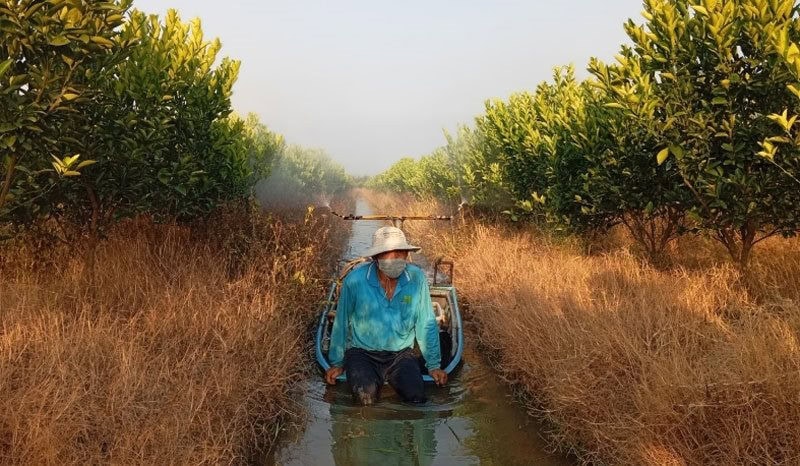
Currently, saltwater intrusion in the Mekong Delta is trending upwards with high tides. According to the National Center for Hydro-Meteorological Forecasting, saltwater intrusion in the Mekong Delta is higher than the multi-year average, and during peak periods, localized freshwater shortages may occur, with saltwater penetrating deep into river estuaries, affecting production and daily life of the people.
During hot weather, if durian trees do not receive enough water, they risk heat shock. At the same time, nutrient deficiencies weaken the trees, making them more susceptible to adverse effects from high temperatures and lack of water.
2. Harmful effects of heat shock on durian trees
2.1. Impact on durian tree productivity
Hot weather causes rapid water evaporation, insufficient soil moisture, and water shortage, leading to wilting leaves, leaf drop, leaf burn, and in more serious cases, mass drop of flowers and young fruit.
For durian trees in the pollination stage, high temperatures can hinder pollination, leading to reduced fruit set and lower yields.

2.2. Causes leaf burn during the dry season.
Burning occurs in the middle of the leaf tissue, the leaves turn yellow, and old leaves fall off. Leaves are considered a vital part where photosynthesis synthesizes nutrients and stores energy to nourish flowers and fruits.

Intense heat causes leaf burn during the dry season, weakening plants and preventing them from nourishing flowers and fruits, thus reducing crop yields.
2.3. Reduced fruit quality and flavor.
Thermal shock disrupts the natural development process of durian fruit, leading to undesirable changes in texture, taste, and aroma.
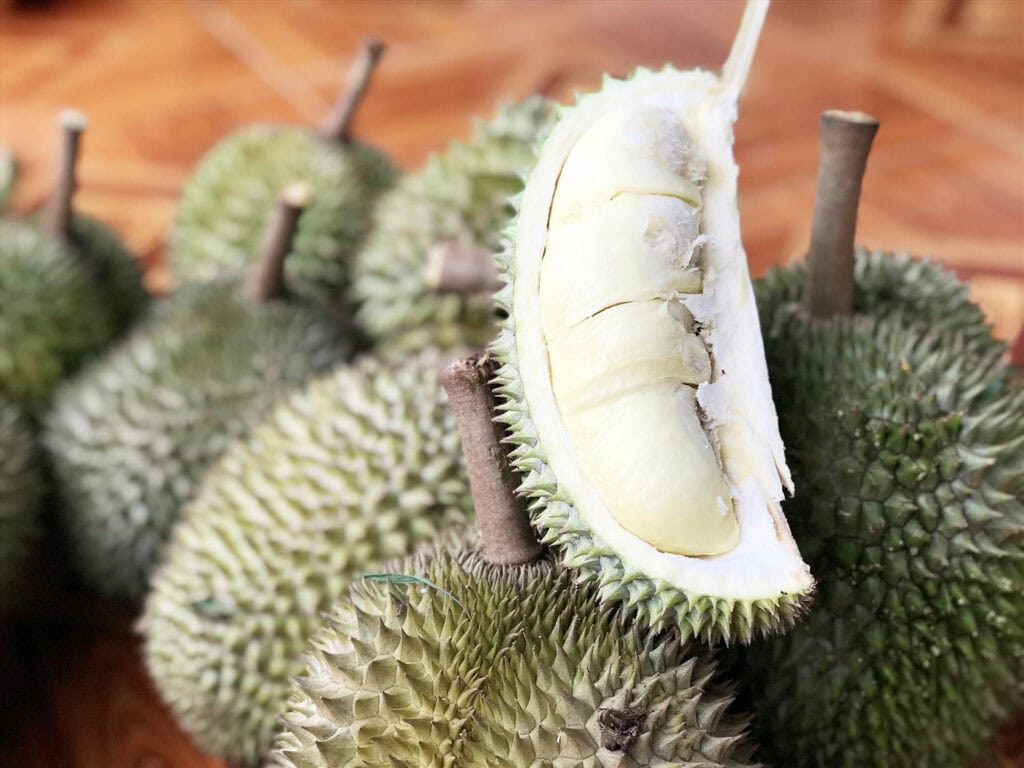
The once juicy flesh can become dry and fibrous, affecting the quality of the fruit when consumed.
3. Solutions to protect durian from shock during the hot season.
Given the current hot weather conditions, in order for the trees to function properly, durian growers in affected areas are advised to implement timely preventative measures to minimize the impact of the heat on their durian orchards.
3.1. Ensure that the plants are in the best possible condition.
It is necessary to ensure that the plants are healthy before the important stages (bud formation, flowering, fruit setting), which, as the locals call it, “making the plant vigorous,” with full foliage and a strong root system.
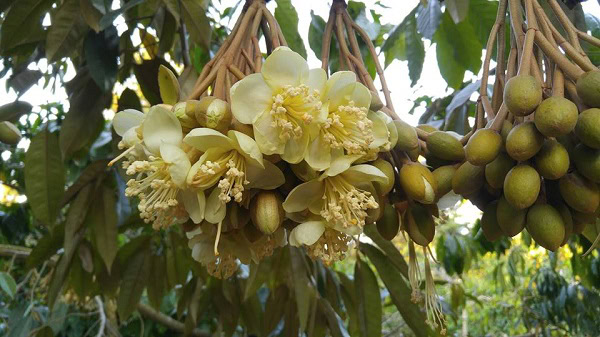
Strong and well-developed durian trees will be better able to withstand sudden climate changes, minimizing the risk of damage and saving time, effort, and costs in tree care.
3.2. Increase the resilience of durian trees.
Plant resistance is closely related to the levels of micronutrients. A deficiency in these components will severely weaken the plant’s resistance and reduce yield.
In situations of water scarcity and temperature fluctuations, supplementing plants with nutrients plays a crucial role in increasing their resilience, preventing heat shock, and reducing flower and fruit drop.
Organic fertilizers should be used, and a balanced and adequate fertilization method should be implemented to supplement essential nutrients and increase resistance and resilience.
>> See also the article: Applying organic fertilizer to durian trees.
3.3. Watering durian trees
Farmers need to ensure that the plants receive enough water to grow. They don’t need to overwater; just enough to maintain soil moisture.
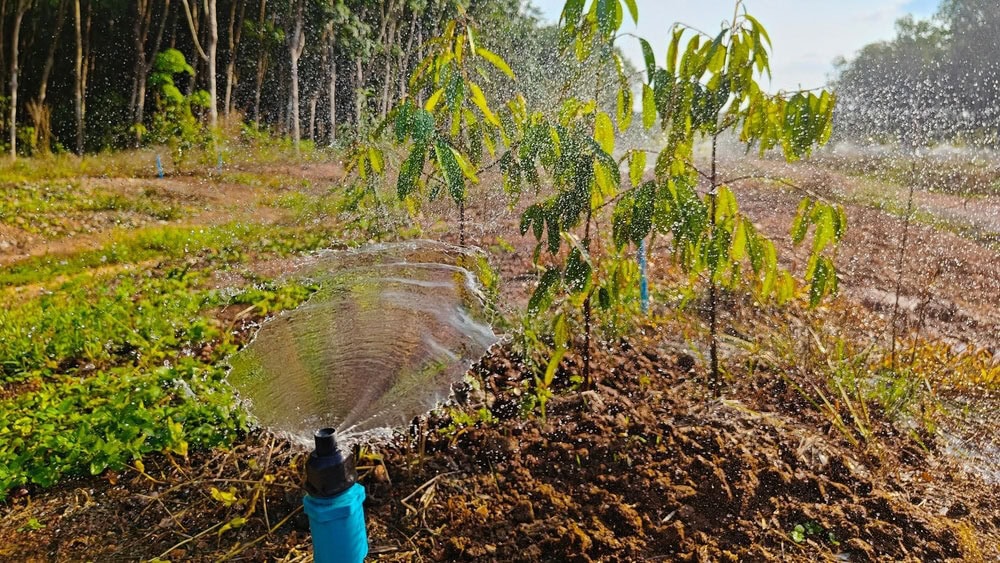
Water directly at the base of the plant to ensure water penetrates to the root system. Water gently and stop when the soil reaches sufficient moisture; avoid overwatering to prevent waterlogging and damage to the root system. Additionally, farmers can equip their plants with a sprinkler system to spray water onto the leaves to cool the plants and alleviate the effects of hot weather.
Farmers should note that irrigation water must be free from acidity or salinity to avoid affecting fruit quality. Additionally, avoid planting in the intense midday sun, as this can cause heat shock to the plants.
3.4. Cover and keep the durian tree moist to prevent heat shock.
During the dry season, the soil evaporates water easily. This affects the fine roots of the durian tree.
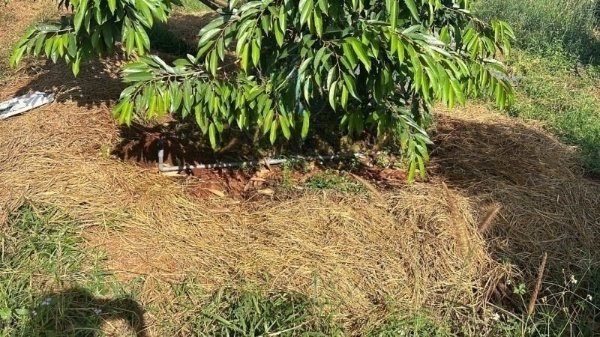
Farmers should cover their crops with materials such as straw, dry branches, corn stalks, and banana stems to reduce water evaporation, retain moisture in the topsoil, and prevent soil erosion during irrigation.
Conclusion
The above is valuable knowledge on how to protect durian trees during the hot season. Hopefully, this information will help farmers take care of their orchards more effectively, ensuring healthy growth and high yields.
If you have any questions or need further advice, please contact Viet Nga Fertilizer via hotline 02778 55 66 77. We are always ready to assist with any problems you may encounter during your farming season!
Related news
The Role of Base Fertilization in Soil Improvement and Enhancing Agricultural Fertility
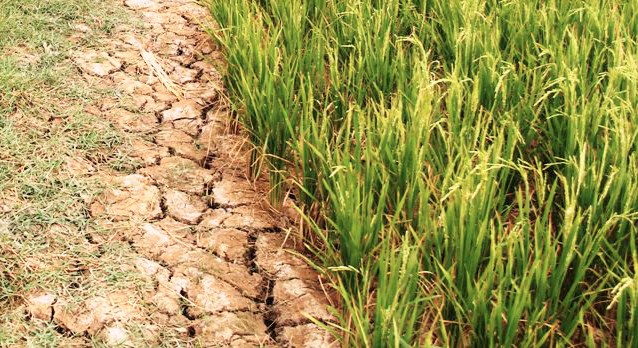
Measures to Improve and Treat Saline Soil
Winter-Spring rice blast warning – Don’t let leaf and flower burns rob you of your golden crop

Rice Sowing Techniques for the Early Winter–Spring Crop
What Is Slow-Release Fertilizer? Learn How to Use It Effectively