
ACCOUNTING WITH FURTHER FARMERS
Techniques for Planting and Fertilizing Green Siamese Coconut Trees
Coconut trees are one of the familiar crops in the Mekong Delta region. To ensure large, high-quality coconuts,
1. Nutritional requirements of the green Siamese coconut tree
Coconut trees have large trunks and leaves, so they require a lot of nutrients. Among the macronutrients NPK, coconuts need the most potassium, followed by sulfur (S) and chlorine. Therefore, applying plenty of potassium chloride fertilizer, using sulfate as nitrogen fertilizer, and phosphorus fertilizer will contribute to increasing the weight of the coconut flesh.
Potassium and chlorine deficiencies will cause coconut trees to experience yellowing and scorching of leaves, fewer and smaller fruits, often with cracked shells, thin coconut flesh, and increased susceptibility to leaf spot disease.
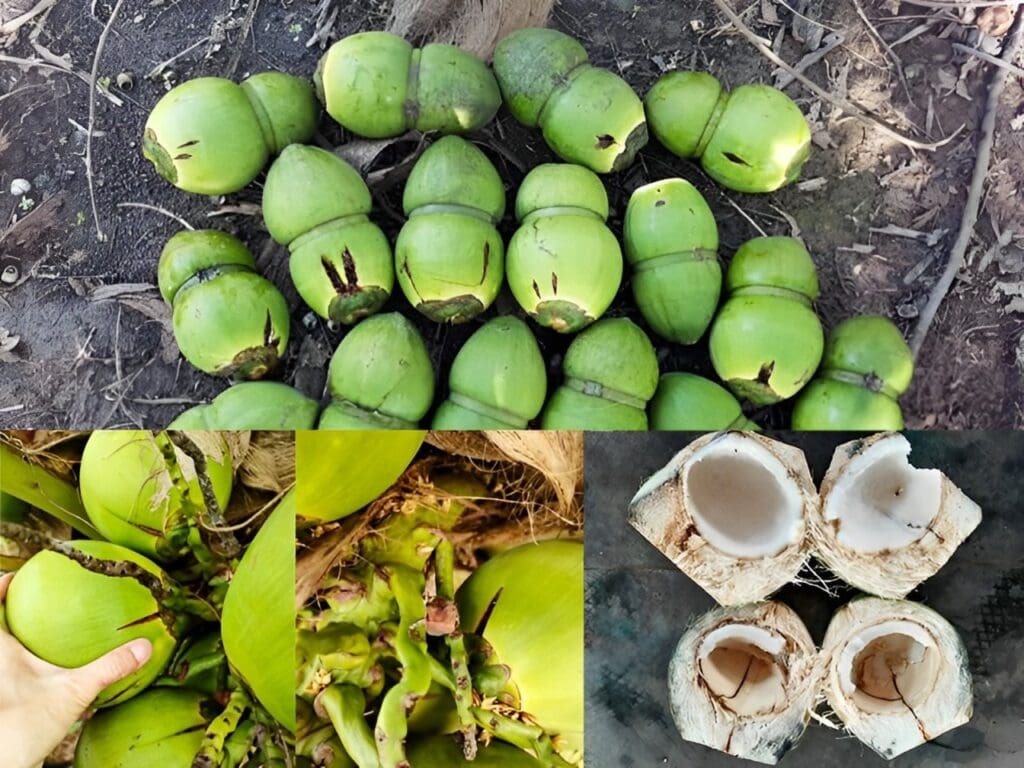
- The fruit cracks due to a lack of essential nutrients in the coconut tree’s fertilizer.
2. Techniques for growing Siamese coconut trees
2.1. Choose land
Coconut trees are easy to grow and not picky about soil, but they thrive best in alluvial soil, sandy loam rich in organic matter and potassium, with a topsoil layer at least 0.5 meters thick.
2.2. Prepare the soil for planting.
– Rice paddy land: Before preparing the raised beds for planting coconut trees, the topsoil from the rice paddy should be gathered and used to create planting mounds with the following dimensions: minimum width of 1 meter in diameter, minimum height of 0.5 meters.
– Old garden land: Before planting, gather the topsoil and create mounds. If the land is low-lying, mound it high like in a rice paddy. If the raised beds are high, mounding is not necessary; just ensure that the soil is not waterlogged during the rainy season.
– Digging holes: Before planting, you need to dig holes with dimensions of 0.6 x 0.6 x 0.4 m.
2.3. Planting distance
According to experts, to achieve high yields from Siamese coconut trees, they should be planted at a spacing of 5m x 6m, in a staggered pattern to allow for optimal sunlight absorption. Taller and hybrid coconut varieties should be planted further apart.
Note on base fertilization: 15-20 days before planting, apply 20-30kg of organic fertilizer + 100g of Superphosphate + 200g of Potassium per planting hole, mix well and cover completely.
2.4. Plant the seedlings
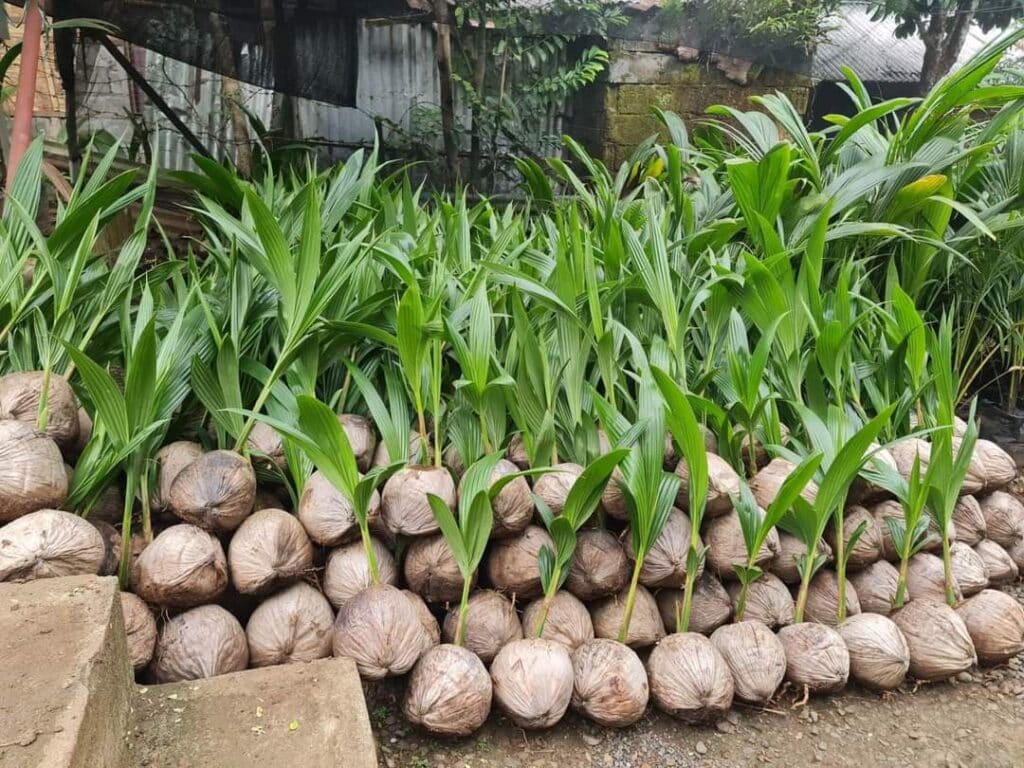
After preparing the seedlings and soil, proceed to place the seedlings on raised mounds or in planting holes.
First, dig a hole the same size as the coconut seedling.
– If the seedling is grown in a plastic bag, use a sharp knife to cut the bottom of the bag, then place the bag into the dug hole, pull the bag up from the tree trunk, and finally fill the soil back in to cover the fruit.
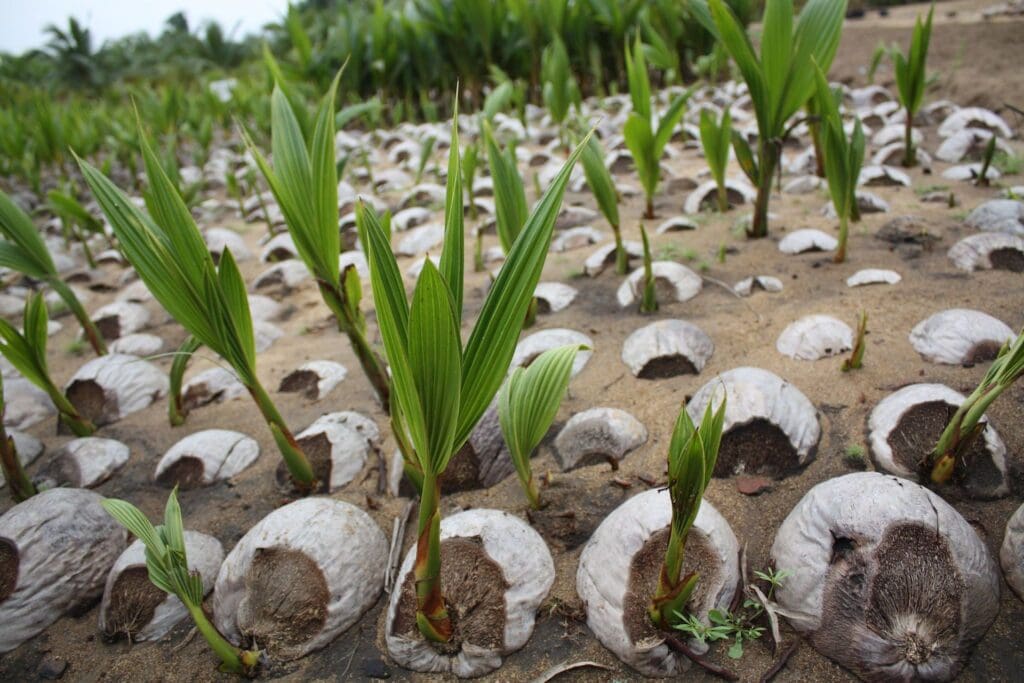
Be careful not to plant the fruit too deep, as this will slow the plant’s growth. Conversely, don’t plant it too shallow, meaning don’t cover it completely with soil, as this will cause the base of the plant to swell later.
3. Fertilization techniques for green Siamese coconut trees
3. 1. Basic establishment period (trees 1-3 years old)
Newly planted seedlings need plenty of water, especially during the dry season. If they lack water during this period, they will die. Therefore, to maintain sufficient moisture, you should mulch the base of the plants with straw, dry grass, or other dry materials during the dry season; water the plants every 2-3 days depending on the moisture level at the base.
Fertilizing:
– First year: Apply 0.5kg of NPK 16-16-16 fertilizer per plant, divided into two applications at the beginning and end of the rainy season. The application method involves lightly loosening the soil around the base of the plant, spreading the fertilizer evenly, then covering it with soil and watering to dissolve the fertilizer for easier absorption by the plant.
– Year 2: Apply 0.75kg of NPK 16-16-16 fertilizer per tree, divided into two applications at the beginning and end of the rainy season. Annually, add more soil or mud to promote root development.
– Year 3: Apply 1kg of NPK 16-16-16 fertilizer per tree, divided into two applications as in year 2. During this stage, if the coconut tree is well cared for and the correct technical procedures are followed, it will produce its first flowers after 30-32 months.
-
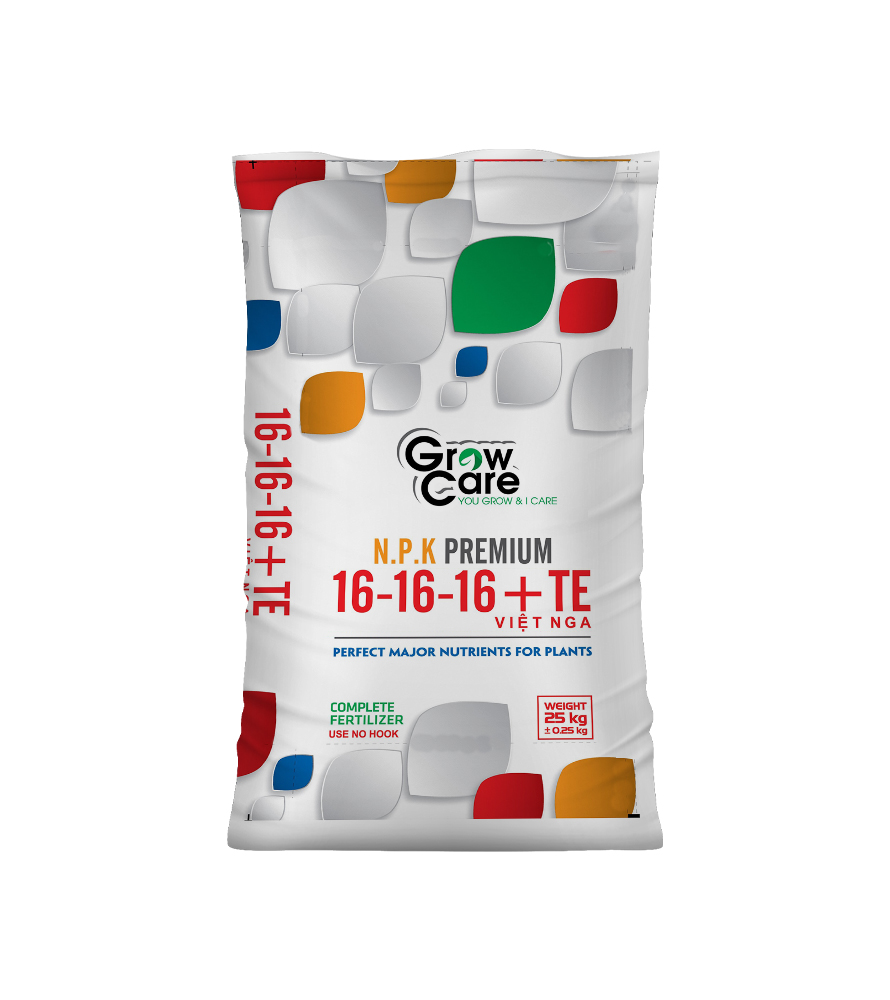
- NPK 16-16-16+TE stimulates flowering and fruiting in plants, and prevents premature fruit drop.
NPK 16-16-16+TE fertilizer provides essential macronutrients for plant growth, while also supplying micronutrients such as Boron (B), Iron (Fe), and Zinc (Zn) to promote healthy plant growth and development, increase resistance, stimulate flowering and fruiting, and prevent premature fruit drop.
3.2. Business period
At this stage, the trees are producing fruit consistently and are entering their commercial period, so the tree care process must strictly follow the guidelines to ensure high and stable yields.
Intercropped plants should be thinned gradually, and weeds should be kept in moderation to ensure the coconut trees receive sufficient sunlight for photosynthesis. Avoid letting weeds compete with coconut trees for nutrients or letting vines become tangled on the trees, which would reduce photosynthesis.
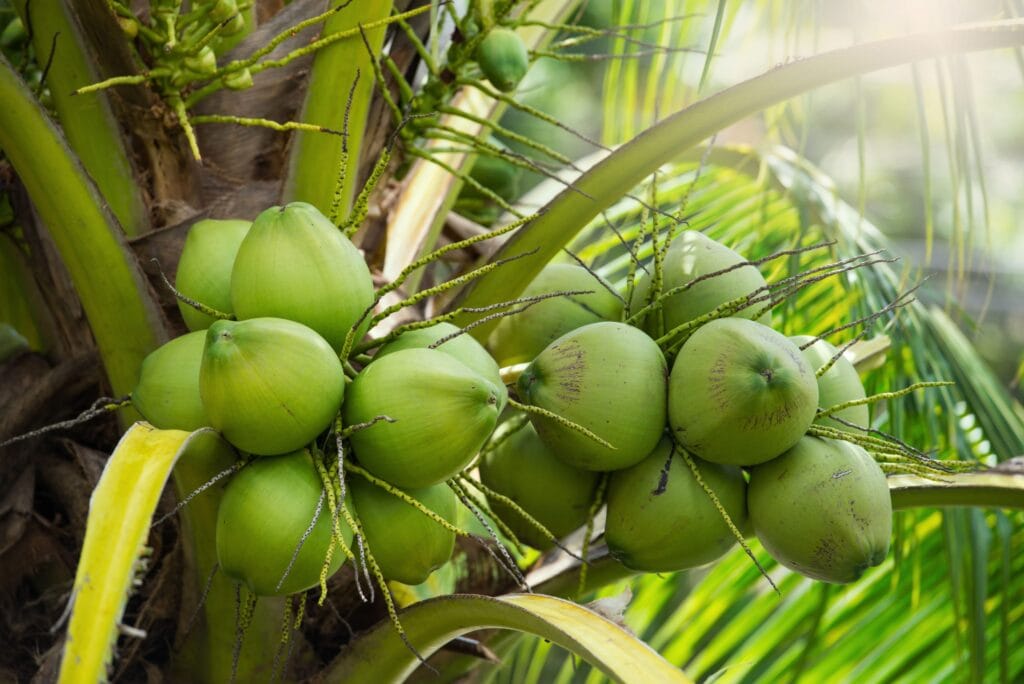
- Pruning coconut trees is recommended to increase their photosynthetic capacity.
Fertilization: Apply urea, superphosphate, and potassium chloride at a ratio of 0.8kg-1.5kg-1.5kg/tree/year, divided into two applications at the beginning and end of the rainy season.
Method of application: Dig a trench 1/2 the circumference of the base of the tree, 1.5-2 meters away from the base, 0.15-0.2m deep and 0.2m wide. Apply fertilizer into the trench, cover with soil, and water to dissolve the fertilizer.
During the period when coconut trees are about 4-6 years old, a thorough cleaning should be done 1-2 times annually, including: removing all twigs, dry flower stalks, and tangled dry coconut fronds, and trimming any twigs that are still too tightly attached to the top to help the leaves unfurl quickly and the tree grow better.
Proper coconut tree care techniques during both the establishment and production phases will help the trees grow well, achieve high yields, and produce good quality fruit. Farmers need to adhere to guidelines on irrigation, fertilization, and pest and disease control to achieve optimal results.
3.3. Harvest
– Coconuts for drinking water are harvested approximately 7-8 months after the flowers bloom.
– The harvesting time for dried coconuts is approximately 11-12 months after flowering (depending on the variety).
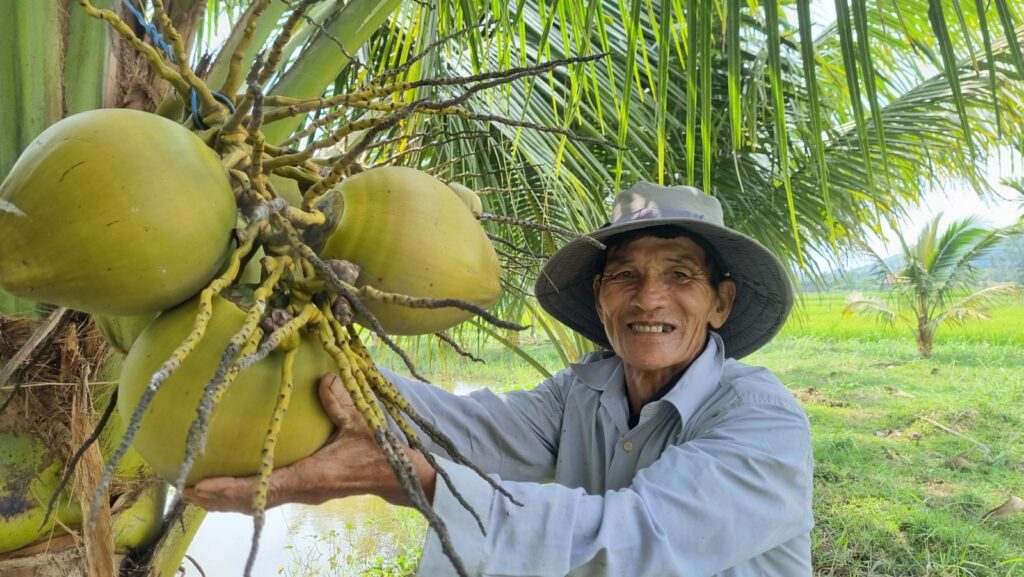
- Fruit quality can be improved with proper care and fertilization.
Conclusion
Proper care and fertilization of coconut trees are key to ensuring healthy growth and high yields. Viet Nga Fertilizer is proud to offer high-quality fertilizers tailored to the nutritional needs of coconut trees at each stage of growth. With a balanced and optimized nutrient formula, our products not only promote vigorous growth but also enhance resistance to pests, diseases, and adverse weather conditions.
Related news
Caring for the Winter-Spring Rice Crop to Ensure Large, Firm Grains

Secrets to Helping Rice Plants Stay Healthy Right From the Start of the Winter-Spring Crop Season
Proper Water Management for Winter-Spring Rice Crops

Tips for Effective Fertilization of the Winter-Spring Rice Crop

What kind of fertilizer should I use to make my banana tree flower and produce large fruits?