ACCOUNTING WITH FURTHER FARMERS
Measures to Improve Long-Term Coconut Cultivation to Increase Productivity
Long-established coconut plantations often experience declining yields due to soil degradation and nutrient depletion. To maintain and increase productivity in these plantations, coconut tree rehabilitation and the application of appropriate technical measures are essential.
In this article, let’s explore with Vietnam Fertilizer effective methods for rehabilitating long-cultivated coconut trees, helping them grow vigorously and yield high productivity.
1. Causes of reduced coconut tree productivity
Currently, some coconut plantations have become old due to lack of care, especially inadequate and untimely nutrient supply and irrigation, as well as pest and disease damage, drought, and salinity conditions, causing the coconut trees to weaken quickly, resulting in low yields and reduced quality.
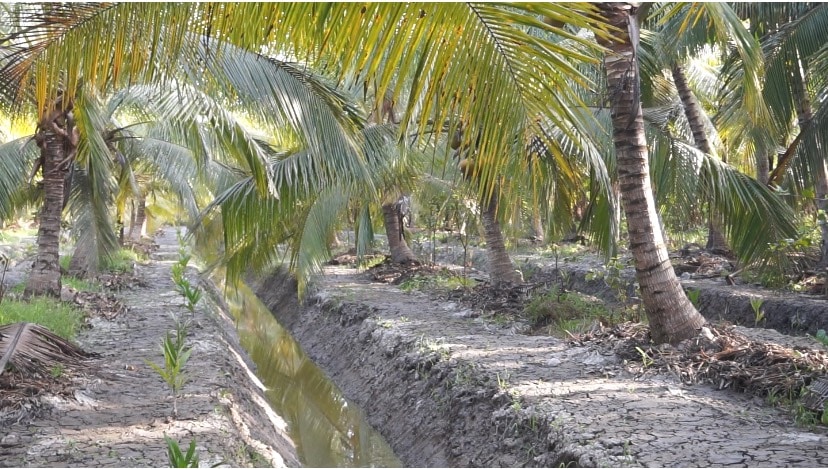
- Long-cultivated coconut groves need to be renovated.
The causes of reduced coconut yield include:
– The soil has lost its fertility because the surface of the raised beds is not regularly replenished with mud from the garden ditches on an annual basis.
– Improper care (fertilization, watering, etc.), due to excessively high planting density causing the coconut trees to lack sunlight, and high intercropping density creating competition for nutrients with the coconut trees.
– The coconut trees are old, damaged by pests and diseases, and affected by drought and salinity…
2. Some coconut tree improvement measures recommended by experts.
To help coconut farmers improve productivity, quality, and sustainability in coconut cultivation, the agricultural sector recommends the following care measures for coconut gardens aged 10-15 years:
Pruning
In coconut groves where the trees are planted too densely, the leaves shade each other, and the coconut trees lack sunlight, resulting in fewer and smaller fruits. Therefore, it is necessary to cut down the weeds to increase sunlight and soil for the coconut trees.
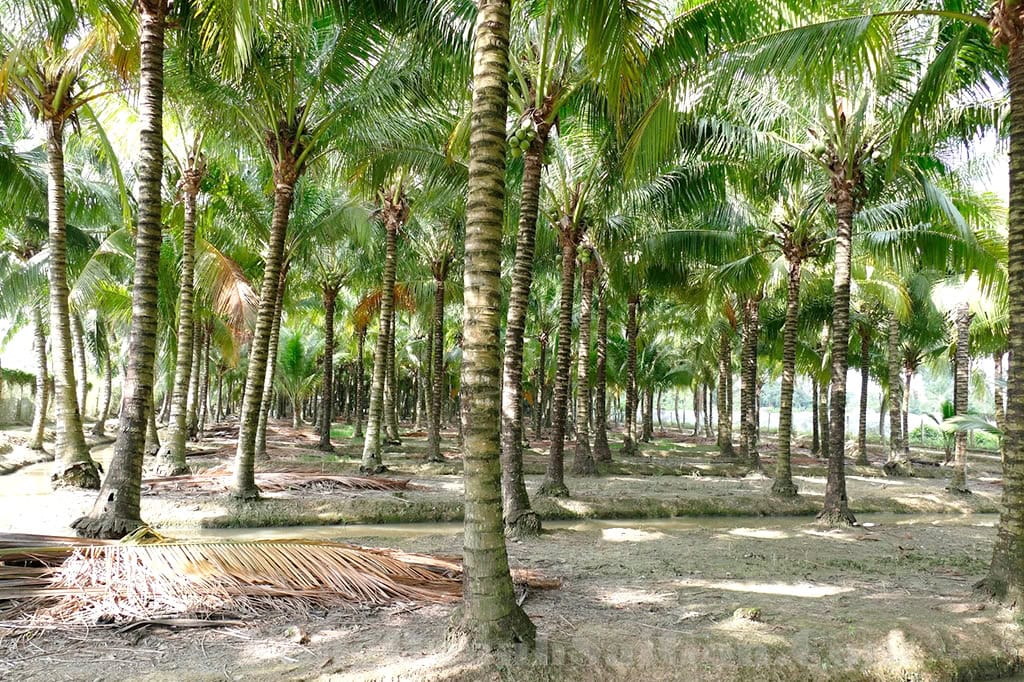
- Regular pruning of coconut trees is essential for optimal growth.
Prune away unhealthy coconut trees and those with a yield of less than 10 coconuts per year, leaving only the following density:
– For tall coconut varieties: Trees are spaced 8m apart, rows 8m apart, or trees are spaced 9m apart, rows 9m apart, corresponding to a density of 160 or 143 trees/ha.
– For hybrid coconut varieties: Trees are spaced 8m apart, and rows are spaced 8m apart, corresponding to a density of 160 trees/ha.
– For dwarf coconut varieties: Plant spacing is 0.5 – 0.7m between trees and 0.5 – 0.7m between rows, corresponding to a density of 200 – 400 trees/ha.
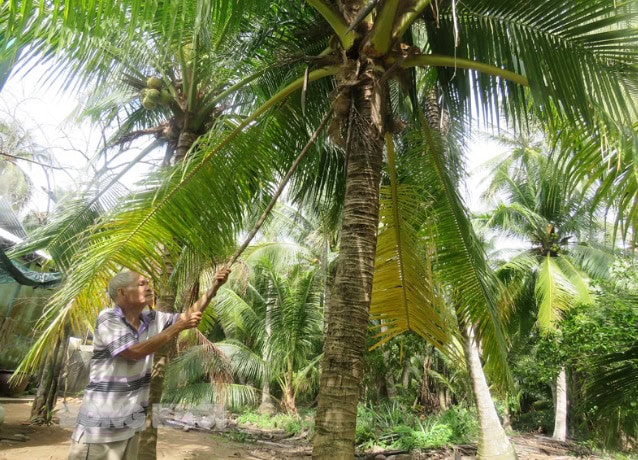
If intercropping coconut trees with citrus trees, the planting density should be as follows:
– Coconut intercropped with green pomelo: The appropriate density for coconut trees is 60-80 trees/ha, and for intercropped pomelo trees, it is 160-140 trees/ha, with an average spacing of 6×6 m/tree for pomelo trees. The minimum distance between coconut trees is 0.4m.
– Coconut intercropped with oranges, tangerines, and lemons: The appropriate density for coconut trees is about 100-120 trees/ha. The density of intercropped orange, tangerine, and lemon trees is 275-255 trees/ha, with a spacing of 4×4 m/tree, and at least 3 m away from the base of the coconut trees.
Apply organic fertilizer
Organic fertilizer is essential for coconut plantations, helping to improve soil, increase resistance, and boost productivity. Apply 25-30 kg of organic fertilizer per tree per year, divided into three applications at the beginning, middle, and end of the rainy season.
Organic fertilizers should be made from plant residues and manure composted with Trichoderma fungi. Combining the application of organic fertilizer with mulching is very effective.
Inorganic fertilization
Apply fertilizer according to the formula: 1.0 – 1.2 kg Urea + 2.0 – 2.2 kg Superphosphate (or fused phosphate) + 1.2 kg KCl/tree/year. If using NPK compound fertilizer, use the formula 15 – 7 – 20.
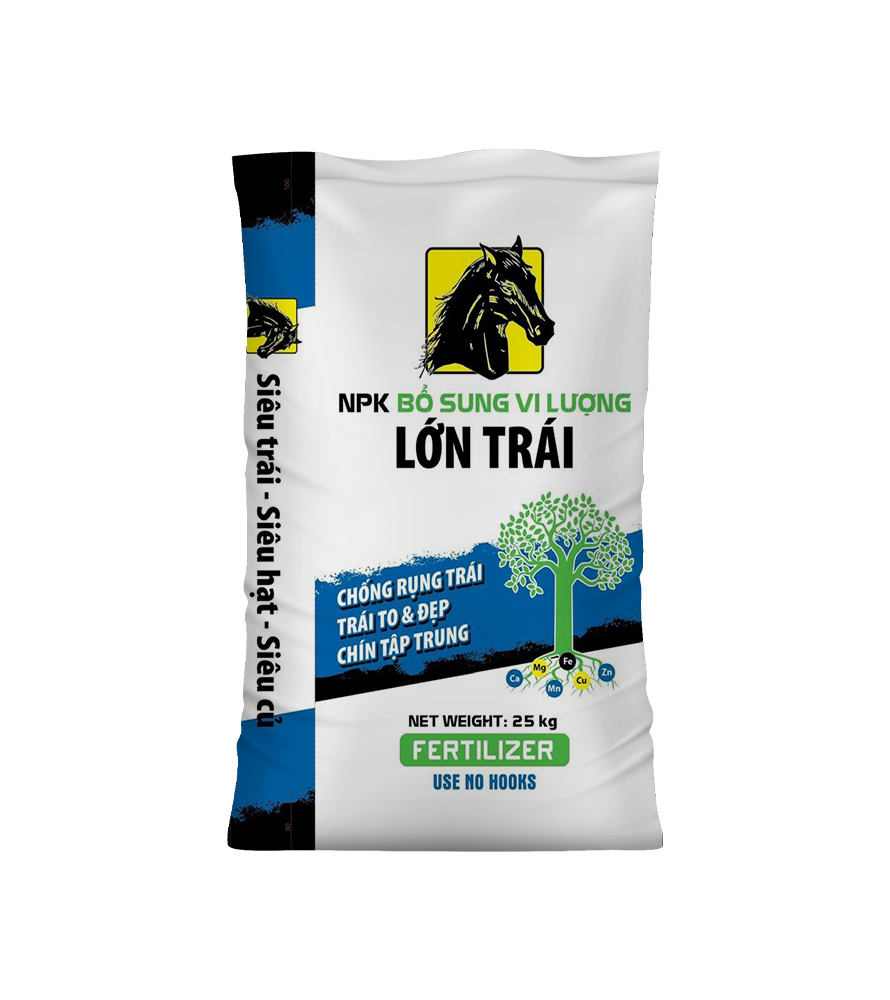
NPK 15-7-20+TE fertilizer (for larger fruits) is a nutrient-rich fertilizer formulated to enhance growth and promote larger fruit production, increasing resistance to pests, diseases, and adverse weather conditions. It also reduces flower and fruit drop, accelerates fruit growth, ensures firm grains, and promotes uniform ripening.
Fertilization should be done approximately 6-7 times per year (after harvesting, fertilize about every 2 months).
– Apply fertilizer evenly around the base of the tree: Spread the fertilizer evenly on the soil around the base of the coconut tree, 1.8 – 2.0m away from the trunk. Loosen the soil to mix the fertilizer into the soil, and water to allow the fertilizer to penetrate the soil (if the soil is dry).
– Circular fertilization: Dig a trench around the base of the tree following the canopy’s projection (1.8 – 2.0m from the trunk, 15 – 20cm deep), apply fertilizer, and cover with soil.
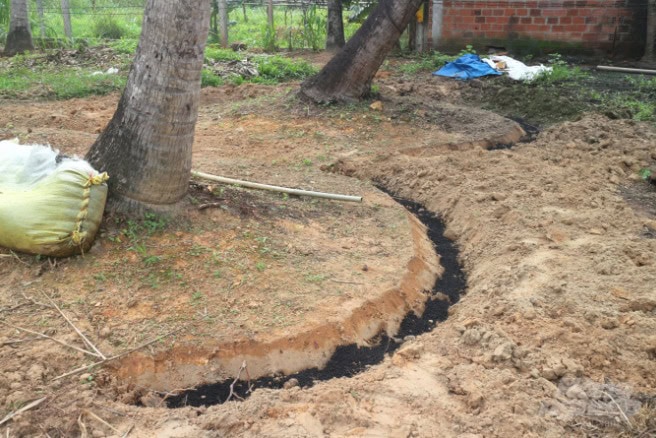
– Apply fertilizer in holes: Dig 4-8 small holes around the base of the coconut tree, about 1.0m away from the trunk. Apply fertilizer into the holes and cover with soil.
Additionally, annually, the soil should be supplemented with 20-30 kg of agricultural lime (for highly acidic soils) per 1,000 m2. The fertilizer should be divided into several applications.
Dredging ditches and removing sediment.
Coconut trees should be mulched with mud every 1-2 years, during the dry season, applying only a thin layer of mud about 2-4 cm thick. The mud should be taken from the surface layer and not from the clay or acidic soil layers at the base of the tree.
Watering
Coconut yields often decline in areas experiencing water shortages during the dry season. Without enough water, coconut trees cannot absorb nutrients and will either fail to bear fruit or will drop their young fruit.
Water thoroughly twice a month, even in saline areas (coconut trees can tolerate salinity levels from 8 to 10‰).
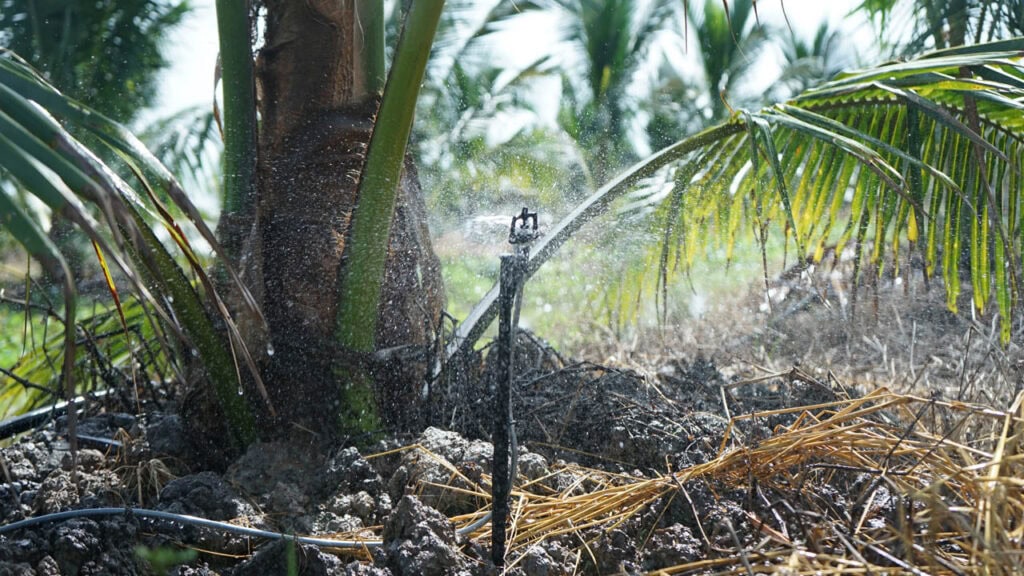
- Water the coconut trees regularly.
During the dry season, especially during droughts, water the trees about every 5 days, or at least once a month (especially for orchards 7-13 years old), ensuring the water penetrates to the roots.
In the case of coconut trees being affected by drought and salinity during the dry season.
– During drought and salinity periods: Reinforce the mulching system to retain moisture, irrigate the plants with stored freshwater using a water-saving irrigation system, with an interval of 5-7 days between irrigations.
– After the drought and salinity period ends: Fertilizers rich in phosphorus and humic acid, such as various organic fertilizers, Super Humic, DAP, or superphosphate, and agricultural lime dolomite, should be applied to minimize toxicity from alum and salinity, and to stimulate new root growth and recovery. After about 3-4 weeks of fertilization and with stable early-season rains, normal care and fertilization can be resumed.
Cleaning the coconut grove and coconut trees.
At the end of the rainy season, weed around the base of the coconut tree, at a distance of 2 meters from the trunk.
Fertilization should be combined with weed removal. Coconut fronds should be regularly cleaned by cutting off coconut husks, stubble, and flower bracts to ensure good ventilation and prevent them from becoming hiding places for insects and rodents.
Conclusion
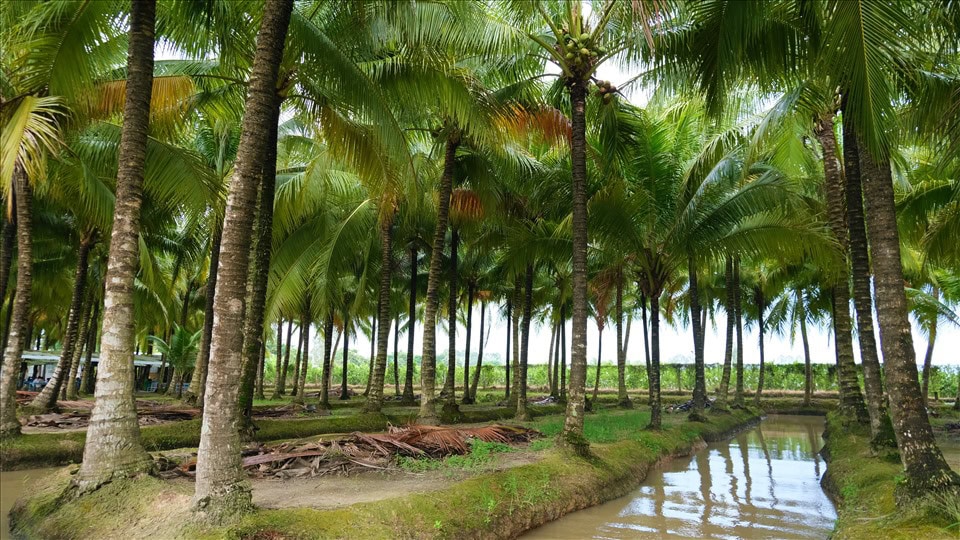
The rehabilitation of long-cultivated coconut plantations is a crucial and necessary task to maintain crop yield and quality. By applying soil improvement measures, using appropriate organic and inorganic fertilizers, and implementing advanced farming techniques, farmers can ensure that their coconut plantations remain in optimal condition to achieve high economic efficiency.
Viet Nga Fertilizer is committed to accompanying farmers in the process of improving and caring for their crops, providing optimal nutritional solutions to help coconut trees grow strong, yield high and sustainable productivity.
Related news
The Role of Base Fertilization in Soil Improvement and Enhancing Agricultural Fertility
Measures to Improve and Treat Saline Soil
Winter-Spring rice blast warning – Don’t let leaf and flower burns rob you of your golden crop

Rice Sowing Techniques for the Early Winter–Spring Crop
What Is Slow-Release Fertilizer? Learn How to Use It Effectively