How to Fix Acid Sulfate Flare-Ups in the 2026 Summer–Autumn Crop
Date
Contents· 6 sectionsExpandCollapse
- What Is an “Acid Sulfate Flare-Up”? Why Does Acidity Appear So Often in the Summer–Autumn Crop?
- Why Are Acid Sulfate Flare-Ups Common in the Summer–Autumn Crop?
- Signs That a Rice Field Has an Acid Sulfate Flare-Up
- How Does Low Soil pH Affect Rice Plants?
- Process for Fixing Acid Sulfate Flare-Ups with Viet Nga Fertilizer’s Solution
- Notes on Growing Rice on Acid Sulfate Soil in the Summer–Autumn Crop
The 2026 Summer–Autumn crop is approaching, and many areas have already started sowing, but early-season acid sulfate flare-ups remain a major concern for farmers, especially on long-standing acid sulfate soils. This year, El Nino has returned with prolonged heat and localized drought, causing more acidity to rise up from the soil. If not treated promptly, soil pH can drop to 2–3, leaving newly sown glutinous rice stunted, curled, slow-growing or even dying off. So what causes it, and how should it be treated so that rice plants establish strong roots and grow well right from the start of the season? Let’s find out with Viet Nga Fertilizer in the article below.
What Is an “Acid Sulfate Flare-Up”? Why Does Acidity Appear So Often in the Summer–Autumn Crop?
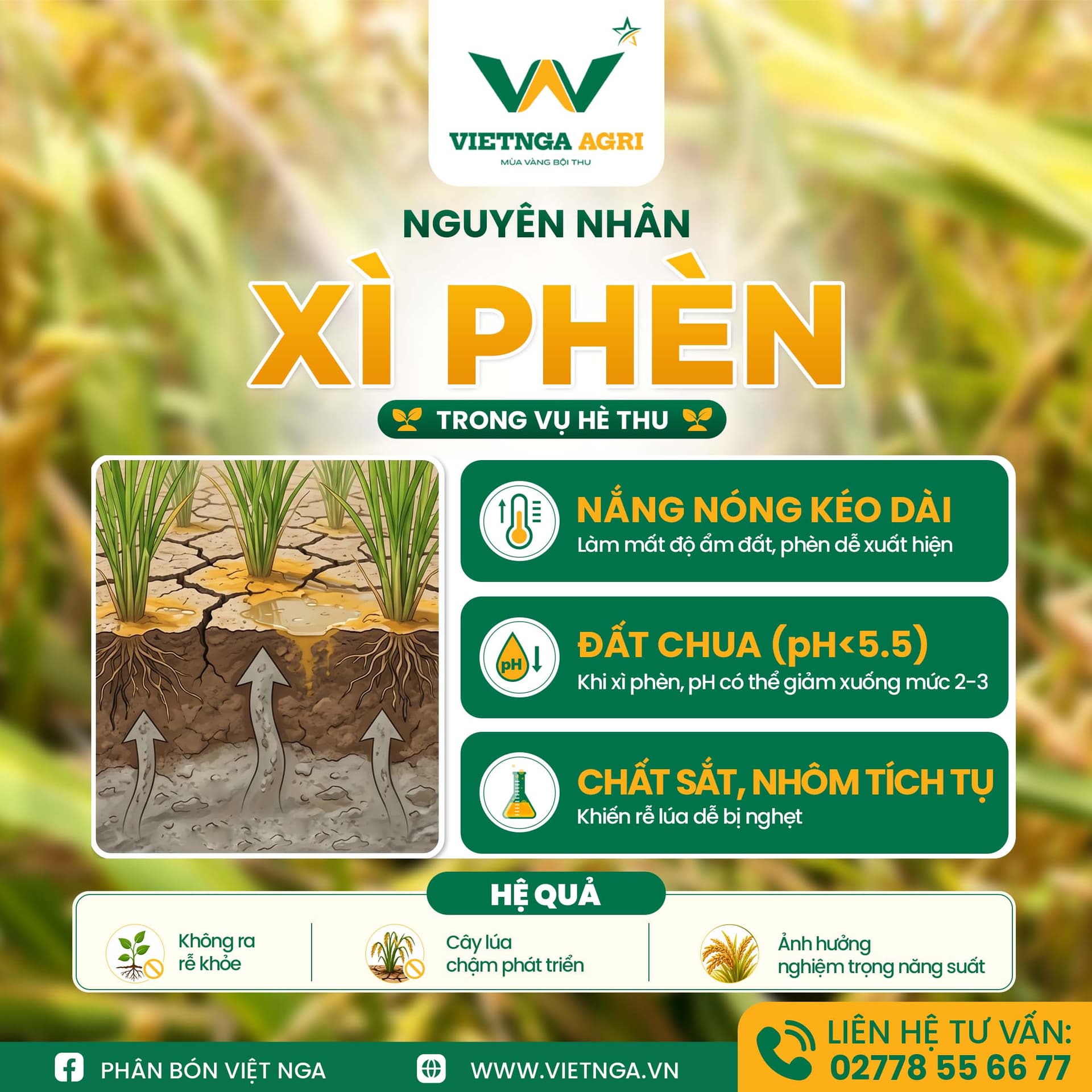
An acid sulfate flare-up (“xi phen”) is what farmers commonly call the phenomenon in which potential acid sulfate compounds in the soil are brought up to the field surface or dissolved into the paddy water, making the soil strongly acidic and harmful to crops. It usually occurs in acid sulfate soils, low-lying land, or long-cultivated areas of the Mekong Delta.
Essentially, acid sulfate soils usually contain sulfur compounds bound with iron. When fields dry out and crack, water levels fluctuate irregularly, or there is a prolonged heat wave, these compounds are easily oxidized and form acid, causing soil pH to drop sharply. In fields with severe acid sulfate conditions, pH can fall to very low levels, directly affecting the rice root system.
When an acid sulfate flare-up occurs, the soil and paddy water often show signs such as:
- Paddy water turns yellow, yellowish-brown or slightly red
- An acidic scum on the soil surface or a sour, fishy smell
- Rice roots turn black and short, with few white roots
- Newly sown rice is slow to root, stunted, with yellowing leaves
- The field grows unevenly, with patches of dead plants
This is because an overly acidic soil environment increases the toxicity of dissolved iron (Fe) and aluminum (Al), while making it hard for plants to absorb important nutrients such as phosphorus, potassium, calcium and magnesium. When the root system is damaged, rice plants absorb less water and nutrients, leading to weak growth right from the start of the season.
Why Are Acid Sulfate Flare-Ups Common in the Summer–Autumn Crop?
The Summer–Autumn crop is when many areas enter a hot spell, alternating with erratic early-season rains. Large changes in temperature, humidity and water supply raise the risk of acid sulfate flare-ups more than at many other times of the year, especially on long-standing acid sulfate fields.
1. El Nino returns with prolonged heat
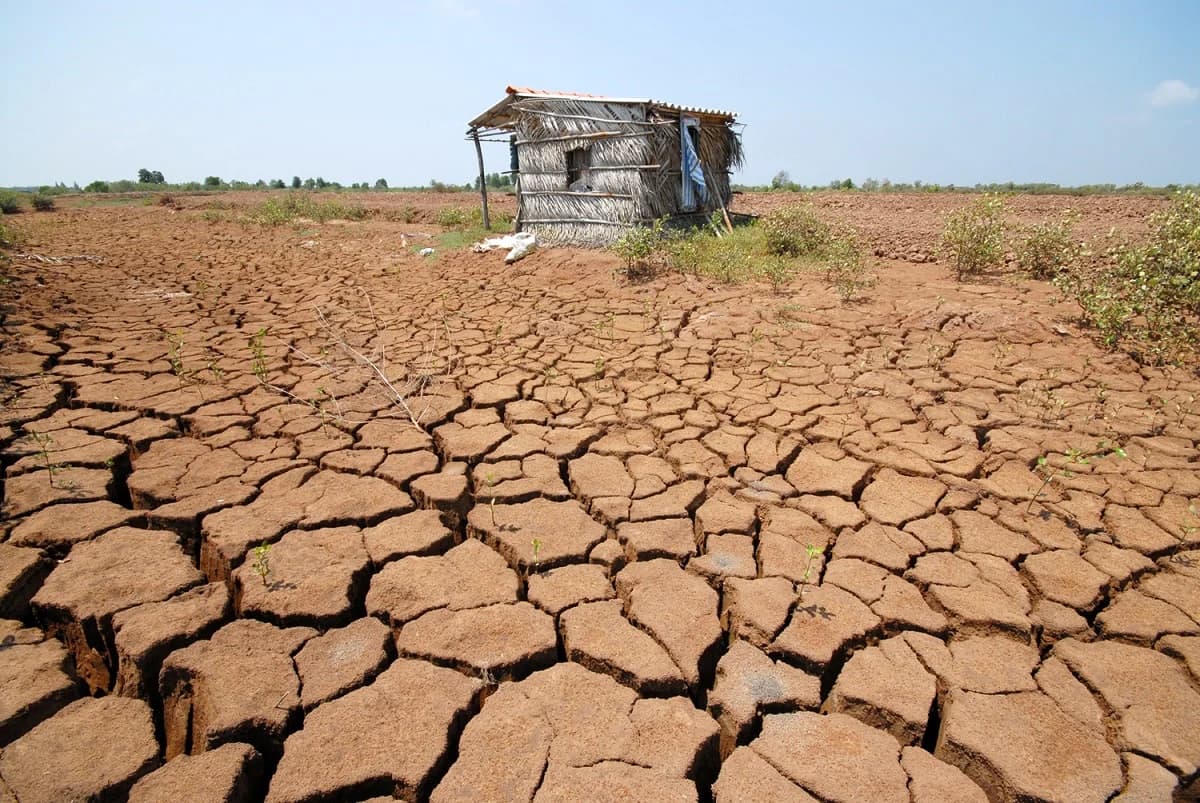
In 2026, the weather continues to be affected by El Nino, with high temperatures and prolonged heat in many areas. When fields lack water, the soil dries quickly and cracks at the surface, and the acid sulfate layers below are easily oxidized and rise to the surface. This is one of the common reasons acid sulfate flare-ups appear early in the season. In addition, high temperatures easily stress newly sown rice, whose roots are still weak and therefore even more sensitive to acidic soil.
2. Acid sulfate soils already have a low pH
Many rice-growing areas in the Mekong Delta have natural acid sulfate soils or acidic soils that have existed for years. These fields usually have a pH lower than what favors rice, and if they are not improved periodically, acid sulfate flare-ups easily occur when the weather turns unfavorable. Low-lying areas with poor drainage, or fields that have been cultivated continuously for many years, are at particularly high risk.
3. Drought followed by sudden re-flooding
After a period of drought, when water is suddenly pumped back into the field or heavy early-season rain falls, the soil environment changes rapidly and acid compounds dissolve heavily into the paddy water. Farmers then often see turbid yellow, reddish-brown paddy water or a sour, fishy smell. This fluctuation not only increases acidity but also shocks young rice roots, slowing their recovery and development.
4. Residual iron, aluminum and sulfate in the soil
Acid sulfate soils usually contain potential iron (Fe), aluminum (Al) and sulfate. When conditions favor a flare-up, these substances dissolve in greater amounts and become toxic to rice roots. Common symptoms are:
- Roots are blackened, short, with few white roots
- Plants grow slowly, with yellow leaves
- Nutrient uptake drops sharply
- The field grows unevenly
This is also why many early-season rice fields fail to grow as expected even after fertilizing.
Signs That a Rice Field Has an Acid Sulfate Flare-Up
Recognizing an acid sulfate flare-up early helps farmers treat it in time and limit its impact on root establishment and early growth of rice. In practice, many rice fields affected by acidity show symptoms quite similar to nutrient deficiency or organic toxicity, so it is necessary to observe the rice plants, the root system and the field surface as a whole.
Newly sown rice grows slowly and is slow to root
Many days after sowing, the plants still grow slowly, stand still, do not unfold new leaves, or produce weak roots. This is a common sign that the soil is too acidic for roots to function normally.
Pale yellow or slightly reddish leaves
Rice leaves may turn pale yellow or weak green, or show a slight reddish-purple tint at the leaf tips and margins. This is because the plants are stressed and the roots absorb nutrients poorly, so the symptoms resemble nutrient deficiency.
Black roots, few white roots
When a plant is pulled up for inspection, the root system is usually short, blackened or dark brown, with few young white roots. This is a typical sign of root damage in acid-affected fields.
Plants are clumped and stunted
Rice plants stay short, with thin stems, short leaves, a clumped stance and slow tillering. In severe cases, plants may shrivel or die in patches.
Slow to produce new roots after sowing
Normally, after sowing, rice plants quickly take root and recover. If no new white roots appear after many days, farmers should check the soil and paddy water immediately.
Patchy fields with uneven growth
Fields with acid sulfate flare-ups are usually not affected uniformly; instead, patches of weak rice appear alongside areas of fairly well-grown rice. Low-lying spots or places where acidity accumulates are usually hit harder.
Paddy water has an unusual color
Besides symptoms on the plants, farmers may notice that the paddy water is turbid yellow, yellowish-brown or slightly red, or has a sour, fishy smell. This is a common sign of acid compounds dissolving in the water.
The earlier an acid sulfate flare-up is detected, the more effective the treatment, helping rice recover quickly and limiting early-season yield losses.
How Does Low Soil pH Affect Rice Plants?
Soil pH is the index of how acidic or alkaline the soil is, and it plays a very important role in root development and nutrient uptake of rice. When soil pH is too low, especially in fields with acid sulfate flare-ups, the soil becomes strongly acidic and rice grows poorly right from the start of the season.
Under normal conditions, rice grows better when the soil pH is suitable. However, when pH falls as low as 2–3, the environment is considered very strongly acidic and seriously harmful to crops. When soil pH drops, rice plants suffer the following effects:
Root system is damaged and struggles to develop: An overly acidic environment burns young roots, turns them black, chokes them and slows the growth of new white roots. With a weak root system, plants struggle to stand and are slow to recover after sowing.
Nutrient uptake drops sharply: Even when farmers have applied fertilizer, plants still struggle to absorb it effectively if soil pH is too low. This is why many rice fields that receive adequate fertilizer still stay yellow, weak and slow-growing.
Poor uptake of phosphorus, potassium, calcium and magnesium: When soil pH is low, many important nutrients in the soil are hard for rice to absorb effectively, even when farmers have fertilized adequately. This causes plants to turn yellow and weak, grow slowly and develop unevenly.
- Phosphorus (P): easily fixed in acidic soil, hard for plants to use, affecting rooting and early tillering.
- Potassium (K): uptake decreases, leading to weak stems and reduced stress tolerance.
- Calcium (Ca): deficiency causes poor root development and slow recovery after sowing.
- Magnesium (Mg): affects photosynthesis, so leaves easily turn pale and growth is weak.
When these nutrients are deficient for a long time, rice plants develop less, tiller slowly and struggle to reach the expected yield.
Weak plants, reduced tillering, more susceptible to pests and diseases: rice under prolonged stress tillers slowly, with thin stems and leaves and uneven growth. At the same time, weak plants are also more vulnerable to pests and diseases in the early season.
Process for Fixing Acid Sulfate Flare-Ups with Viet Nga Fertilizer’s Solution
When a rice field shows an acid sulfate flare-up, early treatment at the start of the season is very important. With the right intervention, rice can recover quickly, produce new roots better and limit yield losses later on. Below is a practical, easy-to-apply acidity treatment process based on Viet Nga Fertilizer’s solution.
Step 1: Drain and Flush the Field – Reduce Acidity Quickly
This step should be done first to reduce the amount of dissolved acidity and toxins present in the soil and paddy water
How to do it:
- Pump water into the field until the surface is evenly flooded
- Hold the water for an appropriate time to dilute the existing acidity
- Drain the old water out
- Pump fresh water back into the field
- Repeat the process 2–3 times depending on how severe the acidity is
Benefits:
- Removes toxins accumulated in the soil and paddy water
- Reduces dissolved acidity around the root zone
- Makes the soil less harshly acidic
- Improves initial soil pH, creating favorable conditions for the next treatment step
Note:
Farmers should secure a clean water source and act as early as possible once the field shows signs of an acid sulfate flare-up, to limit the impact on newly sown rice.

Step 2: Broadcast Viet Nga Secondary-Nutrient Fertilizer to Balance Soil pH
After flushing out the acidity, the next step is to supply secondary nutrients to help improve soil acidity, restore the root zone and help rice absorb nutrients better.

Recommended rate:
- Use 2–4 bags/ha
- Adjust according to how severe the acidity is in each field
Monitoring after application:
- After about 12–36 hours: soil pH may improve noticeably; farmers can check it with a dedicated pH meter
- After about 3 days: the root system starts producing many healthy white roots and the plants recover better
Benefits:
- Neutralizes soil acidity
- Helps raise soil pH to a more stable level
- Promotes strong root growth and more white roots
- Increases uptake of nutrients from fertilizer already applied
- Helps rice regain its green color quickly and grow better
Many farmers only flush out the acidity or only apply a soil amendment on its own, so the results are limited. When the steps are combined in the right process, rice fields have more favorable conditions to take root, tiller and grow strongly in the early Summer–Autumn season.

Notes on Growing Rice on Acid Sulfate Soil in the Summer–Autumn Crop
In acid sulfate areas, besides treating flare-ups when they occur, farmers also need to manage their fields proactively from the start of the season to limit the risk of recurrence and help rice grow more steadily. Below are some important notes for the Summer–Autumn crop.
- Do not leave fields dry and cracked for long: Prolonged dryness makes acidity rise more strongly. Keep the field surface reasonably moist, especially early in the season.
- Secure water at the start of the season: Prepare a water source so you can flood and drain in time when the field shows signs of an acid sulfate flare-up or during prolonged heat.
- Monitor pH regularly: In fields with severe acid sulfate conditions, check soil or paddy-water pH periodically so problems can be treated early.
- Apply balanced NPK + secondary nutrients: Besides nitrogen, phosphorus and potassium (NPK), acid sulfate soils also need secondary nutrients such as calcium, magnesium, sulfur… to help improve the soil and help plants absorb nutrients better. Balanced fertilization keeps plants healthy with strong roots and greater tolerance to adverse conditions.
- Treat acidity as soon as possible after sowing: Newly sown rice is still weak, with an incomplete root system, so it is very sensitive to acidic soil. If signs of an acid sulfate flare-up appear, farmers should treat them early to prevent prolonged stunting, slow growth or a lower effective plant density in the field.
Growing rice on acid sulfate soil in the Summer–Autumn crop requires farmers to be more proactive in managing water and monitoring soil and early-season nutrition. When fields are cared for properly from the start, rice takes root quickly, grows strongly and lays a good foundation for end-of-season yield.
Acid sulfate flare-ups are a major risk in the early 2026 Summer–Autumn crop, especially as the weather is affected by El Nino with prolonged heat and localized drought. If not treated in time, rice easily suffers from choked roots, stunting and slow growth. However, with early detection and the right treatment, farmers can still help rice take root strongly, grow well and build a favorable foundation for end-of-season yield. For advice on the right solution for each field, farmers can contact Viet Nga Fertilizer for prompt support.