
ACCOUNTING WITH FURTHER FARMERS
Effective Methods for Applying Topdressing Fertilizer to Promote Concentrated Tillering in Rice Plants
The tillering stage in rice plants is a crucial period in the entire life cycle. Because it determines the quality and yield of the entire crop, the use of
1. Why is it necessary to apply fertilizer to encourage rice tillering?
Rice plants have two types of tillers: ineffective tillers and effective tillers. Only effective tillers produce panicles.
Effective tillers are those that tiller early, with four or more leaves, while ineffective tillers are those that tiller later, have poor nutrition, and have three or fewer leaves. The abundance of ineffective tillers is mainly due to farmers not applying fertilizer in a concentrated manner, dividing nitrogen fertilizer into multiple applications. If there are many ineffective tillers in the field, the rice field will be overgrown, more susceptible to pests and diseases, and will also consume nutrients, leading to waste and affecting rice yield.
Fertilizers applied to rice plants during the tillering stage typically have a high nitrogen content. This is because nitrogen has a significant impact on rice plants during the early stages of growth. Specifically, this is demonstrated by an increase in the leaf area coefficient and a substantial increase in the number of tillers.
If sufficient nitrogen is not supplied in a timely manner, rice plants may grow slowly, tiller poorly, and produce fewer panicles and grains, leading to a decrease in the overall crop yield.

2. Nutritional requirements of rice during the tillering stage
During the tillering stage, rice plants absorb 3/4 of the total nutrients for the entire growing season. The most important nutrient during this period is Nitrogen (N), followed by Phosphorus (P2O5), Potassium (K2O), and trace elements such as Calcium, Magnesium, Sulfur, Silicon, Copper, Iron, and Zinc.
However, due to ingrained habits and insufficient awareness, farmers often only apply nitrogen fertilizer during the tillering stage, leading to unbalanced rice plant development. Although the rice produces many tillers, there are few effective tillers, resulting in dense, weak plants that are susceptible to pests and diseases, wasting fertilizer but yielding low productivity.
3. How to properly fertilize rice plants during tillering.
3.1 Stages requiring topdressing for rice tillering
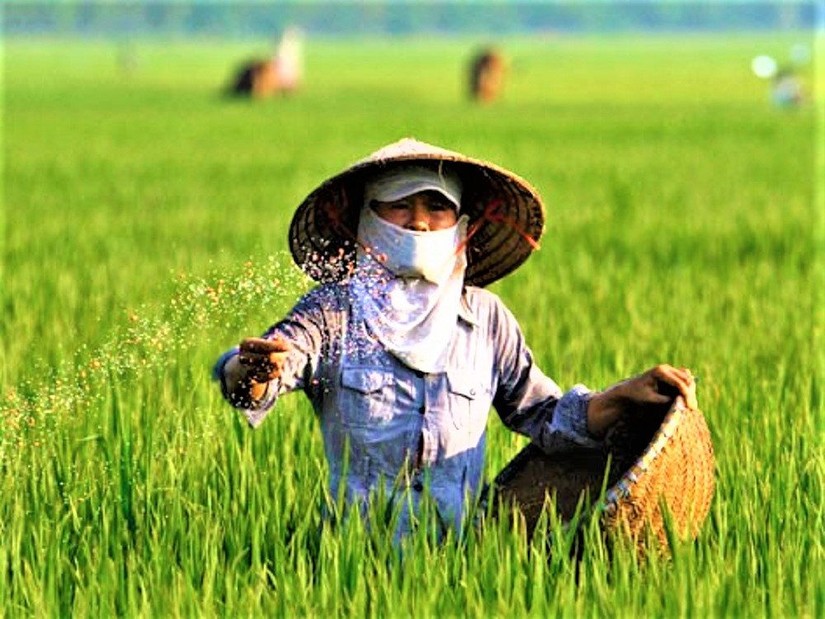
Once the rootlets establish themselves in the soil, the cotyledons begin to develop. The appropriate time to fertilize rice is 8 days after sowing and when the rice begins to tiller from day 18. During this stage, nitrogen fertilizer should be added to the rice to help the tillering process occur quickly. The amount of nitrogen fertilizer applied during this period accounts for about 70% of the total nitrogen for the entire growing season.

- Rice tillering occurs when the rootlets anchor themselves in the soil and the cotyledons begin to develop.
Farmers can combine nitrogen and phosphorus fertilizers to help reduce toxins, acidity, and alkalinity in the soil.
First topdressing: 8-12 days after sowing rice.
Second topdressing: When the rice begins to tiller, on days 18-22.

3.2. Fertilization regime
To help rice plants tiller vigorously and efficiently, increasing the percentage of effective tillers to achieve the highest yield, the following steps should be focused on from the beginning of the growing season:
– Rice should be fertilized early and intensively, with the dosage and method of application following the specific procedure for each variety.
– Avoid applying fertilizer too many times, especially late nitrogen fertilization, as this causes the rice plant to tiller sporadically, producing many ineffective tillers that affect nutrient consumption and increase pest and disease damage.
– About 8-12 days after transplanting, start applying fertilizer to promote tillering with an appropriate amount.

3.3. Choose fertilizers that provide complete nutrition for rice during the tillering stage.
To encourage early and concentrated tillering in rice plants, resulting in thick stems, high effective tillers, and reduced ineffective tillers, thus maximizing rice yield potential, farmers should choose fertilizers with sufficient amounts of nitrogen, phosphorus, potassium, and micronutrients in appropriate proportions.
Viet Nga Fertilizer would like to introduce to you some types of specialized fertilizers for topdressing rice, which help stimulate root development, promote abundant root growth, encourage tillering, and produce many effective shoots.
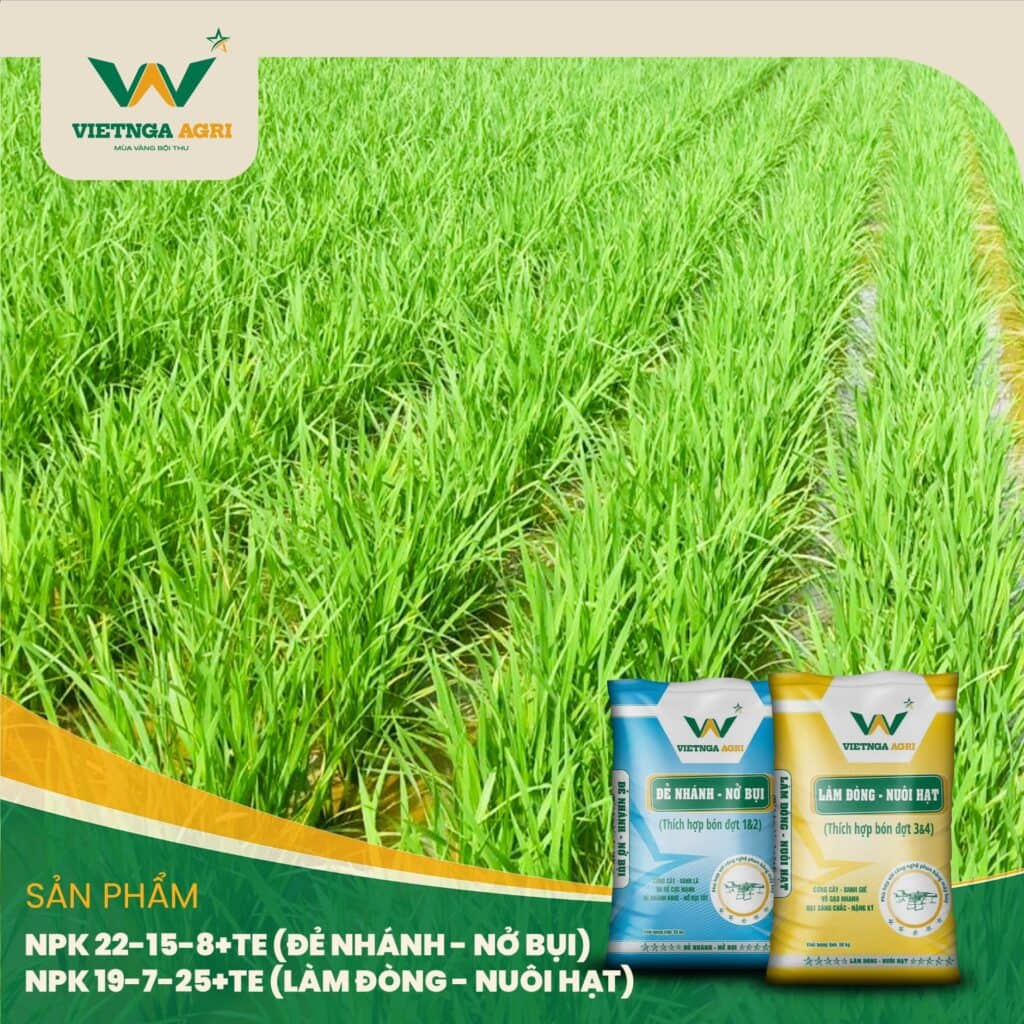
First and second top dressing: NPK 22-15-8+TE (for panicle initiation, use NPK 19-7-25+TE)
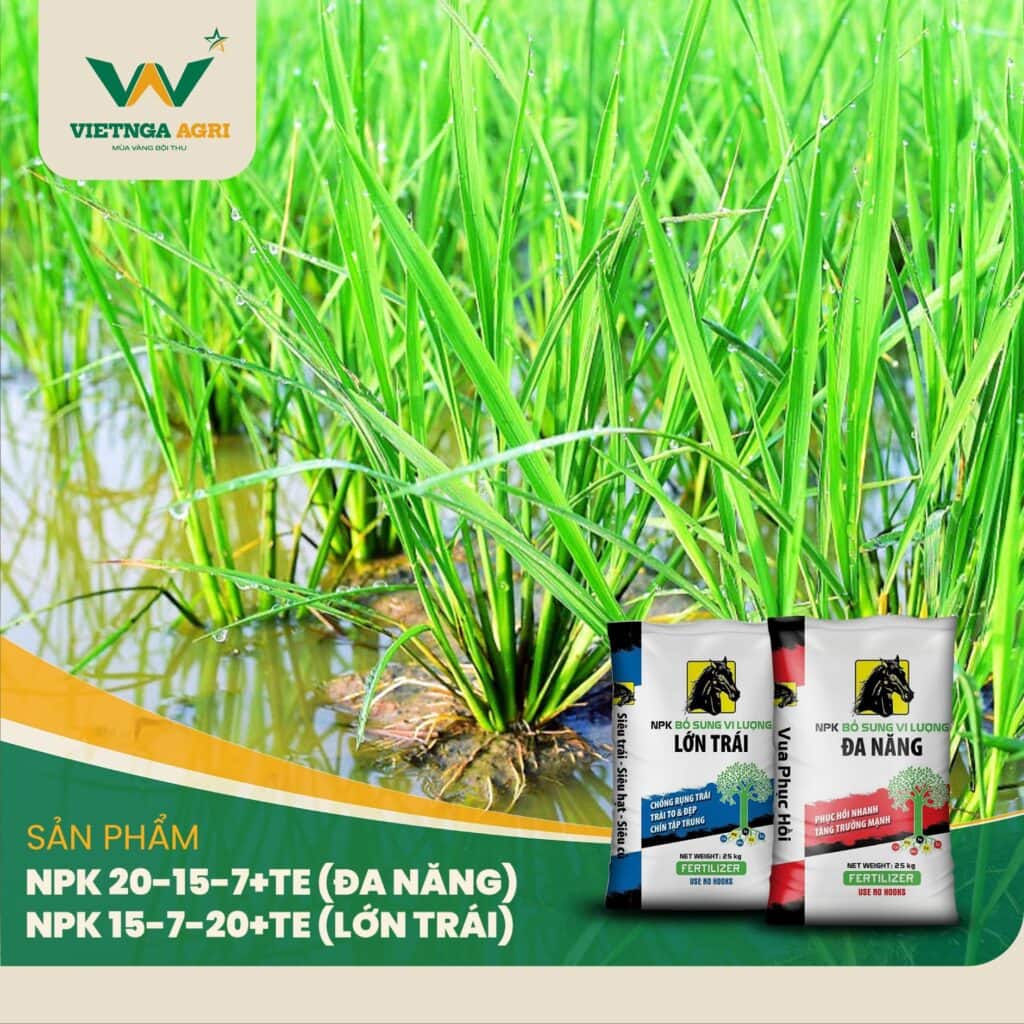
First and second topdressing: NPK 20-15-7+TE (for panicle initiation, use NPK 15-7-20+TE)
Notes on applying fertilizer to promote tillering in rice
– To ensure fertilizer takes effect quickly, maintain a shallow water level (2-3 cm) and prevent the field from drying out. It is best to apply fertilizer in the dry afternoon, avoiding contact with the leaves.
– Absolutely avoid applying fertilizer sporadically or adding extra nitrogen, as this will prolong tillering in rice plants, lead to outbreaks of pests and diseases, and reduce crop yield.
3.4. Water regulation methods
Applying rational and scientific irrigation methods to regulate water levels in the rice fields appropriately at each stage saves water and helps rice plants tiller vigorously and uniformly. This is a water-saving irrigation solution that is of significant importance in the current context of climate change.
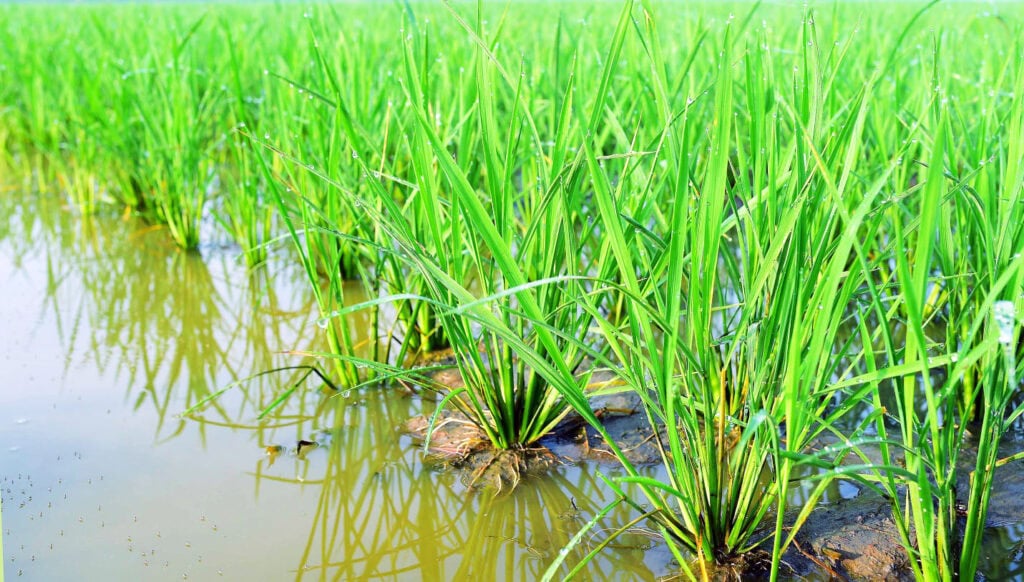
- Proper water management is essential for healthy plant growth.
Regulate water levels appropriately in rice fields: for low-lying fields, drain excess water; for higher fields, maintain a constant water level of 3-5 cm to facilitate care and create conditions for concentrated tillering, resulting in a high effective tiller count. When the rice begins to tiller, drain the water to only 3-5 cm, combine with the first topdressing and tilling to stir the mud. When the rice finishes tillering effectively, flood the fields with water to 7-10 cm to control the rice from tillering too gradually.
Conclusion
Topdressing to encourage tillering is a crucial factor in ensuring strong and uniform rice plant growth, thereby increasing yield and crop quality. Proper fertilization, in the correct dosage and at the right time, not only promotes healthy plant development but also enhances resistance to pests, diseases, and adverse weather conditions. Always monitor your plants and adjust your fertilization plan accordingly to achieve bountiful harvests.
We wish all farmers success in applying topdressing techniques and achieving the best possible results for their crops!
Why is fertilizing during the heading stage important?
Experience in Applying Specialized Fertilizers to Summer-Autumn Rice Crops
Related news
Caring for the Winter-Spring Rice Crop to Ensure Large, Firm Grains

Secrets to Helping Rice Plants Stay Healthy Right From the Start of the Winter-Spring Crop Season
Proper Water Management for Winter-Spring Rice Crops

Tips for Effective Fertilization of the Winter-Spring Rice Crop

What kind of fertilizer should I use to make my banana tree flower and produce large fruits?