What Farmers Need to Know About the One Million Hectares of High-Quality Rice Project
With the growing demands of global markets and increasingly strict import regulations, improving rice quality has become essential. The One Million Hectares of High-Quality Rice Project was established as a breakthrough initiative to innovate rice cultivation processes, enhance agricultural product quality, and promote sustainable development.
1. What is the One Million Hectares of High-Quality Rice Project?
The project’s full name is “The Sustainable Development of One Million Hectares of High-Quality, Low-Emission Rice Associated with Green Growth in the Mekong Delta by 2030.” It was officially approved by the Vietnamese Government in November 2023 and is currently being gradually implemented across provinces in the Mekong Delta region.
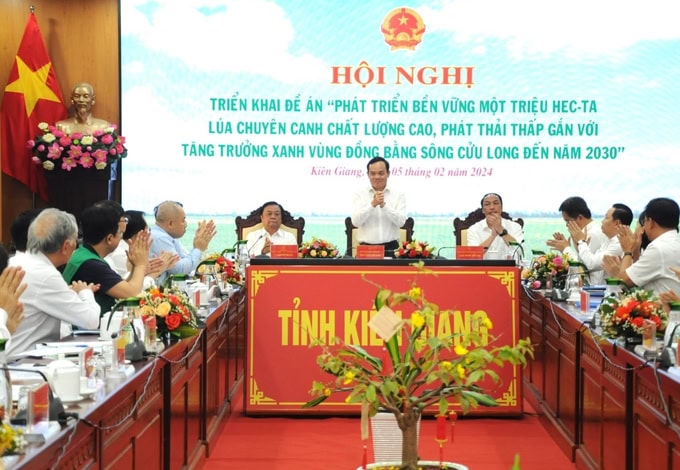
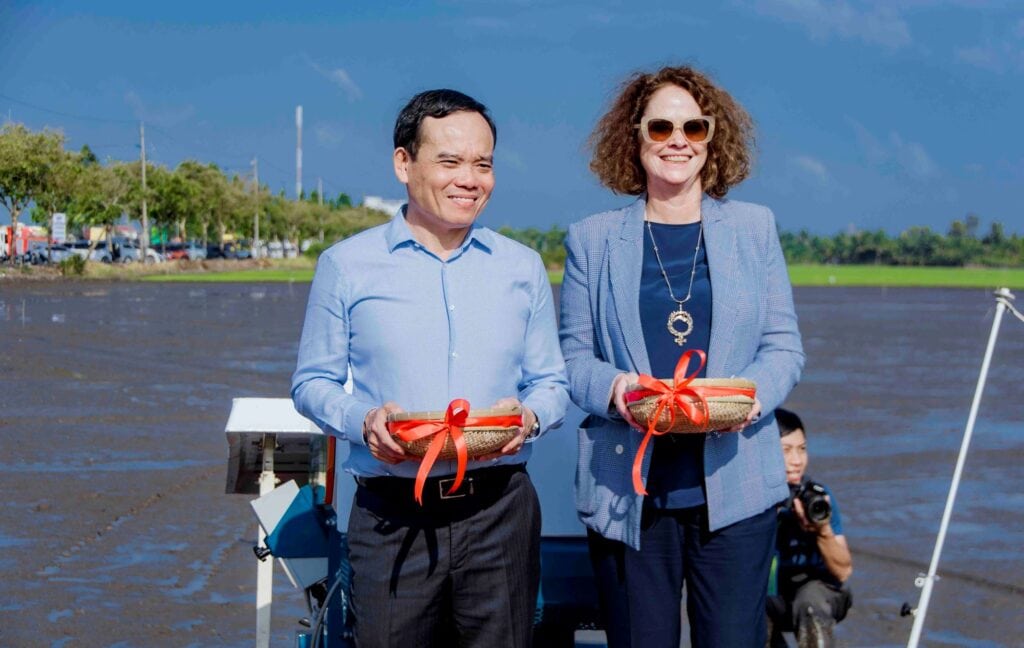
- Deputy Prime Minister Trần Lưu Quang chaired the conference to launch the project.
Regarding its title, the project can be understood as follows:
– The term “high quality” refers to premium rice varieties that are fragrant, clean, and delicious, meeting consumer preferences. It also emphasizes food safety and compliance with importing countries’ standards.
– “The phrase “low emission” relates to minimizing greenhouse gas emissions — both naturally occurring and human-induced — during rice cultivation and production.
This project holds great strategic significance in orienting the transformation toward sustainable rice farming practices in the Mekong Delta. It aims to establish and develop large-scale, stable raw material zones that ensure long-term productivity, consistent quality, and sustainable efficiency.
2. Project Objectives
2.1. General Objective
To establish one million hectares of high-quality, low-emission rice cultivation areas, linked with the restructuring of the rice production system based on value chain organization. Apply sustainable farming practices to increase product value and promote the sustainable development of Vietnam’s rice sector.
Enhance production efficiency, improve farmers’ income and livelihoods, and protect the environment.
Adapt to climate change while reducing greenhouse gas emissions, contributing to Vietnam’s international climate commitments.
2.2. Specific Objectives
– On sustainable cultivation: Reduce the amount of rice seed used for sowing to below 70 kg per hectare. Decrease the use of chemical fertilizers and pesticides by 30%, and reduce irrigation water by 20% compared to traditional practices. Ensure 100% of the cultivated area applies at least one sustainable rice farming model, such as “3 reductions – 3 gains,” “1 must – 5 reductions,” the Sustainable Rice Platform (SRP) standard, Alternate Wetting and Drying (AWD) irrigation, or other certified Good Agricultural Practices (GAP), with traceable planting area codes.
– On production organization: Ensure 100% of the high-quality, low-emission rice cultivation areas are linked between enterprises and farmer cooperatives, associations, or producer groups for both production and product consumption.
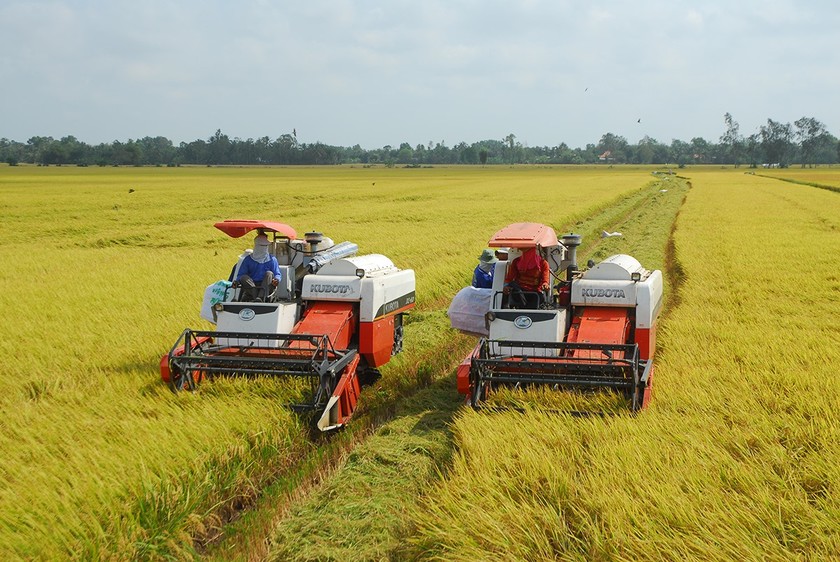
Achieve a mechanization rate of over 70% of the cultivated area.
Enable more than 1,000,000 farming households to apply sustainable cultivation practices.
– On environmental protection and green growth: Reduce post-harvest losses to below 8%. Ensure 100% of rice straw is collected and reused through processing and recycling methods. Achieve a reduction of over 10% in greenhouse gas emissions compared to traditional rice cultivation practices.
– On farmers’ income and value addition: Increase the value added in the rice value chain by 40%, with farmers’ profit margins exceeding 50%.
– On branding and export: Ensure that high-quality, low-emission rice exports account for over 20% of the total rice export volume from the specialized cultivation regions.
3. Project Implementation Areas
3.1. Locations:
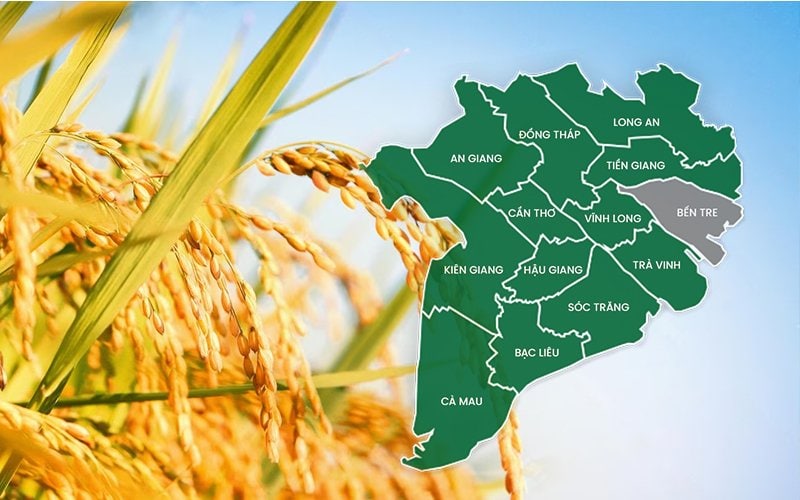
The project will be implemented across 12 provinces in the Mekong Delta, including:
An Giang, Kiên Giang, Đồng Tháp, Long An, Sóc Trăng, Cần Thơ, Bạc Liêu, Trà Vinh, Hậu Giang, Cà Mau, Tiền Giang, and Vĩnh Long,
with a total cultivation area of one million hectares dedicated to the program.
3.2. Project Implementation Phases
Phase 1 (2024 – 2025)
The first phase focuses on strengthening 180,000 hectares of existing cultivation areas under the Vietnam Sustainable Agriculture Transformation Project (VnSAT).
Key activities include:Conducting training programs for farmers and cooperatives. Developing implementation plans and frameworks for sustainable rice cultivation. Establishing a Measurement – Reporting – Verification (MRV) system. Monitoring and piloting carbon credit certification for qualified rice-growing areas. Strengthening cooperatives, maintaining and upgrading essential infrastructure. Preparing the roadmap for the next implementation phase (2026 – 2030).
Phase 2 (2026 – 2030)
In this phase, the project will identify key priority areas to develop new high-quality, low-emission rice cultivation zones beyond the existing VnSAT Project areas, expanding an additional 820,000 hectares.
Main activities will include: Investing in and upgrading infrastructure for newly developed cultivation areas. Restructuring production systems to enhance efficiency and sustainability. Building and strengthening value chains to increase market competitiveness.
Completing and optimizing the MRV (Measurement – Reporting – Verification) system. Maintaining sustainable production practices in areas established during the 2024–2025 phase.
4. Funding Sources for the Project
The Ministry of Agriculture and Rural Development (MARD) estimates the total funding for the project to be approximately USD 800 million, sourced from the following:
– State budget from both central and local governments.
– Credit funds and socialized capital from enterprises, cooperatives, organizations, and individuals within and outside the country.
– Non-refundable aid, Official Development Assistance (ODA) loans, and other forms of international financial support.
– Other lawful funding sources in accordance with Vietnamese regulations.
 ” width=”1024″ height=”648″>
- Deputy Prime Minister Trần Lưu Quang and Ms. Carolyn Turk, World Bank Country Director for Vietnam, attended the Launch Ceremony of the One Million Hectares of High-Quality Rice Project.
The main funding sources for the project include non-refundable aid, loans, credit capital, and revenue generated from carbon credits.
Đồng Tháp Ready to Join the One Million Hectares of High-Quality Rice Project
In 2024, Đồng Tháp Province registered 28,000 hectares to participate in the project. By 2025, this figure is expected to increase to nearly 70,000 hectares, and by 2030, to approximately 162,000 hectares.
 ” width=”645″ height=”483″>
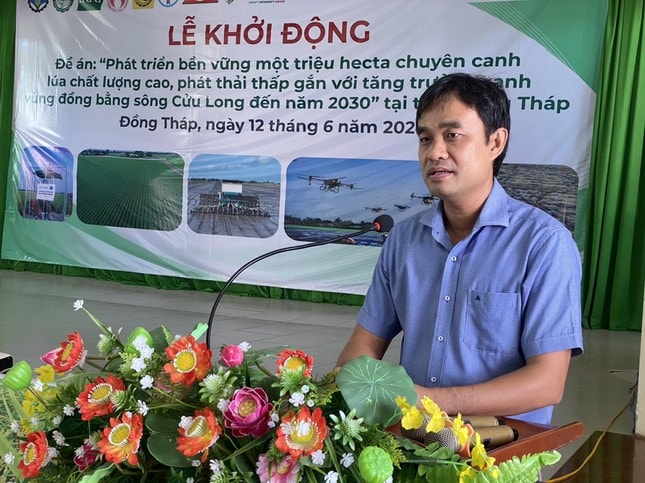
- Mr. Nguyễn Văn Vũ Minh – Director of the Department of Agriculture and Rural Development of Đồng Tháp Province delivered a speech at the Launch Ceremony.
He emphasized that the implementation of the One Million Hectares of High-Quality and Low-Emission Rice Project aims to establish specialized high-quality rice cultivation areas, while restructuring the production system along the value chain and applying sustainable farming practices to enhance value creation.
This initiative will help Đồng Tháp Province develop a sustainable rice industry, improve production efficiency, business performance, farmers’ income, and living standards, while also protecting the environment, adapting to climate change, and reducing greenhouse gas emissions.
The One Million Hectares of High-Quality, Low-Emission Rice Project aims to restructure the rice production system along the value chain, applying sustainable farming practices to increase value creation and promote the sustainable development of the rice industry.
The project seeks to enhance production efficiency, business performance, farmers’ income, and livelihoods, while also protecting the environment, adapting to climate change, and reducing greenhouse gas emissions — thereby contributing to Vietnam’s international climate commitments.

Related news
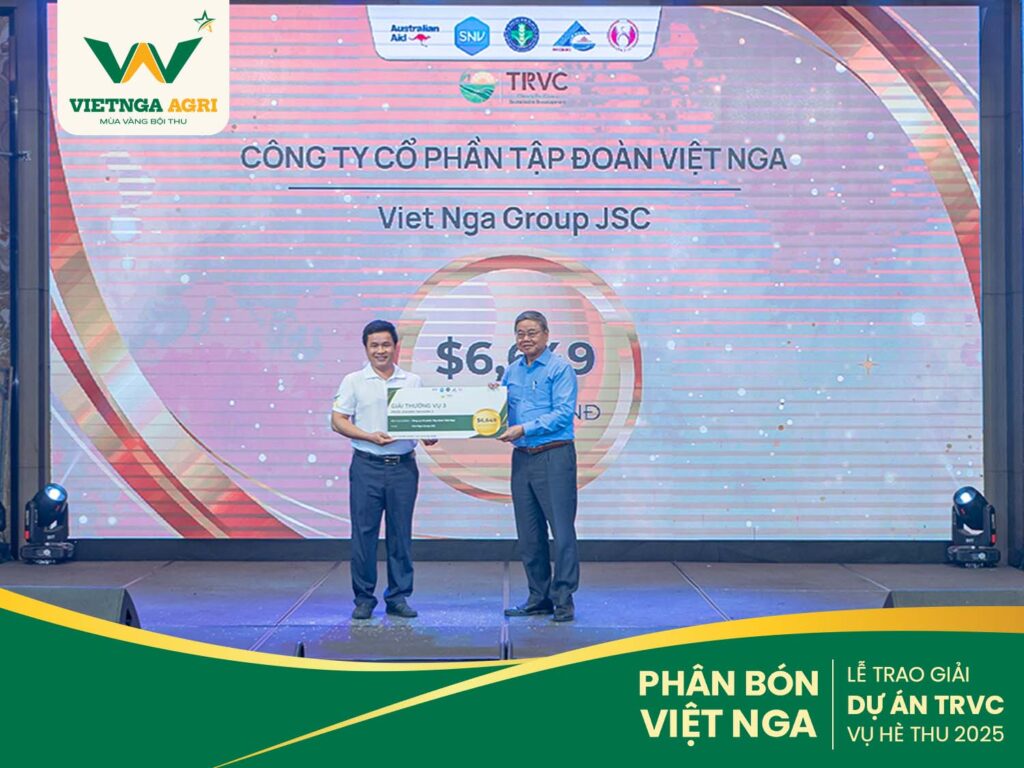
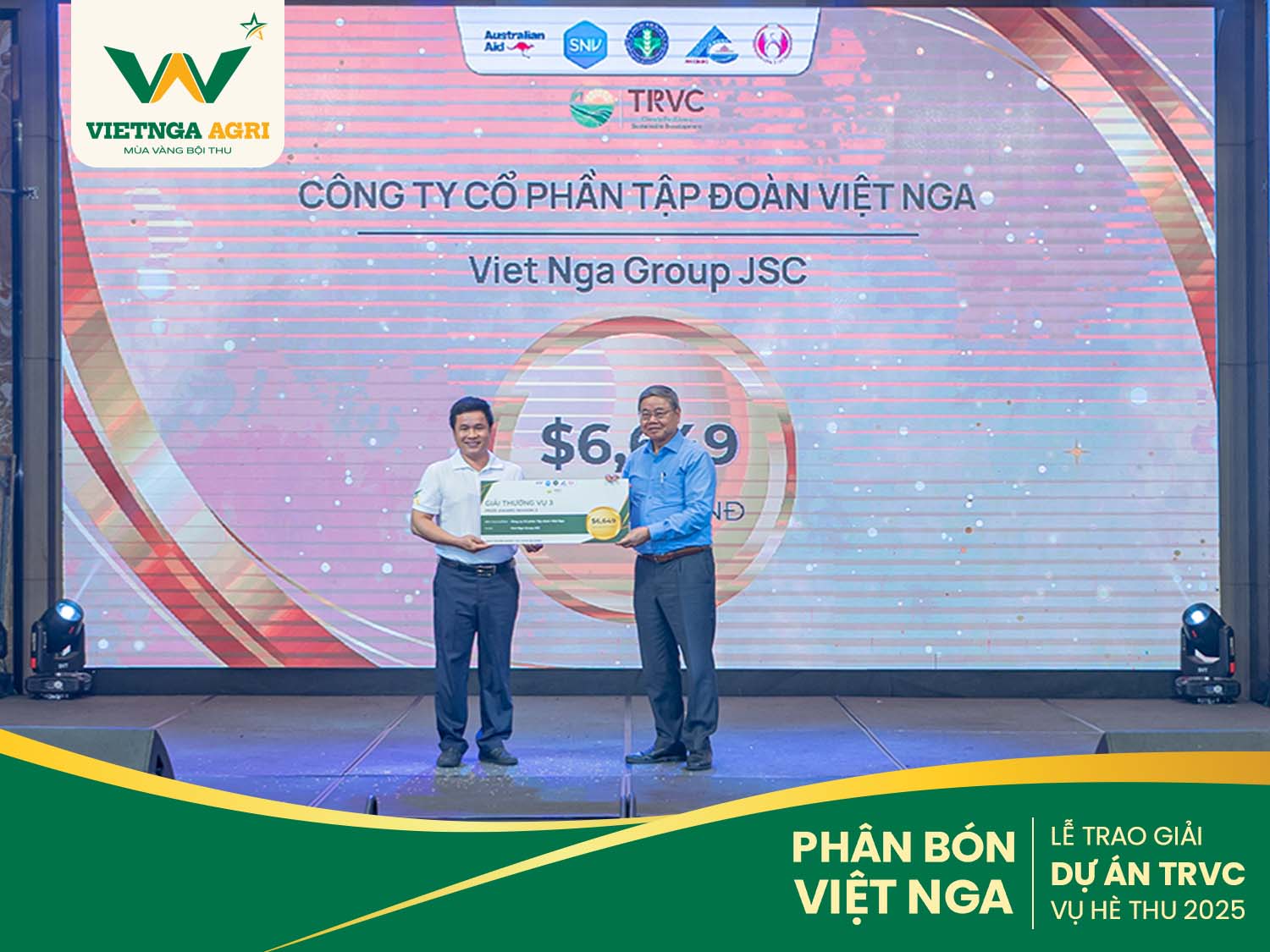
Viet Nga Fertilizer Receives TRVC Project Award for the 2025 Summer Autumn Rice Season
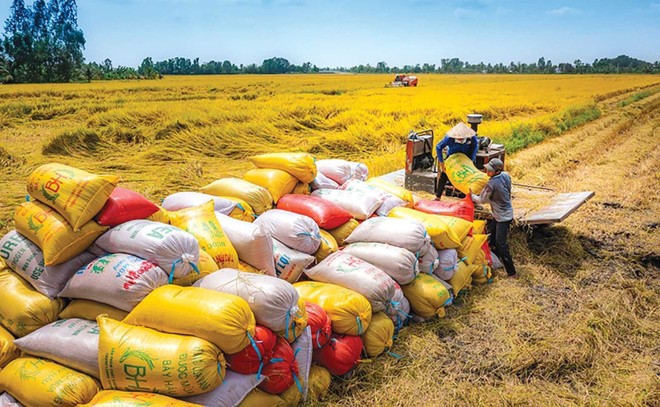
Global Rice Supply Faces Risks as Fertilizer Prices Rise and El Nino Returns

Viet Nga Joint Stock Company announces the holiday schedule for Hung Kings Commemoration Day, Reunification Day (April 30), and International Workers’ Day (May 1).
Viet Nga Agri Achieves High-Quality Vietnamese Goods Certification for Two Consecutive Year

Viet Nga Fertilizer Holds Workshop to Promote the Development of the TRVC Project in Dong Thap Province