ACCOUNTING WITH FURTHER FARMERS
When is the best time to apply potassium fertilizer to rice for high yields?
Potassium fertilizer plays a crucial role in the growth and development of rice plants. So, when is the best time to apply potassium fertilizer to rice plants for optimal growth and high yields? Let’s explore this issue with Viet Nga Fertilizer in the content below.đ
A. The Role of Potassium in Rice Plants
Potassium fertilizer, although not directly involved in the structure of plant cells, plays a crucial role in many physiological processes of rice plants. It helps to:
- Enhanced resistance: Potassium helps rice plants become stronger, increasing their resistance to lodging, drought, cold, and pests and diseases.
- Root development: Potassium promotes root development, helping plants absorb water and other nutrients more effectively.
- Improved productivity and quality: Potassium plays a crucial role in grain formation and development, helping rice grains become plump, increasing weight and nutrient content.

B. Types of Potassium Fertilizers Suitable for Rice
There are many different types of potassium fertilizers available on the market. Some common types include:
- Potassium chloride (KCl): Inexpensive, high in potassium, but contains chlorine which can be harmful to some chlorine-sensitive rice varieties.
- Potassium sulfate (K2SO4): Safe for all types of rice, provides additional sulfur, but is more expensive than potassium chloride (KCl).
- Potassium Nitrate (KNO3): Provides both potassium and nitrogen, suitable for periods of vigorous growth, but is quite expensive.
- Farmers should choose potassium fertilizer that suits their soil type, rice variety, and economic conditions. Always prioritize products from reputable brands to ensure fertilizer quality.
C. Effective Potassium Fertilization Techniques for Rice
1. Timing for Potassium Fertilization in Rice:
Applying potassium fertilizer at the right time is crucial for rice plants to absorb nutrients most effectively. Potassium fertilization is divided into main stages, each meeting the different potassium needs of the rice plant:
- Base fertilization: This stage provides potassium to the rice plants right from the start, helping seedlings develop a strong root system, creating a solid foundation for future growth. Apply about 1/3 of the total potassium needed before sowing or transplanting.
- Top dressing for tillering: Potassium is crucial during the tillering stage of rice, helping the plant produce many healthy tillers, laying the groundwork for a high number of panicles per square meter. Apply about 1/3 of the total potassium when the rice begins to tiller (7-10 days after sowing/transplanting).
- Top dressing during panicle initiation and flowering: This stage determines rice yield and grain quality. Potassium helps rice panicle evenly, ensures firm grains, and increases rice weight and quality. Apply about 1/3 of the remaining total potassium during panicle initiation (15-20 days before flowering).
2. Potassium application rates for rice plants:
The amount of potassium fertilizer applied to rice depends on many factors such as soil type, rice variety, season, and the amount of base fertilizer. Farmers should consult the recommendations of agricultural engineers or the instructions on the product packaging. Avoid applying too much or too little fertilizer, as this can be wasteful or negatively affect rice plant development.
3. How to properly apply potassium fertilizer to rice:
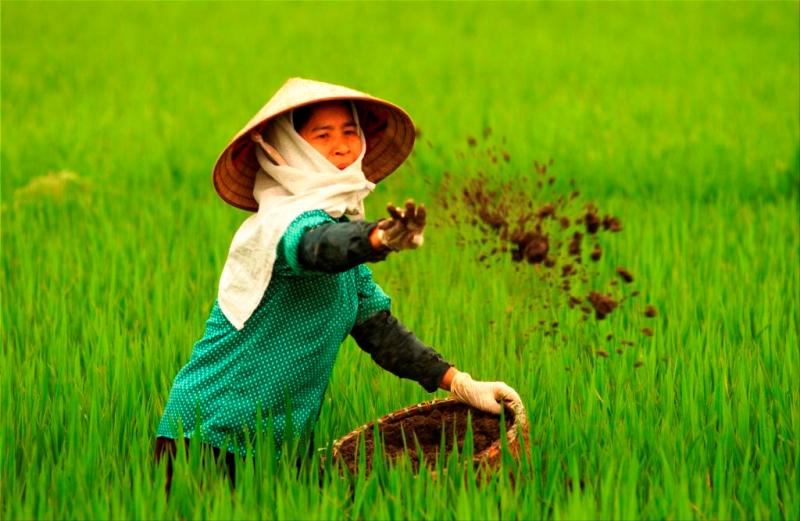
- Broadcast fertilization: Distribute fertilizer evenly over the field surface.
- Row fertilization: Apply fertilizer concentrated in the rows of rice plants.
- Soluble fertilizer: Dissolve potassium fertilizer in water and irrigate the rice plants.
Depending on the specific conditions, farmers can choose the appropriate fertilization method. Avoid applying potassium fertilizer during rainy weather or too close to the base of the plant.
D. Recognizing Signs of Potassium Deficiency in Rice
Rice plants deficient in potassium often show the following symptoms:
– The edges of older leaves turn yellow and dry out.
– The tips of the leaves turn yellow, gradually spreading downwards.
– The rice plants are stunted and have poor tillering.
– The rice grains are shriveled, small, and of poor quality.
If potassium deficiency is detected in rice plants, farmers should immediately supplement it by applying potassium fertilizer or spraying foliar fertilizers containing potassium.
F. Conclusion
Proper potassium fertilization techniques for rice are the golden key to helping farmers achieve bountiful rice harvests. Hopefully, this article from Viet Nga Fertilizer will provide useful information for farmers to have a successful and high-yield harvest.
Related news
The Role of Base Fertilization in Soil Improvement and Enhancing Agricultural Fertility
Measures to Improve and Treat Saline Soil
Winter-Spring rice blast warning – Don’t let leaf and flower burns rob you of your golden crop

Rice Sowing Techniques for the Early Winter–Spring Crop
What Is Slow-Release Fertilizer? Learn How to Use It Effectively